Wang Michael T M, Gamble Greg, Bolland Mark J, Grey Andrew
Department of Medicine, University of Auckland, Auckland, New Zealand.
PLoS One. 2014 Jul 3;9(7):e101533. doi: 10.1371/journal.pone.0101533. eCollection 2014.
Dietary supplement use is increasing despite lack of evidence of benefits, or evidence of harm. Press releases issued by the supplements industry might contribute to this situation by using 'spin' (strategies to hype or denigrate findings) to distort the results of clinical studies. We assessed press releases issued in response to publication of clinical studies on dietary supplements.
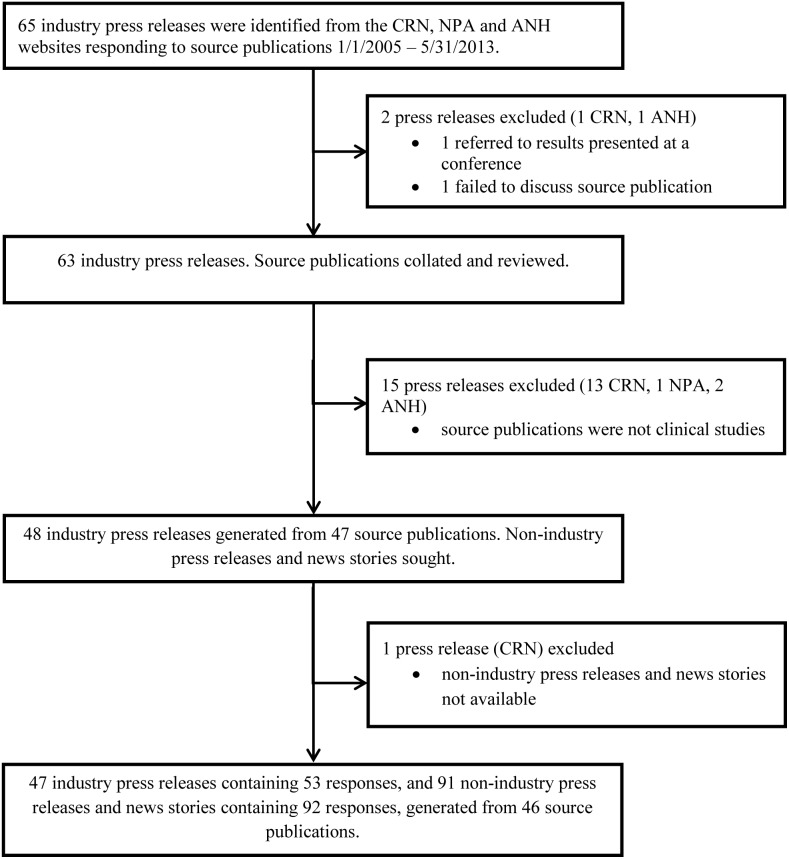
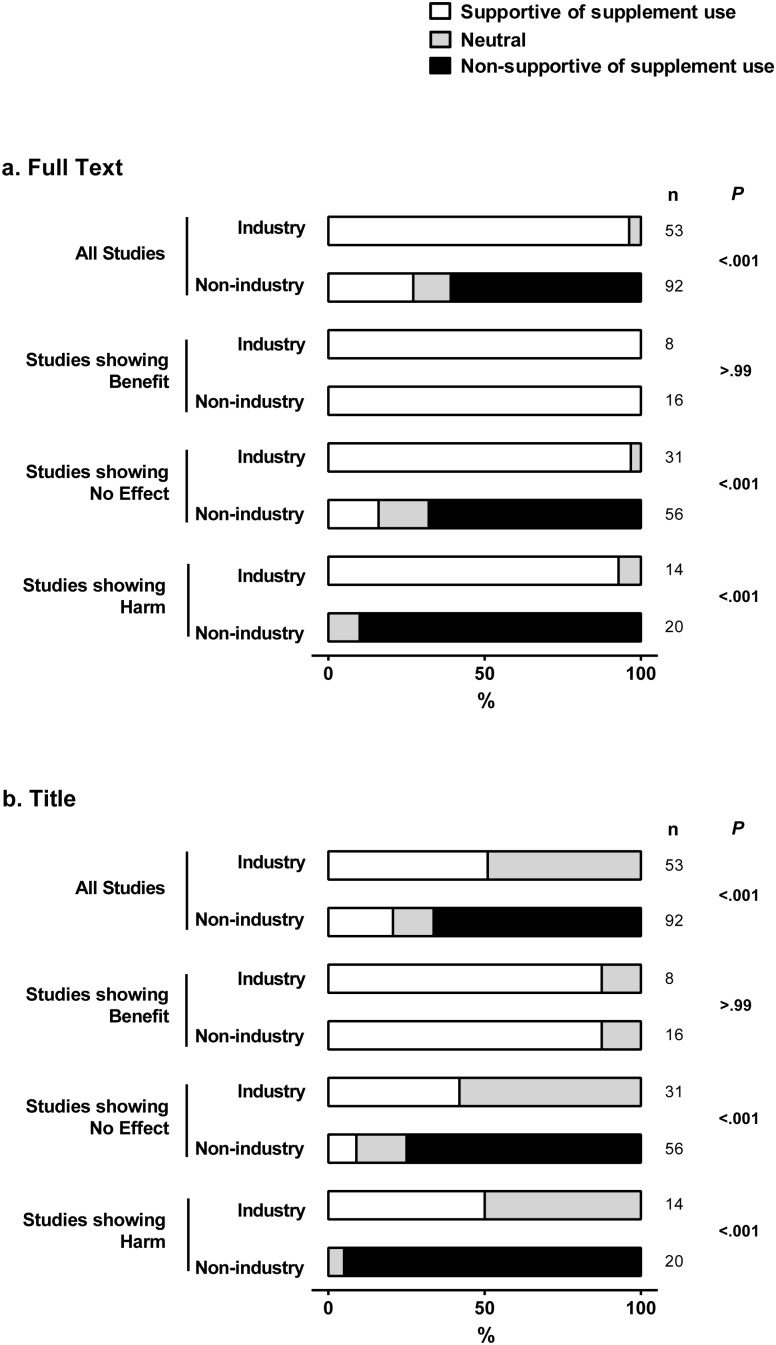
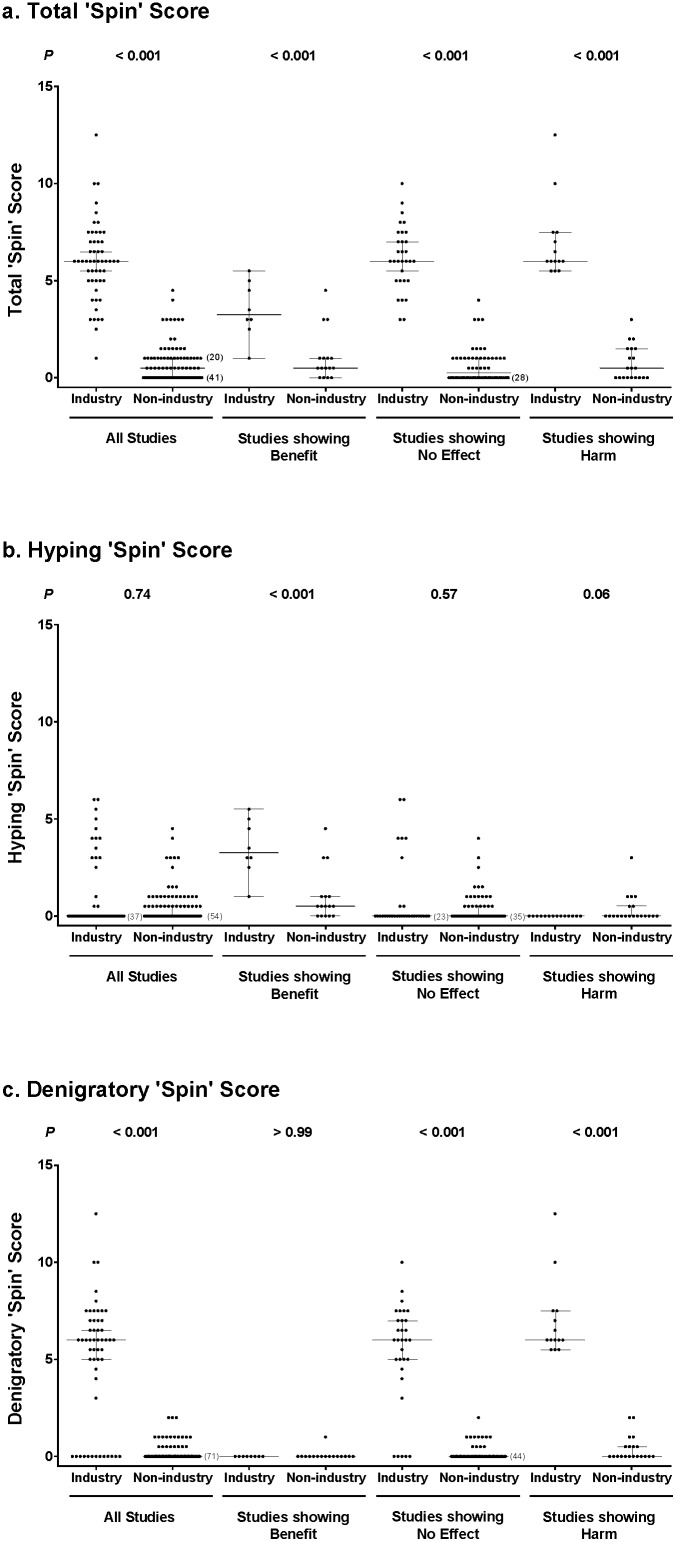
We analyzed 47 supplements industry press releases and 91 non-industry press releases and news stories, generated in response to 46 clinical studies of dietary supplements published between 1/1/2005 and 5/31/2013. The primary outcome was 'spin' content and direction. We also assessed disposition towards use of dietary supplements, reporting of study information, and dissemination of industry press releases. More supplements industry press releases (100%) contained 'spin' than non-industry media documents (55%, P<0.001). Hyping 'spin' scores were higher in industry than non-industry media documents for studies reporting benefit of supplements (median 'spin' score 3.3, 95% CI 1.0-5.5 vs 0.5, 0-1.0; P<0.001). Denigratory 'spin' scores were higher in industry than non-industry media documents for studies reporting no effect (6.0, 5.0-7.0 vs 0, 0-0; P<0.001) or harm (6.0, 5.5-7.5 vs 0, 0-0.5; P<0.001) from a supplement. Industry press releases advocated supplement use in response to >90% of studies that reported no benefit, or harm, of the supplement. Industry press releases less frequently reported study outcomes, sample size, and estimates of effect size than non-industry media documents (all P<0.001), particularly for studies that reported no benefit of supplements. Industry press releases were referenced by 148 news stories on the websites of 6 organizations that inform manufacturers, retailers and consumers of supplements.
Dietary supplements industry press releases issued in response to clinical research findings are characterized by 'spin' that hypes results that are favourable to supplement use and denigrates results that are not.
尽管缺乏益处证据或存在危害证据,但膳食补充剂的使用仍在增加。补充剂行业发布的新闻稿可能通过“炒作”(夸大或诋毁研究结果的策略)来歪曲临床研究结果,从而导致这种情况。我们评估了针对膳食补充剂临床研究发表而发布的新闻稿。
我们分析了47篇补充剂行业新闻稿以及91篇非行业新闻稿和新闻报道,这些新闻稿和报道是针对2005年1月1日至2013年5月31日期间发表的46项膳食补充剂临床研究产生的。主要结果是“炒作”内容和方向。我们还评估了对膳食补充剂使用的倾向、研究信息的报告以及行业新闻稿的传播情况。与非行业媒体文件(55%,P<0.001)相比,更多的补充剂行业新闻稿(100%)包含“炒作”内容。对于报告补充剂有益的研究,行业媒体文件中的夸大“炒作”得分高于非行业媒体文件(“炒作”得分中位数3.3,95%可信区间1.0 - 5.5 vs 0.5,0 - 1.0;P<0.001)。对于报告补充剂无效果(6.0,5.0 - 7.0 vs 0,0 - 0;P<0.001)或有危害(6.0,5.5 - 7.5 vs 0,0 - 0.5;P<0.001)的研究,行业媒体文件中的诋毁“炒作”得分高于非行业媒体文件。对于超过90%报告补充剂无益处或有危害的研究,行业新闻稿主张使用补充剂。与非行业媒体文件相比,行业新闻稿较少报告研究结果、样本量和效应大小估计值(所有P<0.001),特别是对于报告补充剂无益处的研究。6个向补充剂制造商、零售商和消费者提供信息的组织的网站上有148篇新闻报道引用了行业新闻稿。
针对临床研究结果发布的膳食补充剂行业新闻稿的特点是“炒作”,即夸大有利于补充剂使用的结果并诋毁不利结果。