Howard Hughes Medical Institute, Waksman Institute and Department of Molecular Biology and Biochemistry, Rutgers The State University of New Jersey, Piscataway NJ 08854 USA.
Cell. 2014 Jul 3;158(1):143-156. doi: 10.1016/j.cell.2014.05.035.
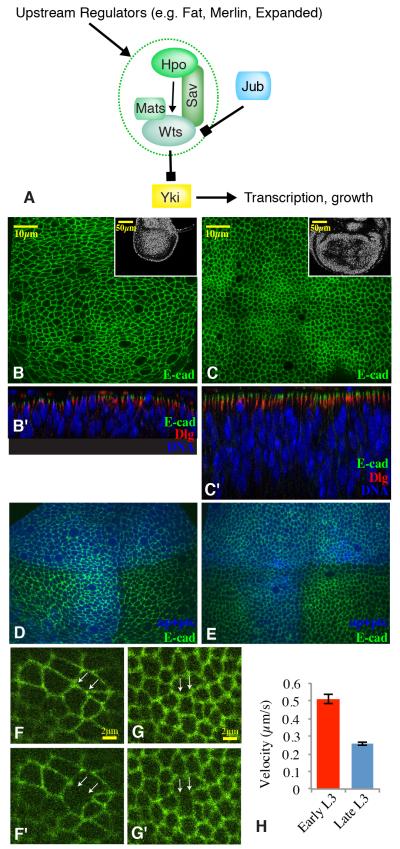
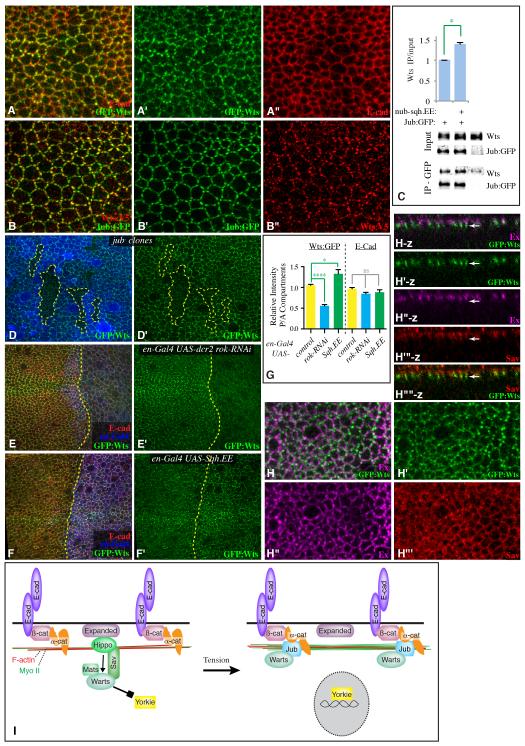
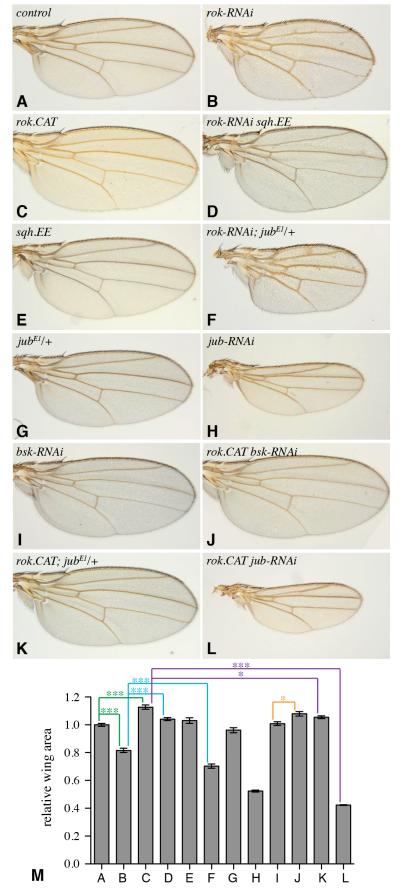
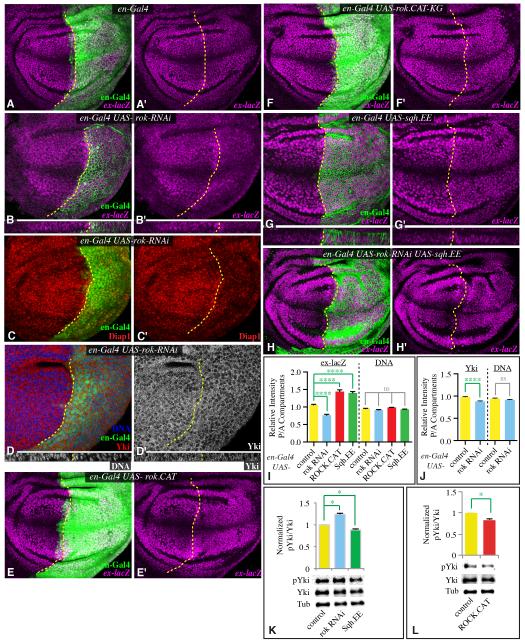
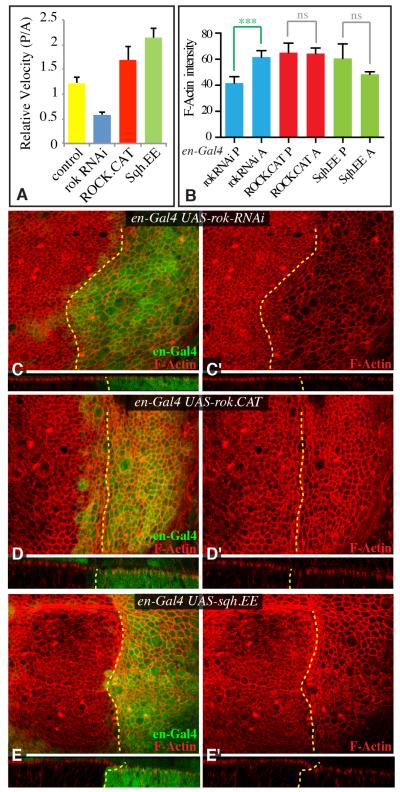
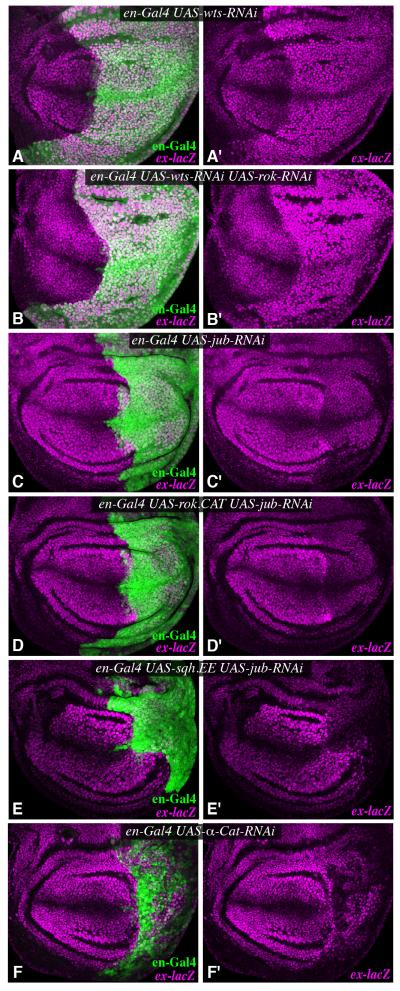
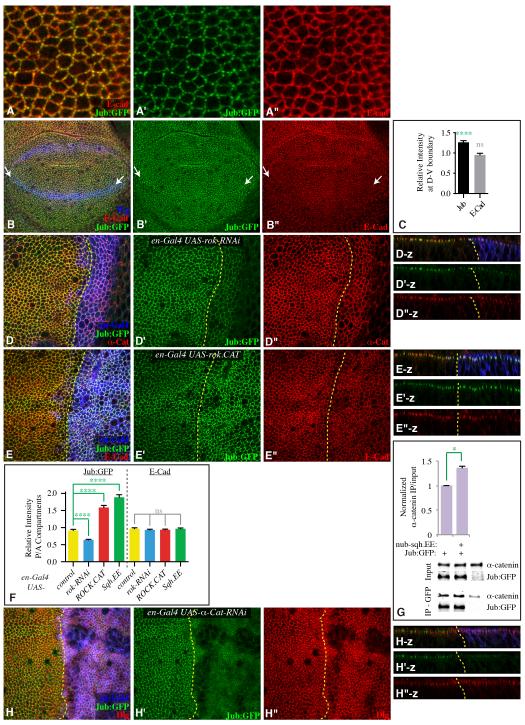
Mechanical forces have been proposed to modulate organ growth, but a molecular mechanism that links them to growth regulation in vivo has been lacking. We report that increasing tension within the cytoskeleton increases Drosophila wing growth, whereas decreasing cytoskeletal tension decreases wing growth. These changes in growth can be accounted for by changes in the activity of Yorkie, a transcription factor regulated by the Hippo pathway. The influence of myosin activity on Yorkie depends genetically on the Ajuba LIM protein Jub, a negative regulator of Warts within the Hippo pathway. We further show that Jub associates with α-catenin and that its localization to adherens junctions and association with α-catenin are promoted by cytoskeletal tension. Jub recruits Warts to junctions in a tension-dependent manner. Our observations delineate a mechanism that links cytoskeletal tension to regulation of Hippo pathway activity, providing a molecular understanding of how mechanical forces can modulate organ growth.
机械力被认为可以调节器官的生长,但将其与体内生长调控联系起来的分子机制一直缺失。我们报告称,细胞骨架内张力的增加会增加果蝇翅膀的生长,而细胞骨架张力的减少会减少翅膀的生长。生长的这些变化可以通过 Yorkie 的活性变化来解释,Yorkie 是一种受 Hippo 途径调节的转录因子。肌球蛋白活性对 Yorkie 的影响在遗传上取决于 Ajuba LIM 蛋白 Jub,它是 Hippo 途径中 Warts 的负调节剂。我们进一步表明,Jub 与α-连环蛋白结合,并且其在黏着连接点的定位和与α-连环蛋白的结合受细胞骨架张力的促进。Jub 以依赖于张力的方式将 Warts 募集到连接点。我们的观察结果描绘了一种将细胞骨架张力与 Hippo 途径活性调节联系起来的机制,为机械力如何调节器官生长提供了分子层面的理解。