Zaman Huri Hasniza, Lian Choo Tee, Sulaiman Che Zuraini, Mark Raymond, Abdul Razack Azad Hassan
Department of Pharmacy, Faculty of Medicine, University of Malaya, Kuala Lumpur, Malaysia Clinical Investigation Centre, University Malaya Medical Centre, Kuala Lumpur, Malaysia.
Department of Pharmacy, Faculty of Medicine, University of Malaya, Kuala Lumpur, Malaysia.
BMJ Open. 2014 Jul 7;4(7):e005381. doi: 10.1136/bmjopen-2014-005381.
To investigate factors associated with demographic/clinical characteristics and drug selection in patients with erectile dysfunction (ED). The prevalence of ED is increasing worldwide. Studies have shown that ED is associated with age, lifestyle and comorbidities. However, the factors associated with patient characteristics as well as drug selection are incompletely understood.
A tertiary medical centre in Kuala Lumpur, Malaysia.
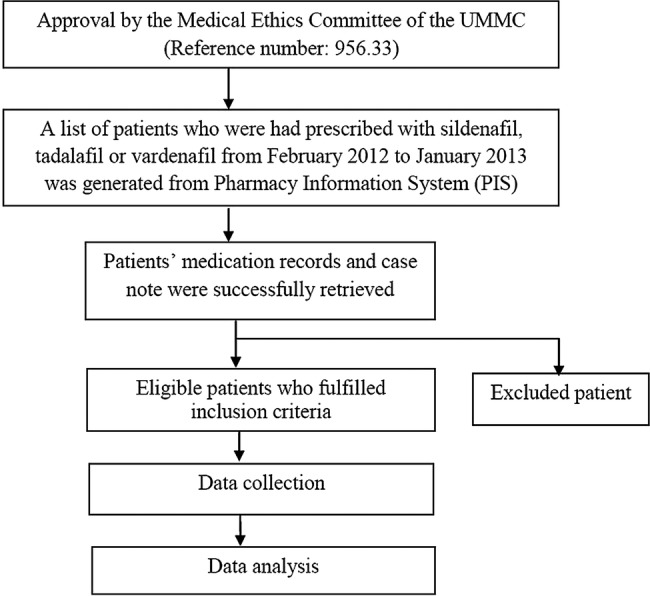
A total of 219 patients (range 23-80 years) who had received phosphodiesterase type-5 (PDE-5) inhibitors as ED treatment were evaluated.
Adult patients aged ≥18 years, diagnosed with ED, and prescribed with sildenafil, tadalafil or vardenafil.
Patients diagnosed with ED but who did not receive any PDE-5 inhibitor, or those with missing data.
Factors associated with demographic and clinical characteristics as well as drug selection were assessed.
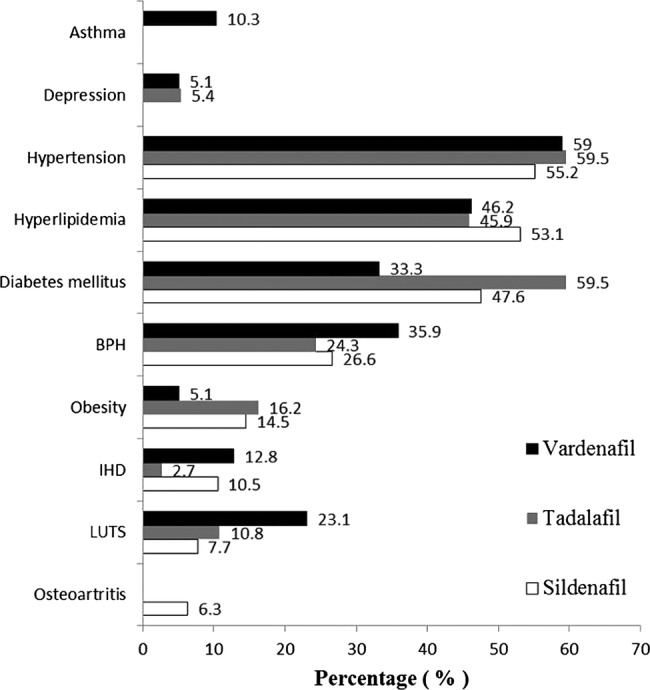
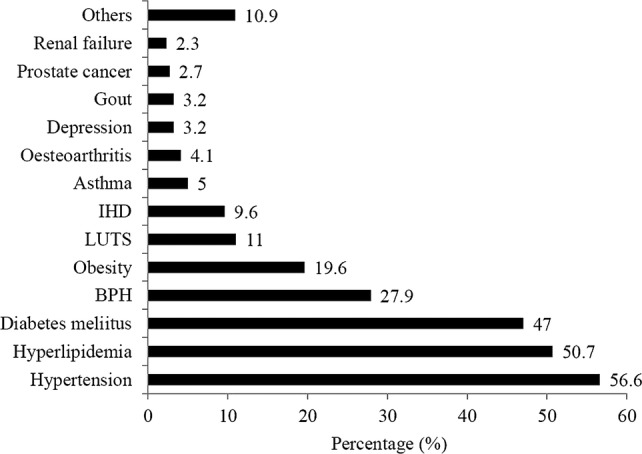
Ischaemic heart disease (p=0.025), benign prostatic hyperplasia (p<0.001), obesity (p=0.005), lower urinary tract symptoms (LUTS) (p=0.006) and α-blockers (p<0.001) were significantly associated with elderly patients with ED. Additionally, LUTS (p=0.038) and α-blockers (p=0.008) were significantly associated with the selection of PDE-5 inhibitor.
These data showed that elderly patients with ED were significantly associated with comorbidities and α-blockers, whereas LUTS and α blockers were associated with drug selection.
探讨勃起功能障碍(ED)患者的人口统计学/临床特征及药物选择相关因素。ED在全球的患病率呈上升趋势。研究表明,ED与年龄、生活方式及合并症有关。然而,与患者特征及药物选择相关的因素尚未完全明确。
马来西亚吉隆坡的一家三级医疗中心。
共评估了219例接受5型磷酸二酯酶(PDE-5)抑制剂治疗ED的患者(年龄范围23 - 80岁)。
年龄≥18岁的成年患者,诊断为ED,并开具了西地那非、他达拉非或伐地那非。
诊断为ED但未接受任何PDE-5抑制剂治疗的患者,或数据缺失的患者。
评估与人口统计学和临床特征以及药物选择相关的因素。
缺血性心脏病(p = 0.025)、良性前列腺增生(p < 0.001)、肥胖(p = 0.005)、下尿路症状(LUTS)(p = 0.006)和α受体阻滞剂(p < 0.001)与老年ED患者显著相关。此外,LUTS(p = 0.038)和α受体阻滞剂(p = 0.008)与PDE-5抑制剂的选择显著相关。
这些数据表明,老年ED患者与合并症和α受体阻滞剂显著相关,而LUTS和α受体阻滞剂与药物选择相关。