Hay Colin W, Shanley Lynne, Davidson Scott, Cowie Philip, Lear Marissa, McGuffin Peter, Riedel Gernot, McEwan Iain J, MacKenzie Alasdair
School of Medical Sciences, Institute of Medical Sciences, University of Aberdeen, Aberdeen AB39 3UW, Scotland, UK.
MRC SGDP Centre, Institute of Psychiatry, King's College London, DeCrespigny Park, London SE5 8AF3, UK.
Psychoneuroendocrinology. 2014 Sep;47(100):43-55. doi: 10.1016/j.psyneuen.2014.04.017. Epub 2014 May 2.
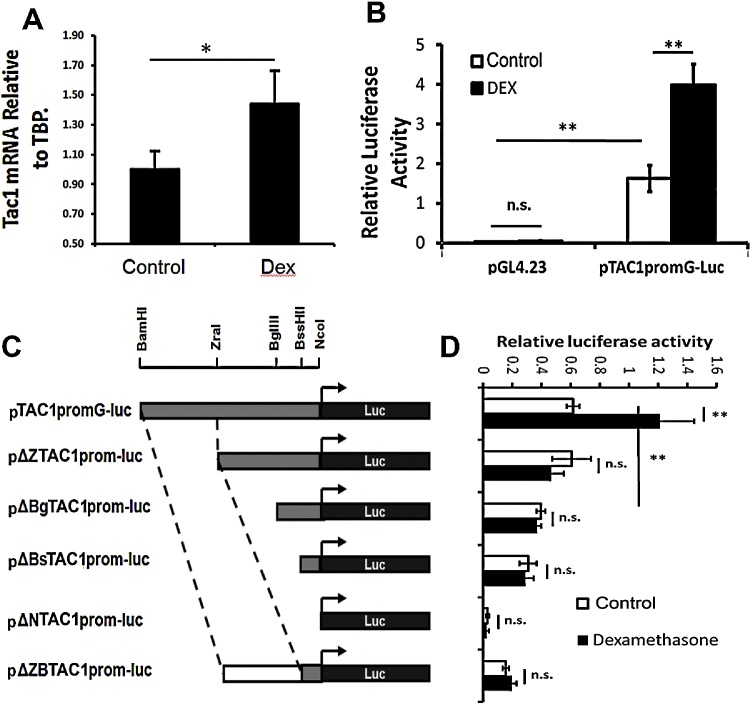
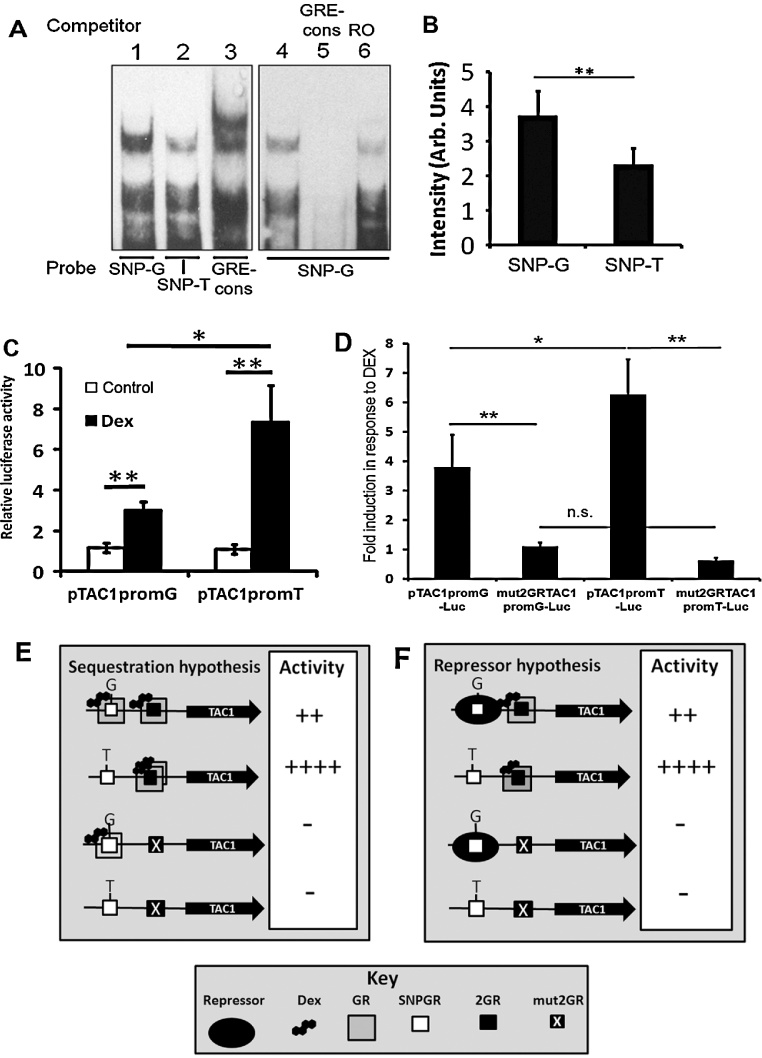
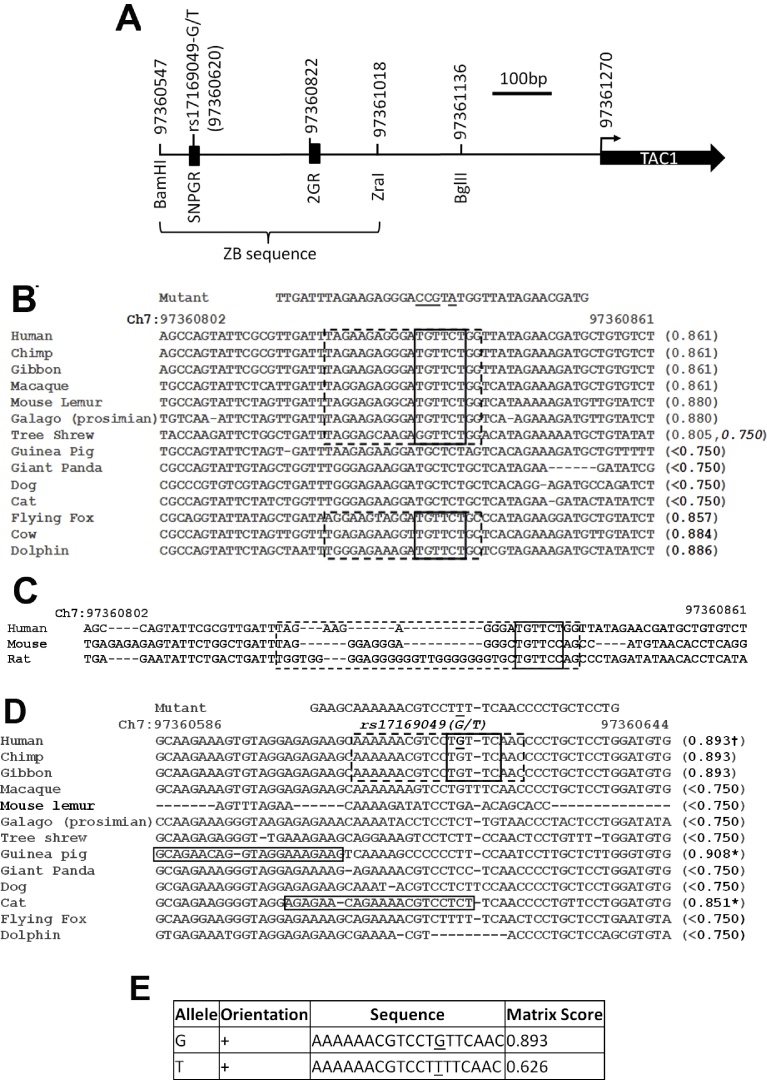
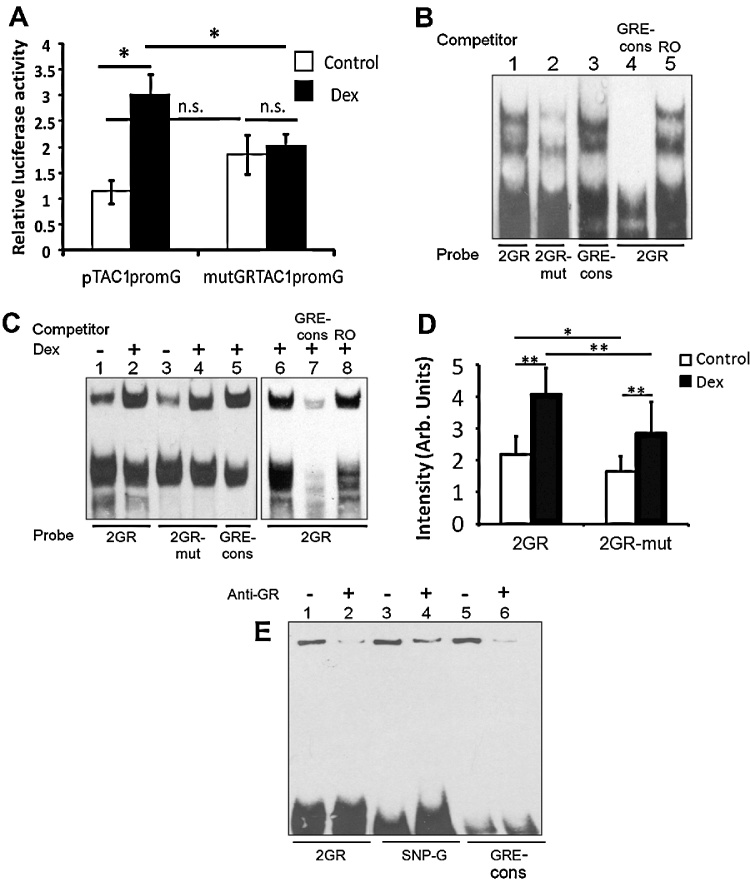
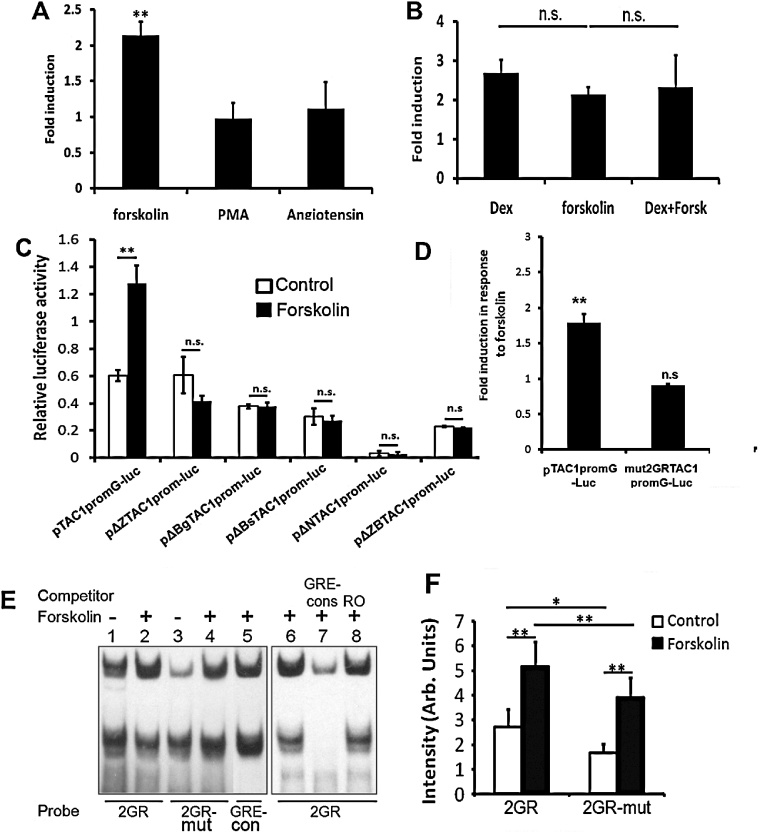
Expression or introduction of the neuropeptide substance-P (SP; encoded by the TAC1 gene in humans and Tac1 in rodents) in the amygdala induces anxiety related behaviour in rodents. In addition, pharmacological antagonism of the main receptor of SP in humans; NK1, is anxiolytic. In the current study, we show that the Tac1 locus is up-regulated in primary rat amygdala neurones in response to activation of the glucocorticoid receptor (GR); a classic component of the stress response. Using a combination of bioinformatics, electrophoretic mobility shift assays (EMSA) and reporter plasmid magnetofection into rat primary amygdala neurones we identified a highly conserved GR response sequence (2GR) in the human TAC1 promoter that binds GR in response to dexamethasone (Dex) or forskolin. We also identified a second GR binding site in the human promoter that was polymorphic and whose T-allele is only found in Japanese and Chinese populations. We present evidence that the T-allele of SNPGR increases the activity of the TAC1 promoter through de-sequestration or de-repression of 2GR. The identification of Dex/forskolin response elements in the TAC1 promoter in amygdala neurones suggests a possible link in the chain of molecular events connecting GR activation and anxiety. In addition, the discovery of a SNP which can alter this response may have implications for our understanding of the role of regulatory variation in susceptibility to stress in specific populations.
在杏仁核中表达或引入神经肽P物质(SP;人类中由TAC1基因编码,啮齿动物中由Tac1基因编码)会诱导啮齿动物产生焦虑相关行为。此外,人类中SP主要受体NK1的药理学拮抗作用具有抗焦虑效果。在本研究中,我们发现,糖皮质激素受体(GR)激活后,大鼠原代杏仁核神经元中的Tac1基因座会上调;GR是应激反应的经典组成部分。我们结合生物信息学、电泳迁移率变动分析(EMSA)以及将报告质粒磁转染至大鼠原代杏仁核神经元的方法,在人类TAC1启动子中鉴定出一个高度保守的GR反应序列(2GR),该序列在受到地塞米松(Dex)或福司可林刺激时会与GR结合。我们还在人类启动子中鉴定出第二个GR结合位点,该位点具有多态性,其T等位基因仅在日本人和中国人中发现。我们提供的证据表明,SNPGR的T等位基因通过解除对2GR的隔离或抑制作用来增加TAC1启动子的活性。在杏仁核神经元的TAC1启动子中鉴定出Dex/福司可林反应元件,这表明在连接GR激活与焦虑的分子事件链中可能存在联系。此外,发现一个能够改变这种反应的单核苷酸多态性(SNP)可能对我们理解特定人群中调控变异在应激易感性中的作用具有重要意义。