Department of Genome Sciences, University of Washington, Seattle, WA 98195, USA.
Science. 2012 Sep 7;337(6099):1190-5. doi: 10.1126/science.1222794. Epub 2012 Sep 5.
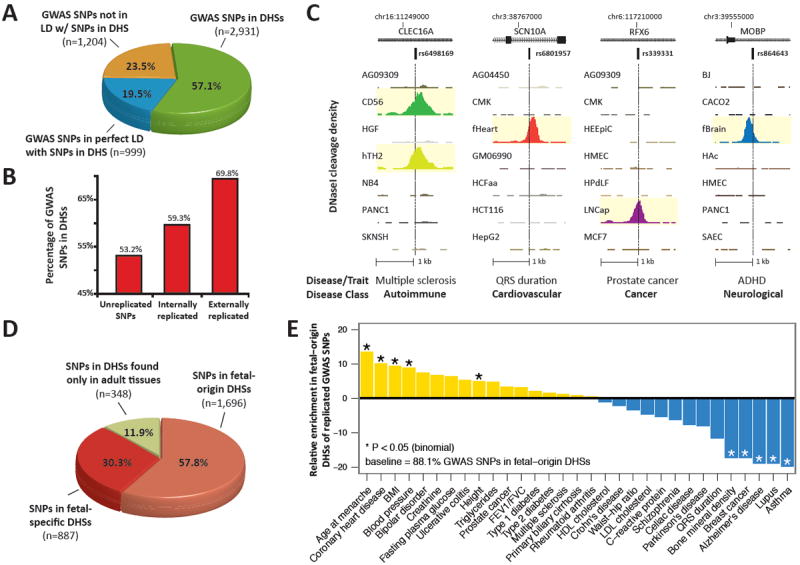
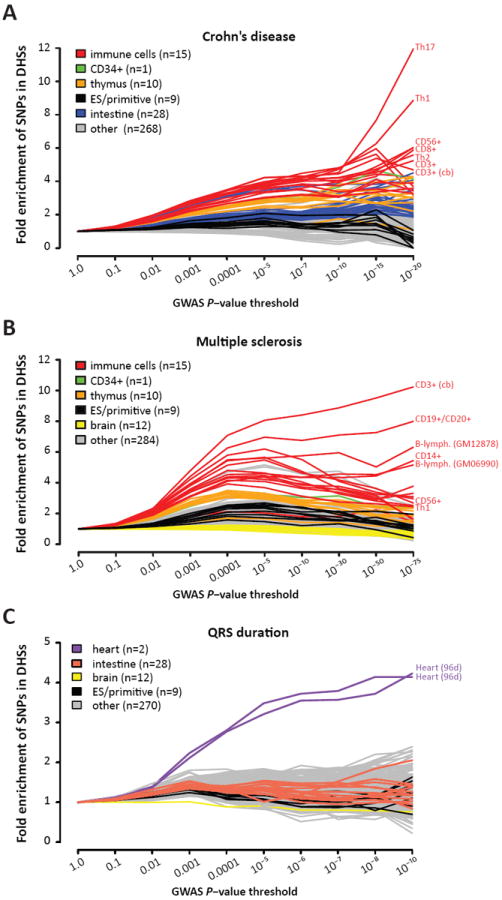
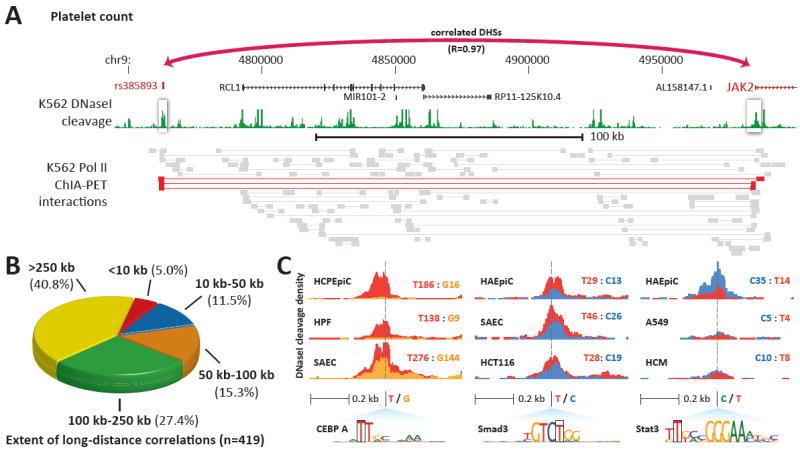
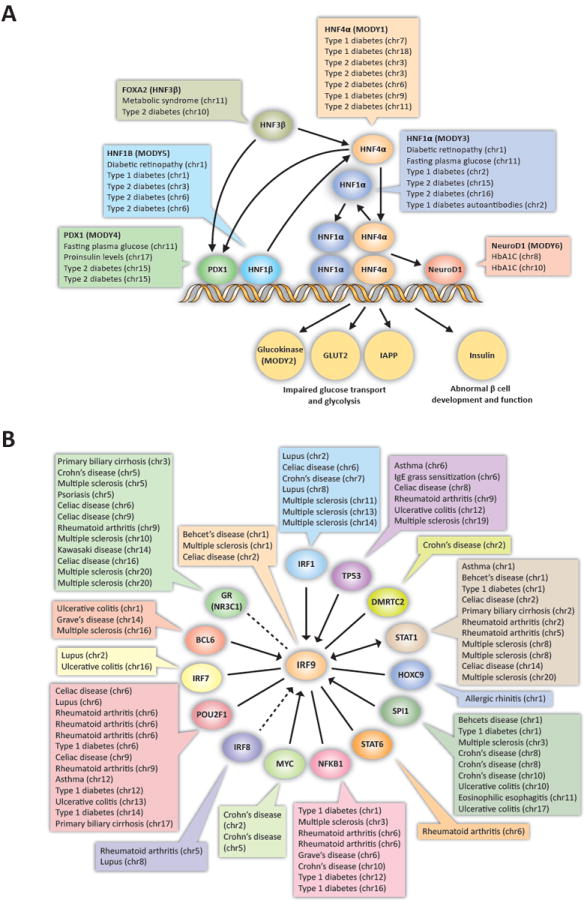
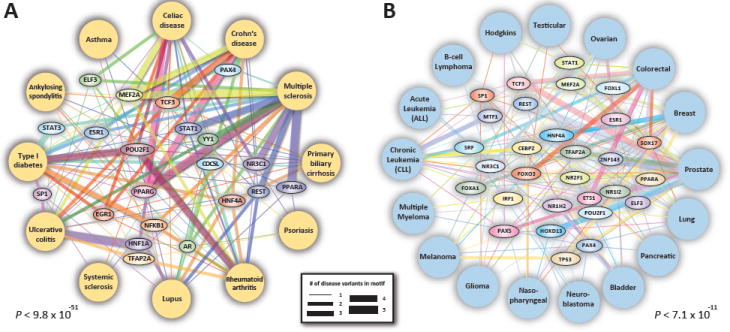
Genome-wide association studies have identified many noncoding variants associated with common diseases and traits. We show that these variants are concentrated in regulatory DNA marked by deoxyribonuclease I (DNase I) hypersensitive sites (DHSs). Eighty-eight percent of such DHSs are active during fetal development and are enriched in variants associated with gestational exposure-related phenotypes. We identified distant gene targets for hundreds of variant-containing DHSs that may explain phenotype associations. Disease-associated variants systematically perturb transcription factor recognition sequences, frequently alter allelic chromatin states, and form regulatory networks. We also demonstrated tissue-selective enrichment of more weakly disease-associated variants within DHSs and the de novo identification of pathogenic cell types for Crohn's disease, multiple sclerosis, and an electrocardiogram trait, without prior knowledge of physiological mechanisms. Our results suggest pervasive involvement of regulatory DNA variation in common human disease and provide pathogenic insights into diverse disorders.
全基因组关联研究已经确定了许多与常见疾病和特征相关的非编码变异。我们表明,这些变异集中在由脱氧核糖核酸酶 I(DNase I)超敏位点(DHS)标记的调控 DNA 中。88%的此类 DHS 在胎儿发育过程中活跃,并富集了与妊娠暴露相关表型相关的变异。我们确定了数百个包含变异的 DHS 的远程基因靶标,这些靶标可能可以解释表型关联。与疾病相关的变异系统地扰乱转录因子识别序列,经常改变等位基因染色质状态,并形成调控网络。我们还在 DHS 内发现了更弱的与疾病相关的变异的组织选择性富集,并且在没有生理机制先验知识的情况下,为克罗恩病、多发性硬化症和心电图特征新鉴定了致病细胞类型。我们的结果表明,调控 DNA 变异普遍参与常见人类疾病,并为多种疾病提供了发病机制见解。