Li Huili, Huang Kun, Liu Xinghua, Liu Jinlin, Lu Xiaoming, Tao Kaixiong, Wang Guobin, Wang Jiliang
Department of Surgery, Union Hospital, Tongji Medical College, Huazhong University of Science and Technology, 430022 Wuhan, China.
Department of Cardiovascular Diseases, Union Hospital, Tongji Medical College, Huazhong University of Science and Technology, 430022 Wuhan, China.
Oxid Med Cell Longev. 2014;2014:241864. doi: 10.1155/2014/241864. Epub 2014 Jun 5.
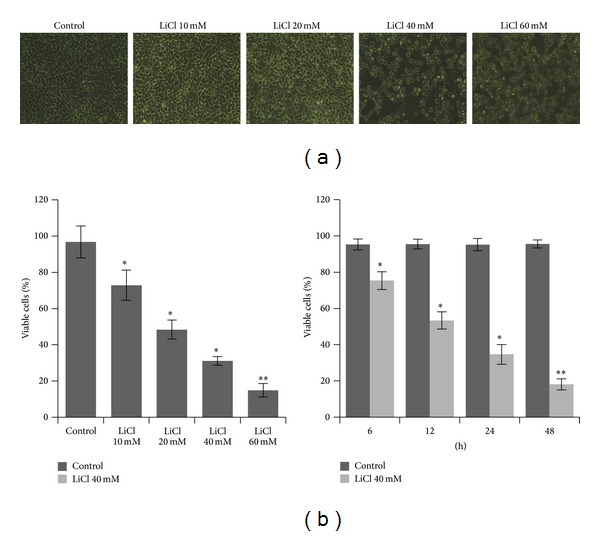
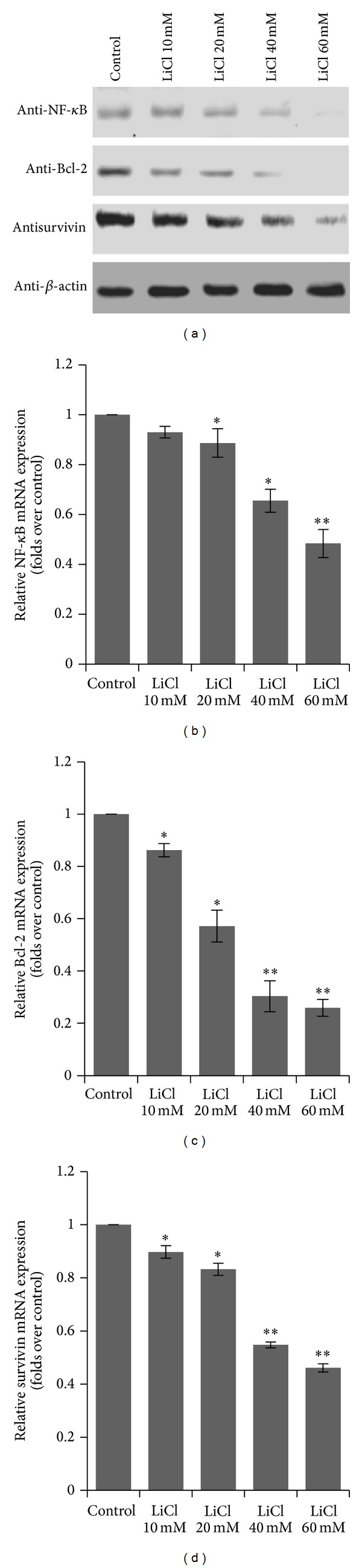
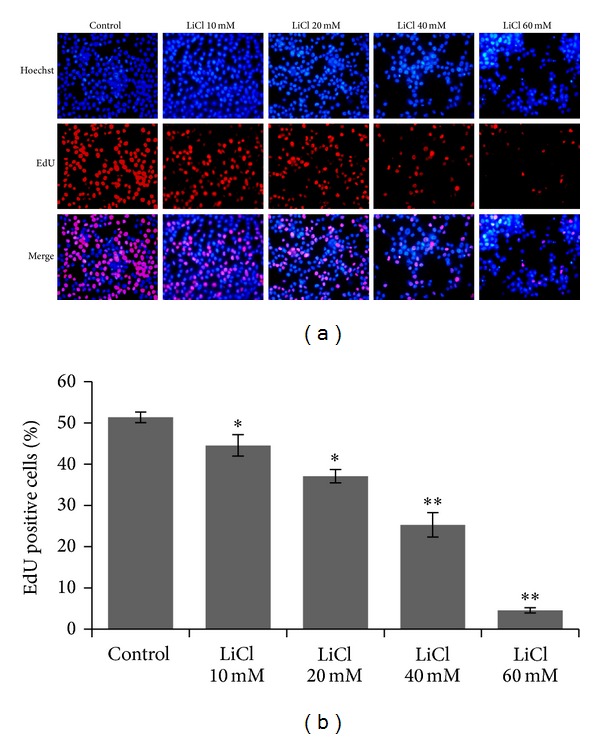
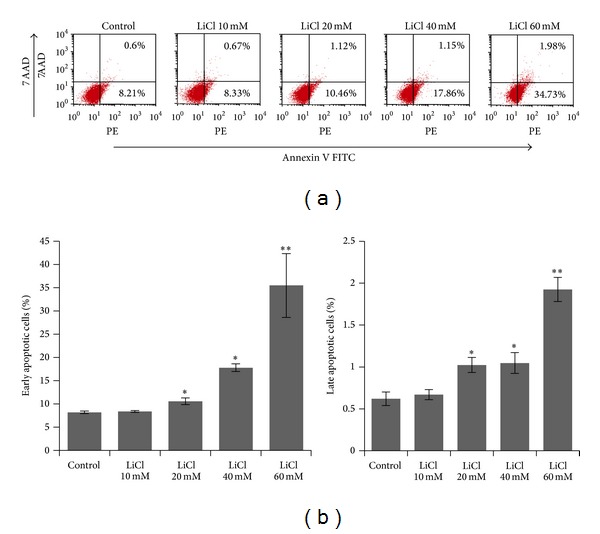
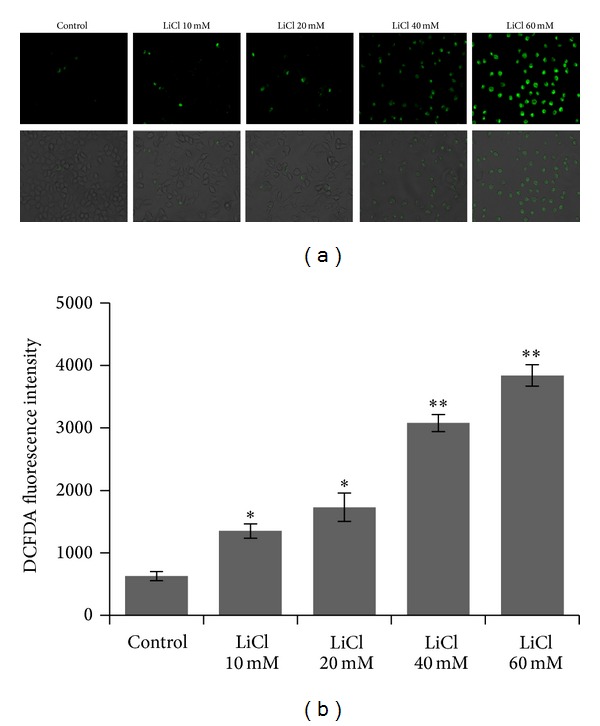
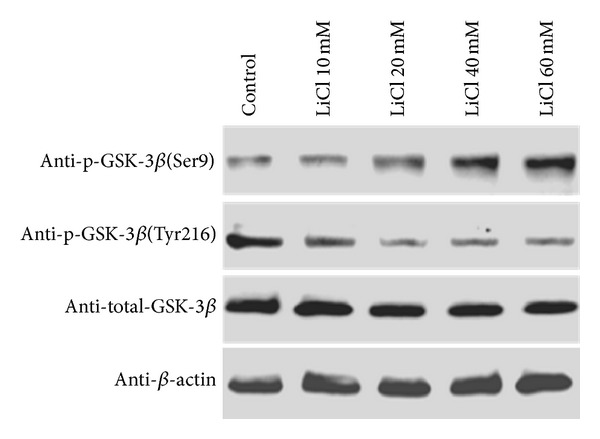
Glycogen synthase kinase-3β (GSK-3β), a serine/threonine protein kinase, has been regarded as a potential therapeutic target for multiple human cancers. In addition, oxidative stress is closely related to all aspects of cancer. We sought to determine the biological function of lithium, one kind of GSK-3β inhibitors, in the process of reactive oxygen species (ROS) production in colorectal cancer. In this study, we analyzed the cell apoptosis and proliferation by cell viability, EdU, and flow cytometry assays through administration of LiCl. We used polymerase chain reaction and Western blotting to establish the effect of GSK-3β inhibition on the nuclear factor-κB (NF-κB) pathway. Results showed administration of LiCl increased apoptosis and the level of ROS in colorectal cancer cells. Furthermore, the underlying mechanisms could be mediated by the reduction of NF-κB expression and NF-κB-mediated transcription. Taken together, our results demonstrated that therapeutic targeting of ROS/GSK-3β/NF-κB pathways may be an effective way for colorectal cancer intervention, although further preclinical and clinical testing are desirable.
糖原合酶激酶-3β(GSK-3β)是一种丝氨酸/苏氨酸蛋白激酶,已被视为多种人类癌症的潜在治疗靶点。此外,氧化应激与癌症的各个方面密切相关。我们试图确定GSK-3β抑制剂之一锂在结直肠癌活性氧(ROS)产生过程中的生物学功能。在本研究中,我们通过给予LiCl,采用细胞活力、EdU和流式细胞术分析细胞凋亡和增殖情况。我们使用聚合酶链反应和蛋白质免疫印迹法来确定抑制GSK-3β对核因子-κB(NF-κB)通路的影响。结果显示,给予LiCl可增加结直肠癌细胞的凋亡和ROS水平。此外,其潜在机制可能是通过降低NF-κB表达和NF-κB介导的转录来介导的。综上所述,我们的结果表明,尽管需要进一步的临床前和临床试验,但靶向ROS/GSK-3β/NF-κB通路进行治疗可能是干预结直肠癌的有效方法。