Lahti Leo, Salojärvi Jarkko, Salonen Anne, Scheffer Marten, de Vos Willem M
1] Department of Veterinary Biosciences, University of Helsinki, PO Box 66, FI-00014 Helsinki, Finland [2] Laboratory of Microbiology, Wageningen University, PO Box 8033, 6700 EJ Wageningen, The Netherlands.
1] Department of Veterinary Biosciences, University of Helsinki, PO Box 66, FI-00014 Helsinki, Finland [2].
Nat Commun. 2014 Jul 8;5:4344. doi: 10.1038/ncomms5344.
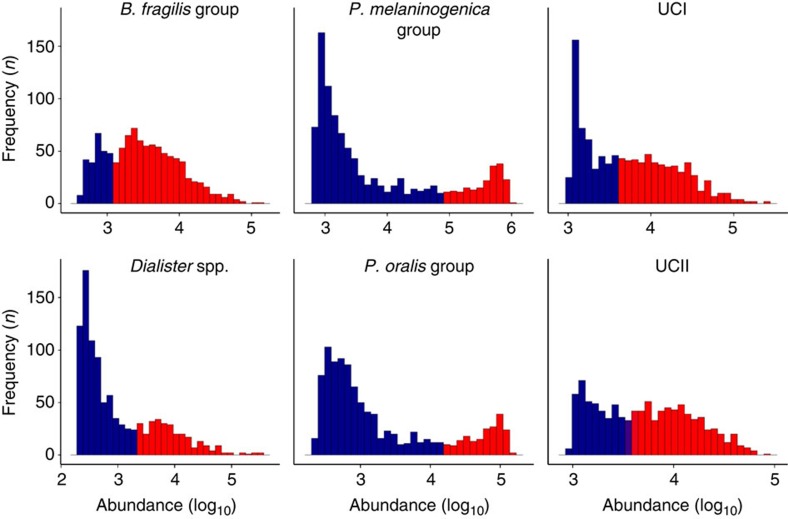
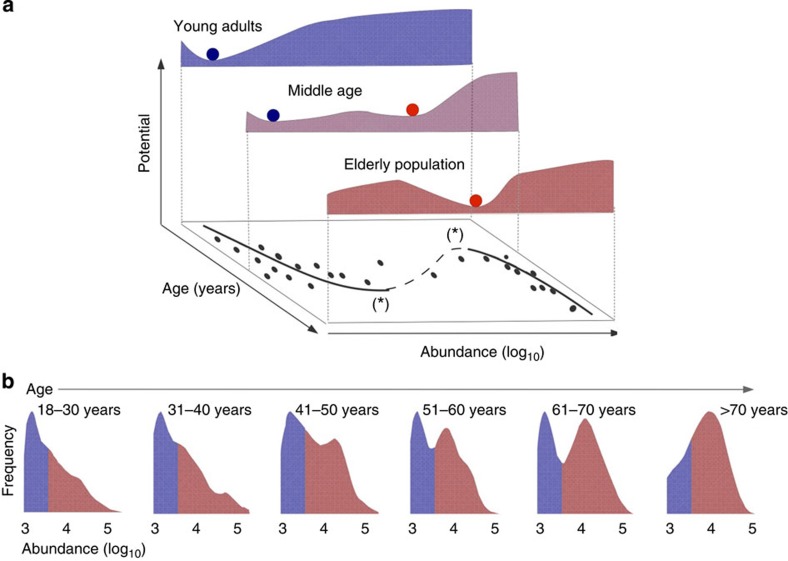
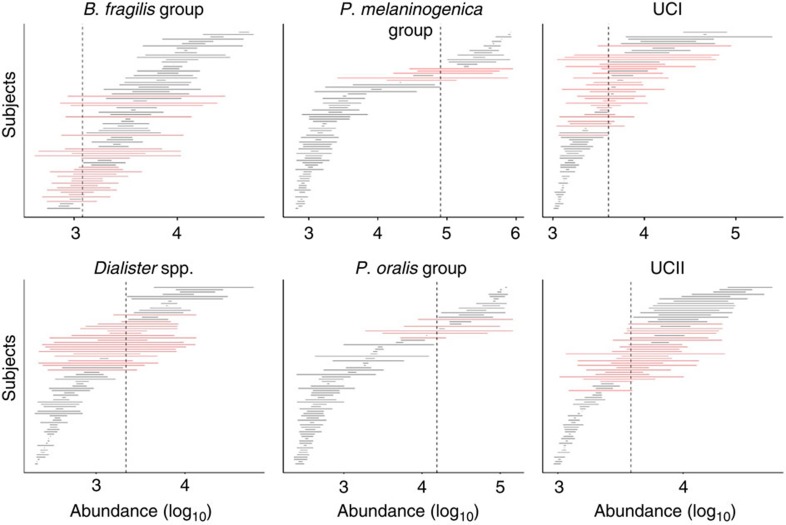
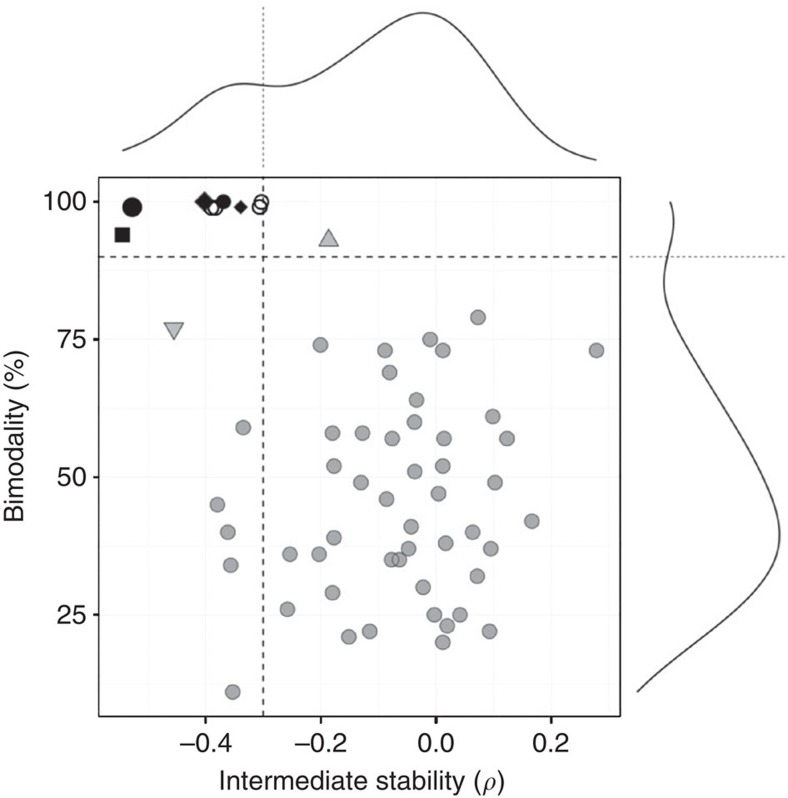
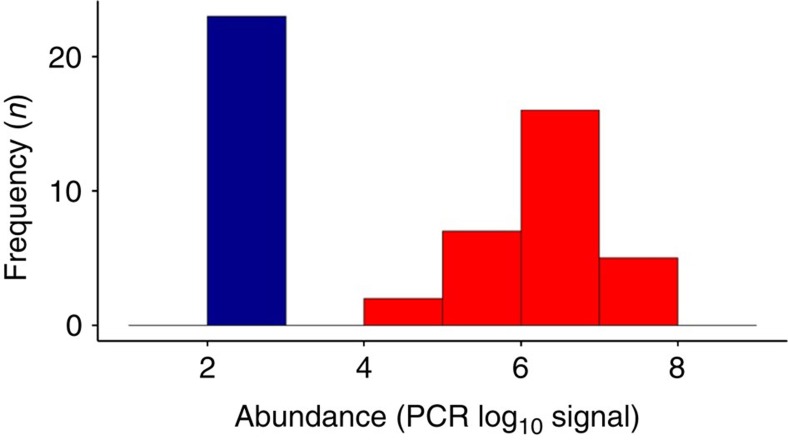
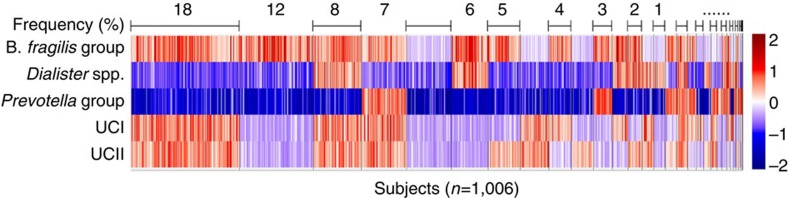
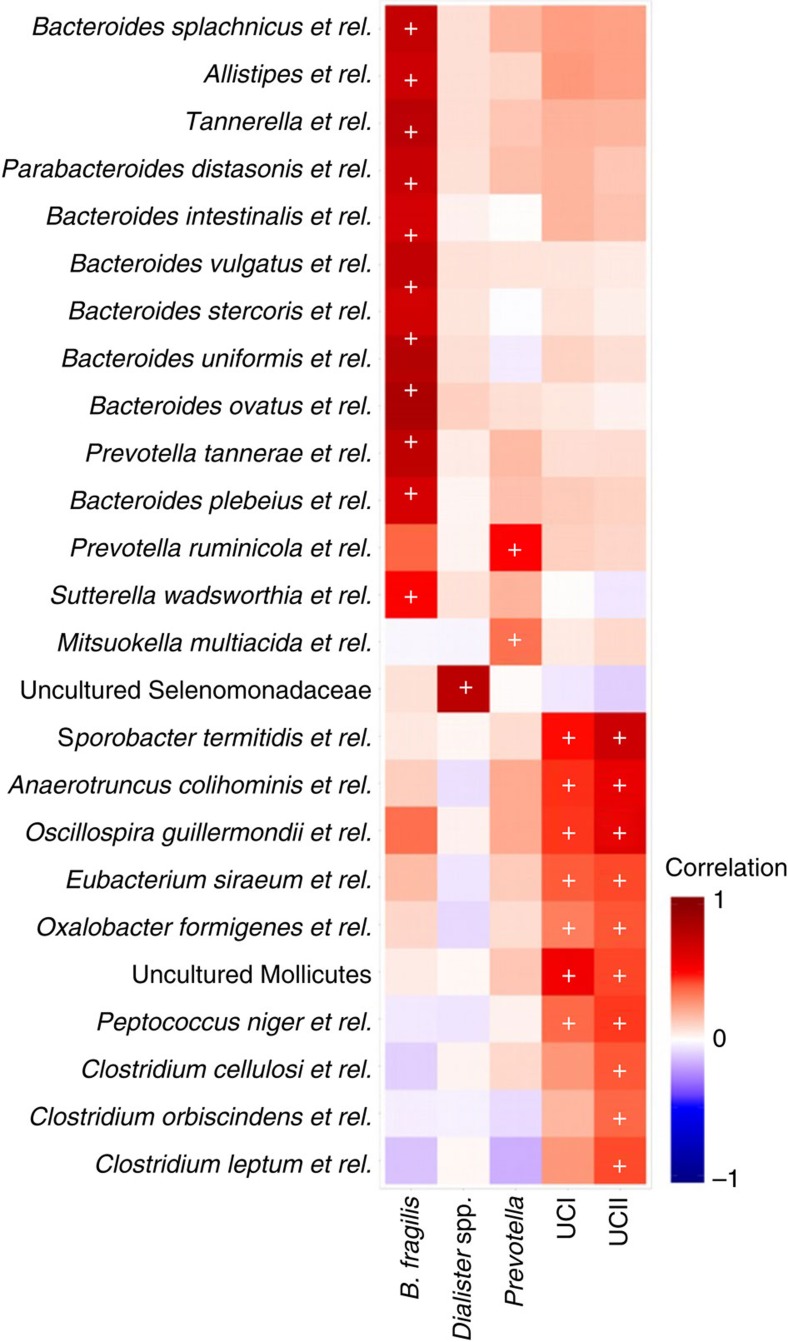
The microbial communities living in the human intestine can have profound impact on our well-being and health. However, we have limited understanding of the mechanisms that control this complex ecosystem. Here, based on a deep phylogenetic analysis of the intestinal microbiota in a thousand western adults, we identify groups of bacteria that exhibit robust bistable abundance distributions. These bacteria are either abundant or nearly absent in most individuals, and exhibit decreased temporal stability at the intermediate abundance range. The abundances of these bimodally distributed bacteria vary independently, and their abundance distributions are not affected by short-term dietary interventions. However, their contrasting alternative states are associated with host factors such as ageing and overweight. We propose that the bistable groups reflect tipping elements of the intestinal microbiota, whose critical transitions may have profound health implications and diagnostic potential.
生活在人类肠道中的微生物群落会对我们的幸福和健康产生深远影响。然而,我们对控制这个复杂生态系统的机制了解有限。在此,基于对一千名西方成年人肠道微生物群的深度系统发育分析,我们识别出了呈现出稳健双稳态丰度分布的细菌群。这些细菌在大多数个体中要么大量存在,要么几乎不存在,并且在中等丰度范围内表现出较低的时间稳定性。这些双峰分布细菌的丰度独立变化,其丰度分布不受短期饮食干预的影响。然而,它们截然不同的替代状态与衰老和超重等宿主因素有关。我们提出,双稳态菌群反映了肠道微生物群的临界点,其关键转变可能对健康有深远影响并有诊断潜力。