Hohl Mathias, Linz Benedikt, Böhm Michael, Linz Dominik
Klinik fur Innere Medizin III, Kardiologie, Angiologie und Internistische Intensivmedizin, Universitatsklinikum des Saarlandes, Kirrberger Str. 1, Geb. 40, D-66421 Homburg/ Saar, Germany.
Curr Cardiol Rev. 2014 Nov;10(4):362-8. doi: 10.2174/1573403x1004140707125137.
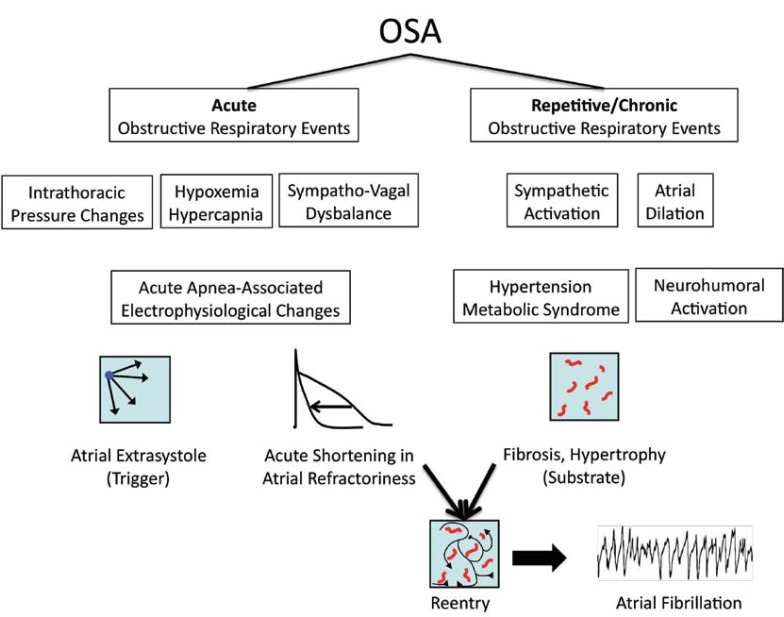
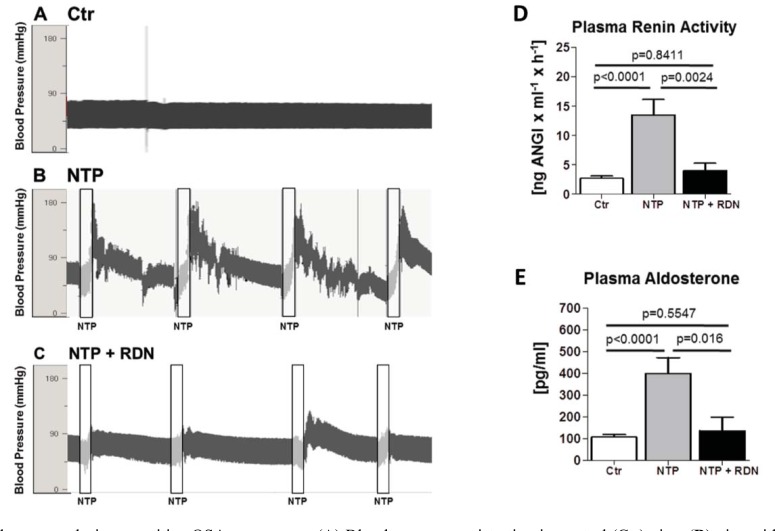
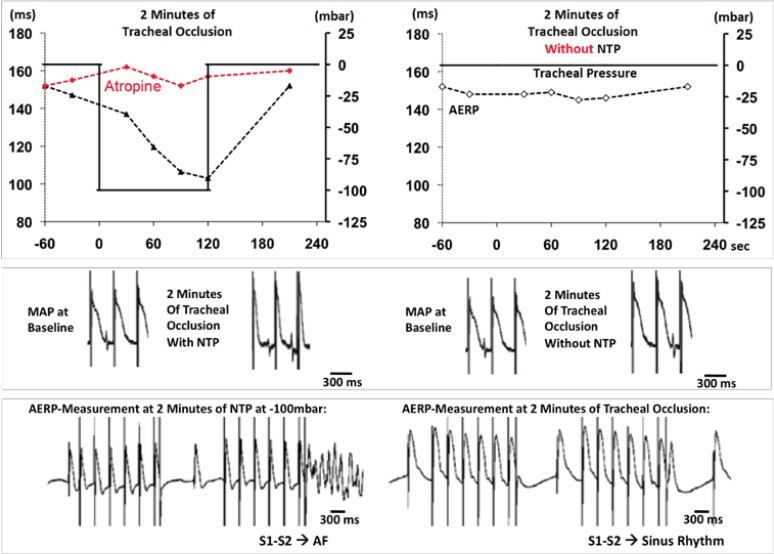
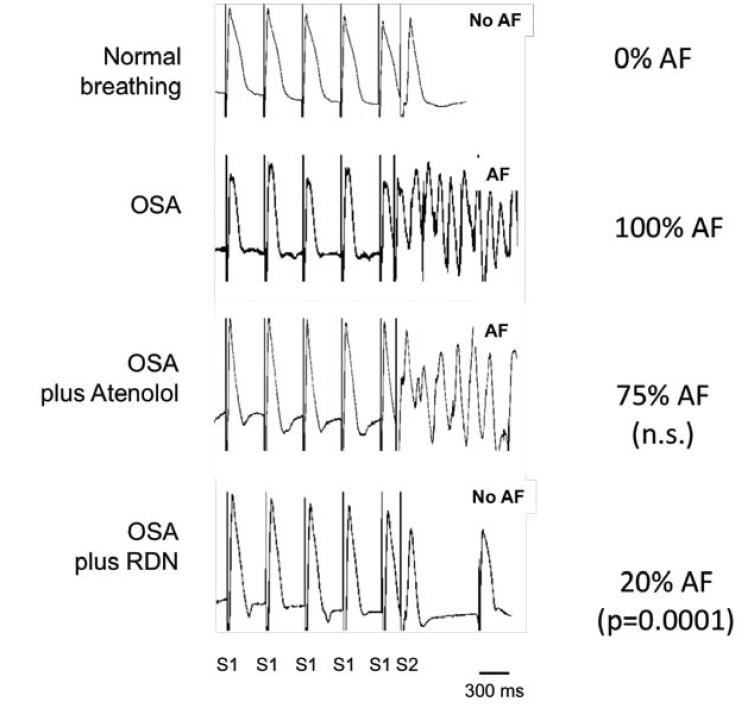
Atrial fibrillation (AF) is the most common sustained arrhythmia and is associated with relevant morbidity and mortality. Besides hypertension, valvular disease and cardiomyopathy, mainly ischemic and dilated, also other conditions like obesity, alcohol abusus, genetic factors and obstructive sleep apnea (OSA) are discussed to contribute to the progression from paroxysmal to persistent AF. The prevalence of OSA among patients with AF is 40-50%. OSA is characterized by periodic or complete cessation of effective breathing during sleep due to obstruction of the upper airways. Obstructive respiratory events result in acute intrathoracic pressure swings and profound changes in blood gases together leading to atrial stretch and acute sympatho-vagal dysbalance resulting in acute apnea related to electrophysiological and hemodynamic alterations. Additionally, repetitive obstructive events in patients with OSA may lead to sympathetic and neurohumoral activation and subsequent structural and functional changes in the atrium creating an arrhythmogenic substrate for AF in the long run. This review focuses on the acute and chronic effects of negative thoracic pressure swings, changes in blood pressure and sympatho-vagal dysbalance induced by obstructive respiratory events on atrial electrophysiology and atrial structure in patients with obstructive sleep apnea.
心房颤动(AF)是最常见的持续性心律失常,与相关的发病率和死亡率相关。除了高血压、瓣膜病和心肌病(主要是缺血性和扩张性心肌病)外,肥胖、酗酒、遗传因素和阻塞性睡眠呼吸暂停(OSA)等其他情况也被认为会促使阵发性房颤发展为持续性房颤。房颤患者中OSA的患病率为40%-50%。OSA的特征是睡眠期间由于上呼吸道阻塞导致有效呼吸周期性或完全停止。阻塞性呼吸事件导致急性胸内压力波动和血气的深刻变化,共同导致心房牵张和急性交感-迷走神经失衡,从而导致与电生理和血流动力学改变相关的急性呼吸暂停。此外,OSA患者反复出现的阻塞性事件可能导致交感神经和神经体液激活,以及随后心房的结构和功能变化,从长远来看,为房颤形成致心律失常基质。本综述重点关注阻塞性呼吸事件引起的胸内负压波动、血压变化和交感-迷走神经失衡对阻塞性睡眠呼吸暂停患者心房电生理和心房结构的急性和慢性影响。