Schneeweiss Andreas, Chia Stephen, Hegg Roberto, Tausch Christoph, Deb Rahul, Ratnayake Jayantha, McNally Virginia, Ross Graham, Kiermaier Astrid, Cortés Javier
Breast Cancer Res. 2014 Jul 8;16(4):R73. doi: 10.1186/bcr3690.
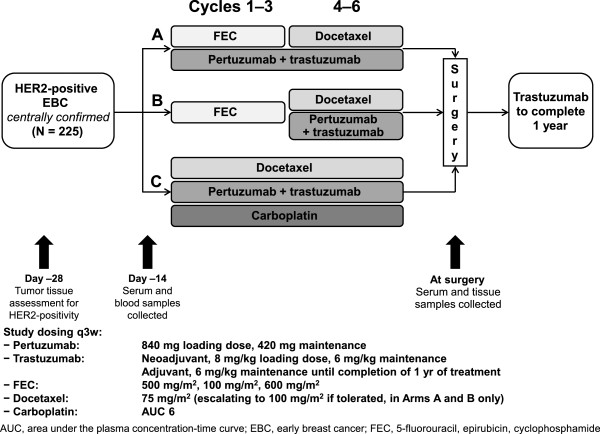
Molecular markers that predict responses to particular therapies are invaluable for optimization of patient treatment. The TRYPHAENA study showed that pertuzumab and trastuzumab with chemotherapy was an efficacious and tolerable combination for patients with human epidermal growth factor receptor 2 (HER2)-positive breast cancer in the neoadjuvant setting. We analyzed whether particular biomarkers correlated with the responses observed and therefore may predict outcomes in patients given pertuzumab plus trastuzumab.
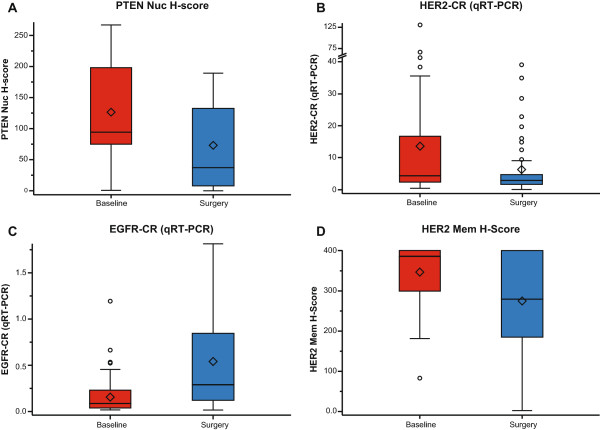
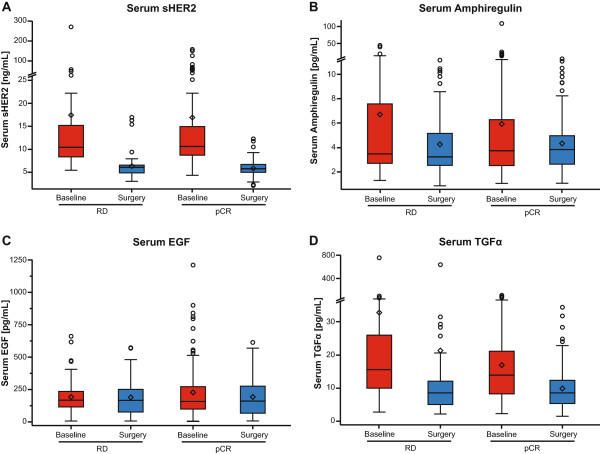
We describe the analysis of a panel of biomarkers including HER2, human epidermal growth factor receptor 3 (HER3), epidermal growth factor receptor (EGFR), phosphatase and tensin homolog (PTEN), and phosphatidylinositol-4,5-bisphosphate 3-kinase catalytic subunit alpha (PIK3CA) by qRT-PCR, immunohistochemistry (IHC), fluorescence in situ hybridization (FISH), enzyme-linked immunosorbent assay (ELISA), and PCR-based mutational analyses as appropriate. For each marker analyzed, patients were categorized into 'low' (generally below median) or 'high' (generally above median) subgroups at baseline and post-treatment.
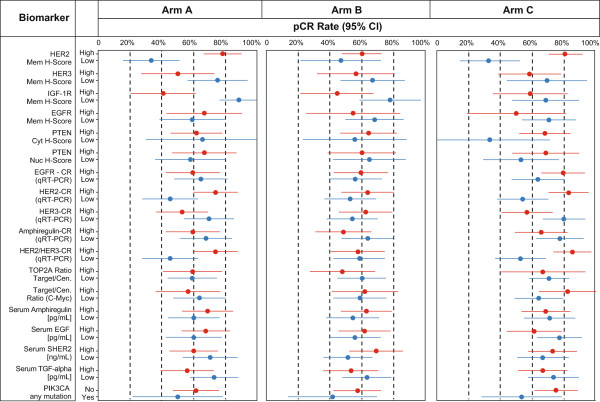
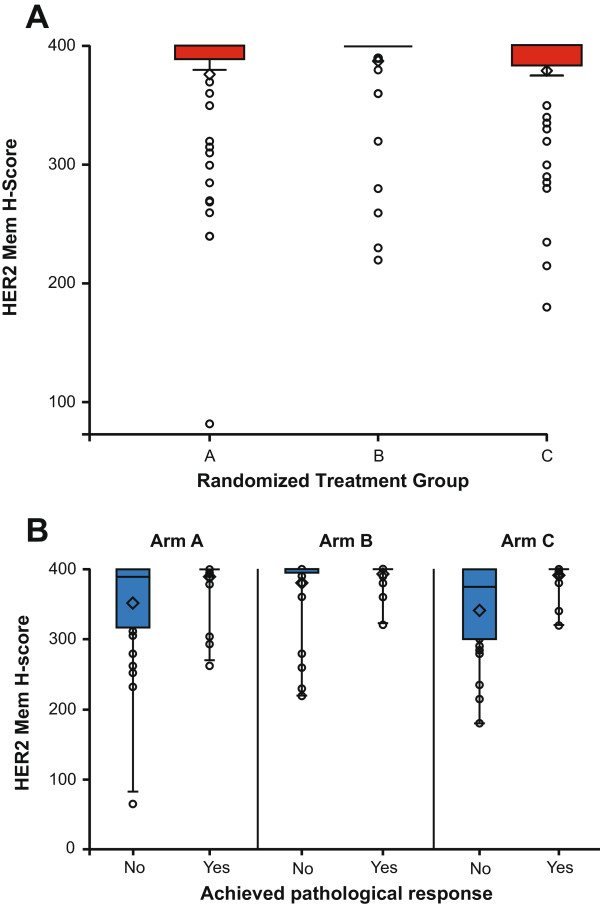
Correlation of marker subgroups with the achievement of a pathological complete response (pCR) (ypT0/is) was analyzed. HER2 protein and mRNA expression levels were associated with pCR rate in two of the three study arms and the pooled analyses. Correlations of biomarker status with pCR occurred in one individual arm only and the pooled analyses with EGFR and PTEN; however, interpretation of these results is limited by a strong imbalance in patient numbers between the high and low subgroups and inconsistency between arms. We also found no association between expression levels of TOP2A and pCR rate in either the anthracycline-containing or free arms of TRYPHAENA.
According to these analyses, and in line with other analyses of pertuzumab and trastuzumab in the neoadjuvant setting, we conclude that HER2 expression remains the only marker suitable for patient selection for this regimen at present.
The TRYPHAENA study was registered with ClinicalTrials.gov, NCT00976989, on September 14 2009.
预测对特定疗法反应的分子标志物对于优化患者治疗至关重要。TRYPHAENA研究表明,在新辅助治疗中,帕妥珠单抗、曲妥珠单抗联合化疗对于人表皮生长因子受体2(HER2)阳性乳腺癌患者是一种有效且耐受性良好的联合治疗方案。我们分析了特定生物标志物是否与观察到的反应相关,因此是否可以预测接受帕妥珠单抗加曲妥珠单抗治疗患者的预后。
我们描述了通过定量逆转录聚合酶链反应(qRT-PCR)、免疫组织化学(IHC)、荧光原位杂交(FISH)、酶联免疫吸附测定(ELISA)以及适当的基于PCR的突变分析,对一组生物标志物进行分析,这些生物标志物包括HER2、人表皮生长因子受体3(HER3)、表皮生长因子受体(EGFR)、磷酸酶和张力蛋白同源物(PTEN)以及磷脂酰肌醇-4,5-二磷酸3-激酶催化亚基α(PIK3CA)。对于每个分析的标志物,患者在基线和治疗后被分为“低”(一般低于中位数)或“高”(一般高于中位数)亚组。
分析了标志物亚组与达到病理完全缓解(pCR)(ypT0/is)之间的相关性。在三个研究组中的两个组以及汇总分析中,HER2蛋白和mRNA表达水平与pCR率相关。生物标志物状态与pCR的相关性仅在一个单独的研究组以及EGFR和PTEN的汇总分析中出现;然而,这些结果的解释受到高、低亚组之间患者数量严重不平衡以及各研究组之间不一致性的限制。我们还发现,在TRYPHAENA研究中,无论含蒽环类药物组还是不含蒽环类药物组,TOP2A的表达水平与pCR率之间均无关联。
根据这些分析,并与新辅助治疗中帕妥珠单抗和曲妥珠单抗的其他分析结果一致,我们得出结论,目前HER2表达仍然是该治疗方案患者选择的唯一合适标志物。
TRYPHAENA研究于2009年9月14日在ClinicalTrials.gov注册,注册号为NCT00976989。