Okungu Vincent, Gilson Lucy
KEMRI-Wellcome Trust Research Programme, P,O, Box 230, Kilifi, Kenya.
Malar J. 2014 Jul 8;13:258. doi: 10.1186/1475-2875-13-258.
Widespread parasite resistance to first-line treatment for uncomplicated malaria leads to introduction of new drug interventions. Introducing such interventions is complex and sensitive because of stakeholder interests and public resistance. To enhance take up of such interventions, health policy communication strategies need to deliver accurate and accessible information to empower communities with necessary information and address problems of cultural acceptance of new interventions.
To explore community understanding of policy changes in first-line treatment for uncomplicated malaria in Kenya; to evaluate the potential role of policy communication in influencing responses to changes in first-line treatment policy.
Data collection involved qualitative strategies in a remote district in the Kenyan Coast: in-depth interviews (n = 29), focus group discussions (n = 14), informal conversations (n = 11) and patient narratives (n = 8). Constant comparative method was used in the analysis. Being malaria-prone and remotely located, the district offered an ideal area to investigate whether or not and how policy communication about a matter as critical as change of treatment policy reaches vulnerable populations.
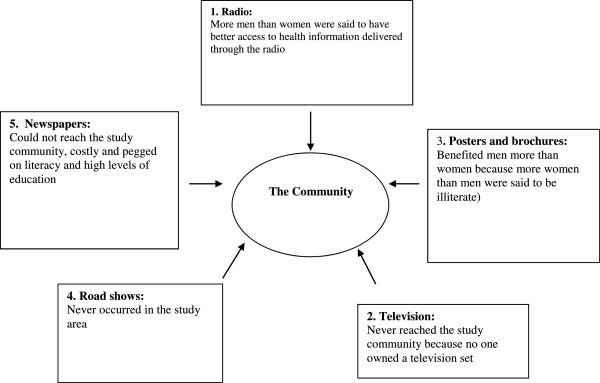
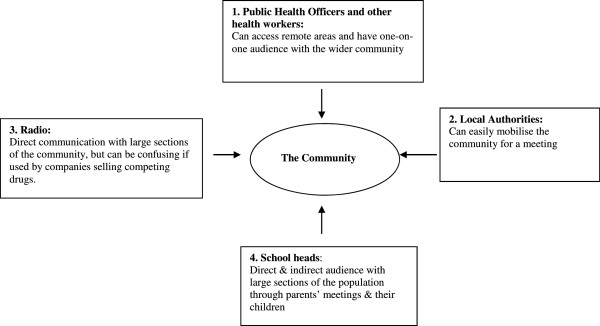
Three years after initial implementation (2009), there was limited knowledge or understanding regarding change of first-line treatment from sulphadoxine-pyrimethamine (SP) to artemether-lumefantrine (AL) for treatment of uncomplicated malaria in the study district. The print and electronic media used to create awareness about the drug change appeared to have had little impact. Although respondents were aware of the existence of AL, the drug was known neither by name nor as the official first-line treatment. Depending on individuals or groups, AL was largely viewed negatively. The weaknesses in communication strategy surrounding the change to AL included poor choice of communication tools, confusing advertisements of other drugs and conflicts between patients and providers.
Effective health policy communication is important for the uptake of new drug interventions and adherence to treatment regimens. Besides, prompt access to effective treatment may not be achieved if beneficiaries are not adequately informed about treatment policy changes. Future changes in treatment policy should ensure that the communication strategy is designed to pass sustained, accurate and effective messages that account for local contexts.
广泛存在的寄生虫对单纯性疟疾一线治疗产生耐药性,促使引入新的药物干预措施。由于利益相关者的利益和公众的抵触情绪,引入此类干预措施既复杂又敏感。为了提高对此类干预措施的接受度,卫生政策传播策略需要提供准确且易于获取的信息,使社区能够获得必要信息,并解决新干预措施在文化接受方面的问题。
探讨肯尼亚社区对单纯性疟疾一线治疗政策变化的理解;评估政策传播在影响对一线治疗政策变化的反应方面的潜在作用。
在肯尼亚海岸的一个偏远地区采用定性策略收集数据:深度访谈(n = 29)、焦点小组讨论(n = 14)、非正式交谈(n = 11)和患者叙述(n = 8)。分析采用持续比较法。该地区疟疾高发且地处偏远,为调查关于治疗政策变化这一关键问题的政策传播是否以及如何传达给弱势群体提供了理想区域。
在首次实施(2009年)三年后,研究地区对于单纯性疟疾一线治疗从磺胺多辛 - 乙胺嘧啶(SP)改为蒿甲醚 - 本芴醇(AL)的政策变化,了解或理解有限。用于提高对药物变化认识的印刷和电子媒体似乎影响甚微。尽管受访者知晓AL的存在,但既不知道该药物的名称,也不知道它是官方一线治疗药物。根据个人或群体的不同,AL在很大程度上被负面看待。围绕改用AL的传播策略存在的弱点包括传播工具选择不当、其他药物广告混乱以及患者与医疗服务提供者之间的冲突。
有效的卫生政策传播对于新药干预措施的采用和治疗方案的依从性很重要。此外,如果受益人群未充分了解治疗政策变化,可能无法及时获得有效治疗。未来的治疗政策变化应确保传播策略旨在传递考虑当地情况的持续、准确和有效的信息。