Lyn Rodney K, Singaravelu Ragunath, Kargman Stacia, O'Hara Shifawn, Chan Helen, Oballa Renata, Huang Zheng, Jones Daniel M, Ridsdale Andrew, Russell Rodney S, Partridge Anthony W, Pezacki John Paul
1] National Research Council of Canada, Ottawa, Ontario, Canada [2] Department of Chemistry, Microbiology and Immunology, University of Ottawa, Ottawa, Canada.
1] National Research Council of Canada, Ottawa, Ontario, Canada [2] Department of Biochemistry, Microbiology and Immunology, University of Ottawa, Ottawa, Canada.
Sci Rep. 2014 Apr 1;4:4549. doi: 10.1038/srep04549.
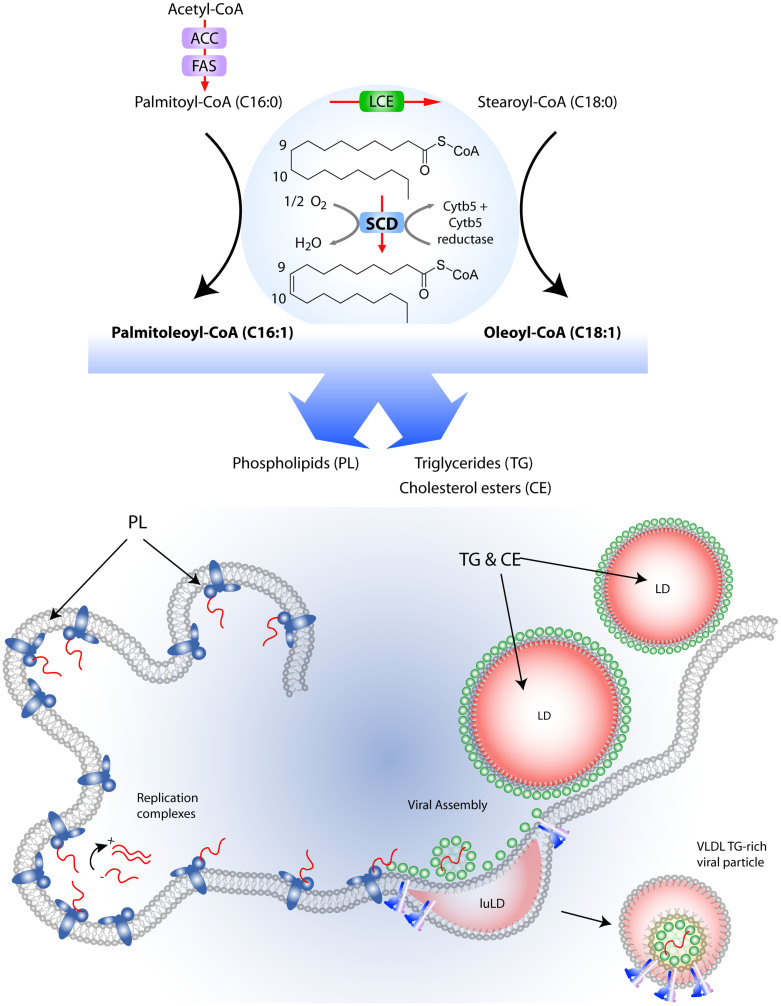
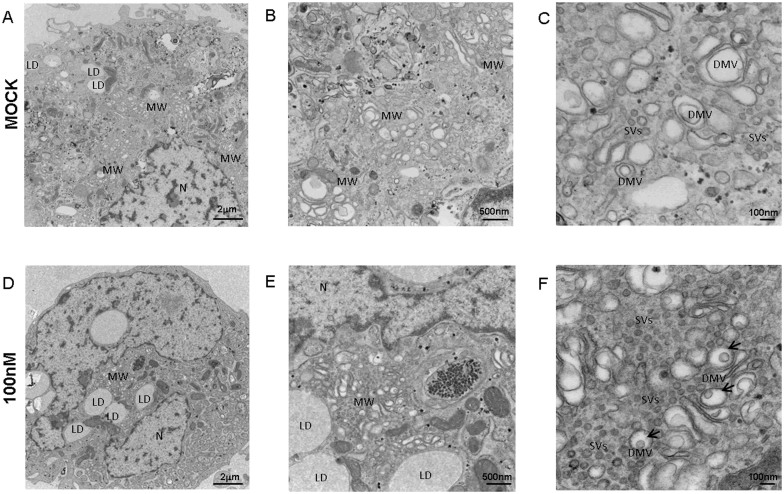
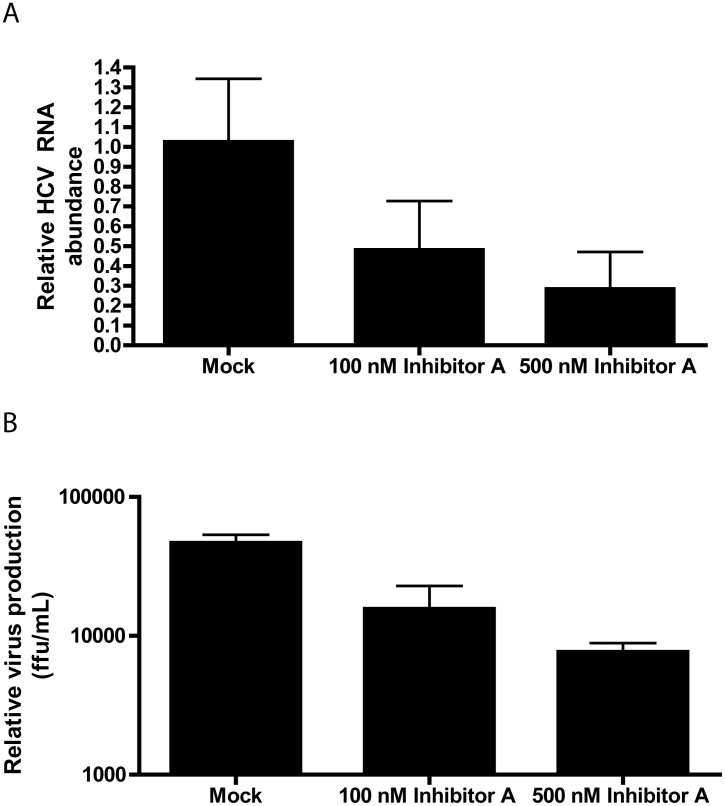
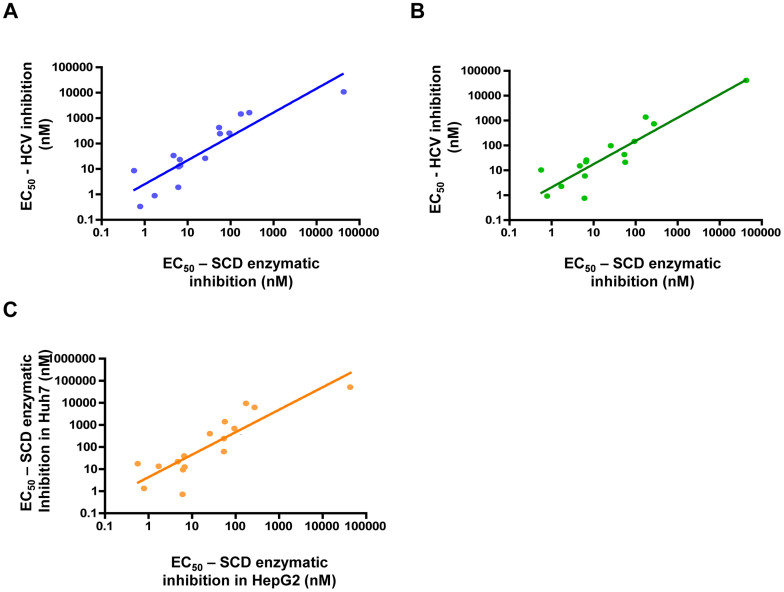
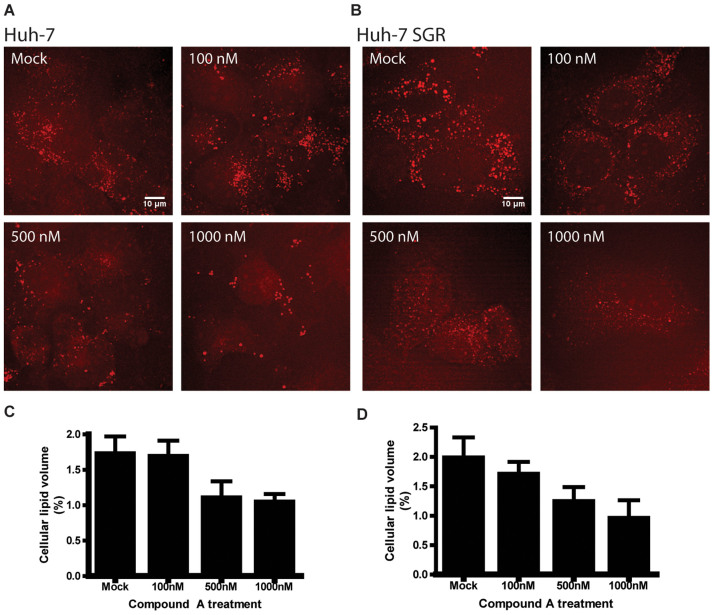
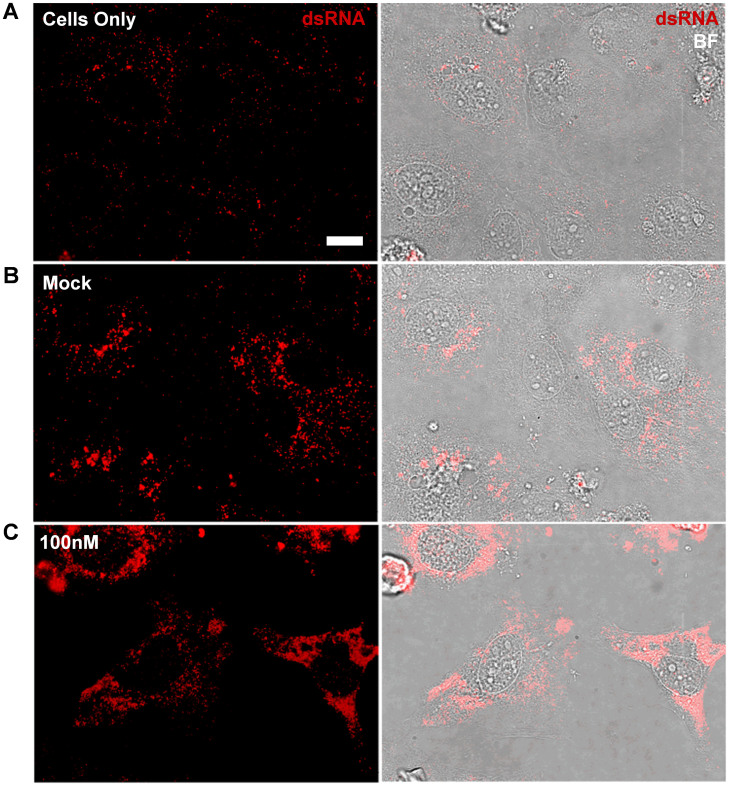
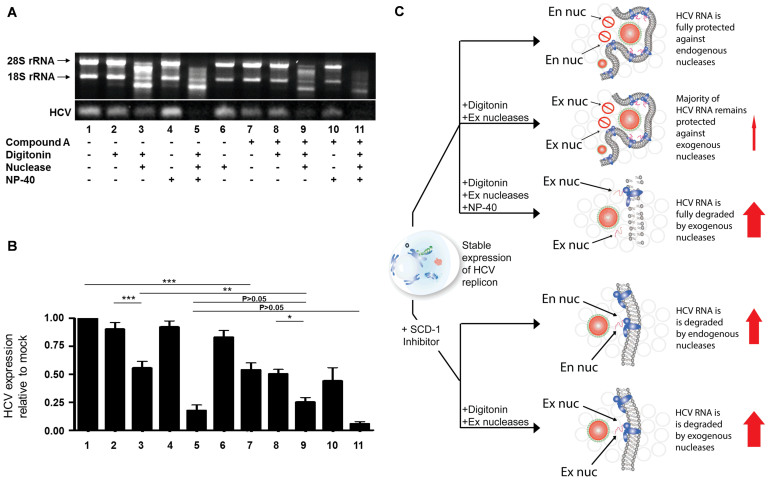
Hepatitis C virus (HCV) replication is dependent on the formation of specialized membrane structures; however, the host factor requirements for the formation of these HCV complexes remain unclear. Herein, we demonstrate that inhibition of stearoyl-CoA desaturase 1 (SCD-1) halts the biosynthesis of unsaturated fatty acids, such as oleic acid, and negatively modulates HCV replication. Unsaturated fatty acids play key roles in membrane curvature and fluidity. Mechanistically, we demonstrate that SCD-1 inhibition disrupts the integrity of membranous HCV replication complexes and renders HCV RNA susceptible to nuclease-mediated degradation. Our work establishes a novel function for unsaturated fatty acids in HCV replication.
丙型肝炎病毒(HCV)的复制依赖于特殊膜结构的形成;然而,这些HCV复合物形成所需的宿主因子仍不清楚。在此,我们证明抑制硬脂酰辅酶A去饱和酶1(SCD-1)会阻止不饱和脂肪酸(如油酸)的生物合成,并对HCV复制产生负调节作用。不饱和脂肪酸在膜曲率和流动性中起关键作用。从机制上讲,我们证明SCD-1抑制会破坏膜性HCV复制复合物的完整性,并使HCV RNA易受核酸酶介导的降解。我们的工作确立了不饱和脂肪酸在HCV复制中的新功能。