Guo Yong-Qing, Zheng Li-Na, Wei Jian-Feng, Hou Xiao-Lai, Yu Shu-Zhen, Zhang Wei-Wei, Jing Jian-Min
Department of Anesthesiology, Shanxi Provincial People's Hospital, Taiyuan, Shanxi 030012, P.R. China.
Exp Ther Med. 2014 Aug;8(2):657-661. doi: 10.3892/etm.2014.1757. Epub 2014 Jun 4.
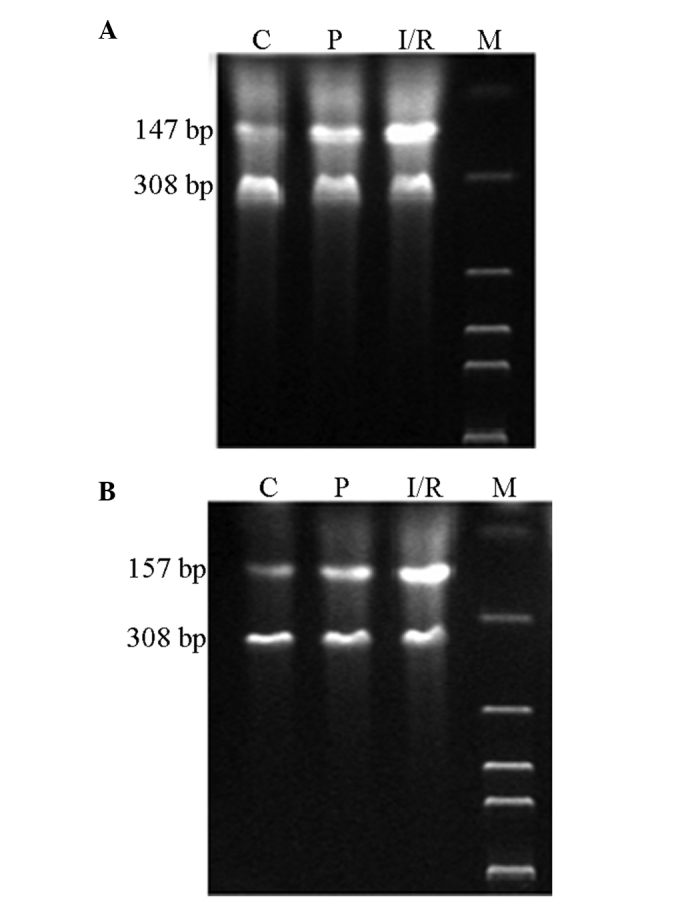
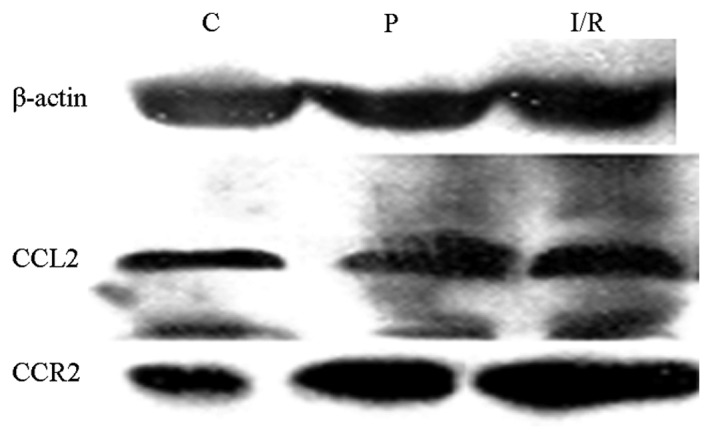
The aim of the present study was to determine the roles of the chemotactic factor, chemokine ligand 2 (CCL2), and its receptor, chemokine receptor type 2 (CCR2), in the hippocampus of rats with cerebral ischemia/reperfusion injury. In total, 24 Sprague-Dawley rats, weighting 250-300 g, were randomly divided into three groups (n=8): Sham-operated (C group), cerebral ischemia/reperfusion injury (I/R group) and propofol-intervention (P group) groups. The rats were sacrificed at 6 h after the ischemia/reperfusion surgery, and the brains were obtained to isolate the hippocampus. The mRNA expression levels of CCL2 and CCR2 in the hippocampus were analyzed by quantitative polymerase chain reaction, while the protein expression levels of CCL2 and CCR2 were determined by western blot analysis. The expression levels of CCL2 and CCR2 in the procerebrum were markedly elevated in the I/R and P groups at 6 h after the ischemia/reperfusion surgery when compared with the C group (P<0.05). In addition, the mRNA expression levels of CCL2 and CCR2 decreased significantly in the P group as compared with that in the I/R group (P<0.05). Therefore, CCL2 and CCR2 may be involved in the mechanisms underlying cerebral ischemia/reperfusion injury, and propofol may protect the brain through regulating the expression of CCL2 and CCR2.
本研究的目的是确定趋化因子、趋化因子配体2(CCL2)及其受体趋化因子受体2型(CCR2)在脑缺血/再灌注损伤大鼠海马中的作用。总共24只体重250 - 300克的Sprague-Dawley大鼠被随机分为三组(n = 8):假手术组(C组)、脑缺血/再灌注损伤组(I/R组)和丙泊酚干预组(P组)。在缺血/再灌注手术后6小时处死大鼠,获取大脑以分离海马。通过定量聚合酶链反应分析海马中CCL2和CCR2的mRNA表达水平,同时通过蛋白质印迹分析测定CCL2和CCR2的蛋白质表达水平。与C组相比,I/R组和P组在缺血/再灌注手术后6小时大脑前叶中CCL2和CCR2的表达水平显著升高(P < 0.05)。此外,与I/R组相比,P组中CCL2和CCR2的mRNA表达水平显著降低(P < 0.05)。因此,CCL2和CCR2可能参与脑缺血/再灌注损伤的潜在机制,丙泊酚可能通过调节CCL2和CCR2的表达来保护大脑。