Hennigs Jan K, Müller Julia, Adam Matti, Spin Joshua M, Riedel Emilia, Graefen Markus, Bokemeyer Carsten, Sauter Guido, Huland Hartwig, Schlomm Thorsten, Minner Sarah
Department of Pathology, University Medical Center Hamburg-Eppendorf, Hamburg, Germany; Department of Internal Medicine II - Oncology, Hematology, BMT with Section Pneumology, Hubertus-Wald-Tumorzentrum/University Cancer Center Hamburg (UCCH) University Medical Center Hamburg-Eppendorf, Hamburg, Germany.
Department of Pathology, University Medical Center Hamburg-Eppendorf, Hamburg, Germany.
PLoS One. 2014 Jul 10;9(7):e100469. doi: 10.1371/journal.pone.0100469. eCollection 2014.
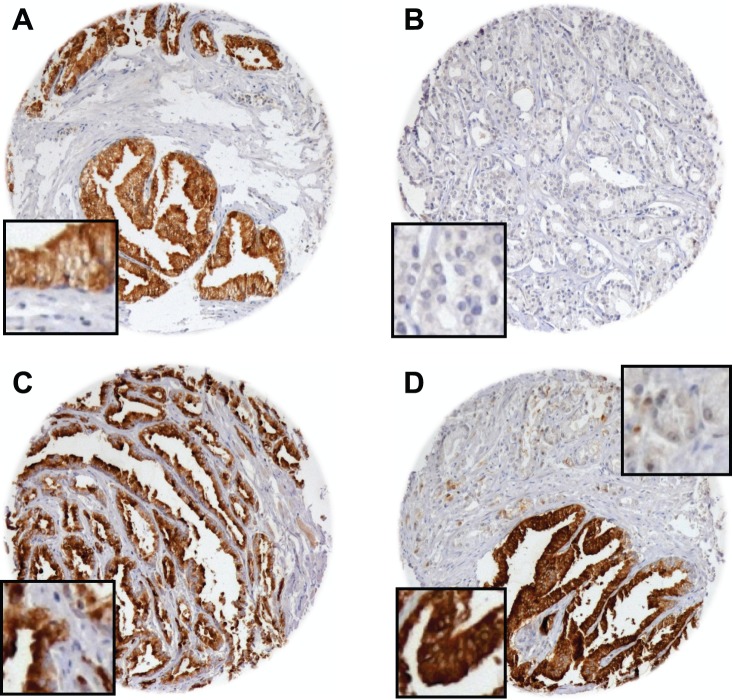
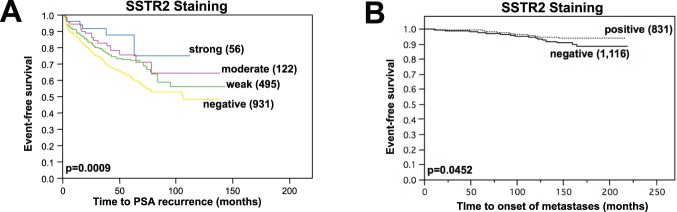
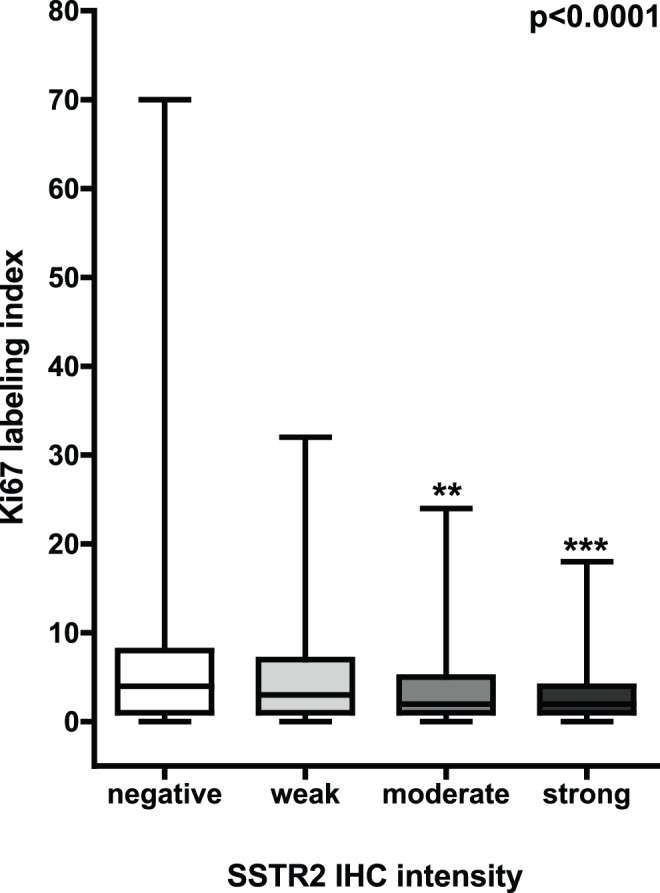
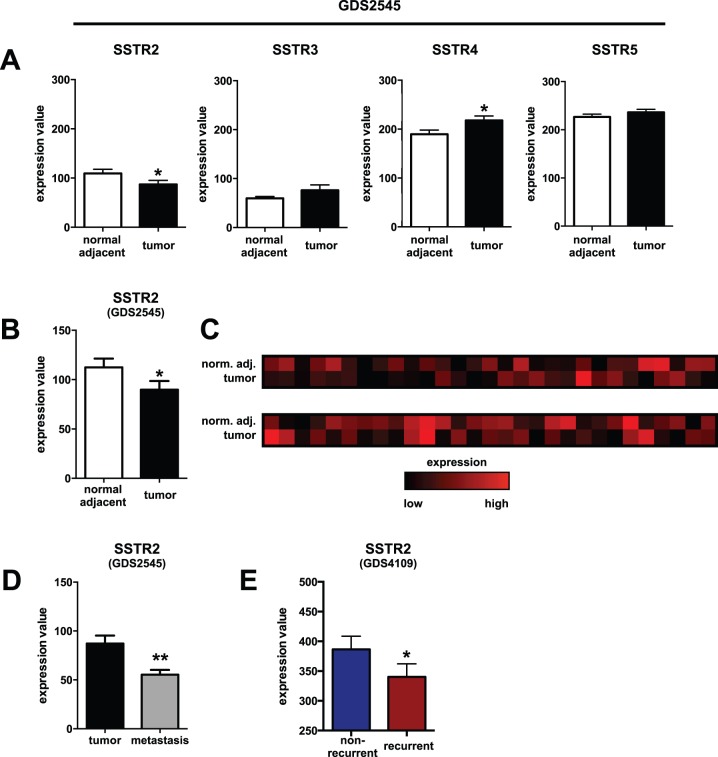
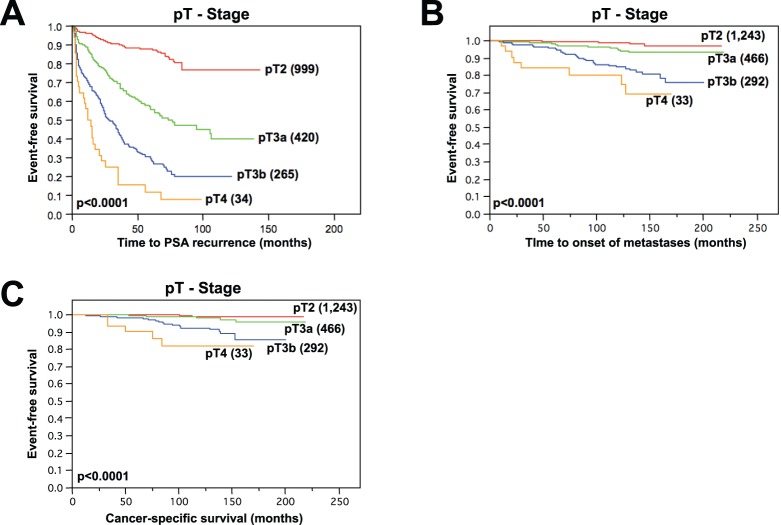
Somatostatin receptor subtype 2 (SSTR2) is the most frequently expressed SSTR subtype in normal human tissues. SSTR2 expression is differentially regulated in various tumor types and therapeutic somatostatin analogs binding to SSTR2 are in clinical use. In prostate cancers highly contradictory results in terms of SSTR2 expression and its consequences have been published over the past years. The aim of this study was to clarify prevalence and clinical significance of SSTR2 expression in prostate cancer. Therefore, quantitative immunohistochemistry (IHC) using a tissue microarray containing samples from 3,261 prostate cancer patients with extensive clinical and molecular cancer characteristics and oncological follow-up data was performed. IHC data was compared to publicly available Gene Expression Omnibus datasets of human prostate cancer gene expression arrays. While membranous SSTR2 staining was always seen in normal prostate epithelium, SSTR2 staining was absent in more than half (56.1%) of 2,195 interpretable prostate cancer samples. About 13% of all analyzed prostate cancers showed moderate to strong cytoplasmic and membranous SSTR2 staining. Staining intensities were inversely correlated with high Gleason grade, advanced pT category, high tumor cell proliferation (p<0.0001 each), high pre-operative PSA levels, (p = 0.0011) and positive surgical margins (p = 0.006). In silico analysis confirmed lower SSTR2 gene expression in prostate cancers vs. normal adjacent tissue (p = 0.0424), prostate cancer metastases vs. primary cancers (p = 0.0011) and recurrent vs. non-recurrent prostate cancers (p = 0.0438). PSA-free survival gradually declined with SSTR2 staining intensity (p<0.0001). SSTR2-negative cancers were more likely to develop metastases over time (p<0.05). In conclusion, most prostate cancers are indeed SSTR2-negative and loss of SSTR2 strongly predicts an unfavorable tumor phenotype and poor prognosis. Therefore, SSTR2 expression seems an important factor in the pathogenesis of prostate cancer and re-introduction of the receptor in SSTR2-negative prostate cancers may feature a promising target for novel gene therapy approaches.
生长抑素受体2型(SSTR2)是在正常人体组织中表达最频繁的SSTR亚型。SSTR2的表达在各种肿瘤类型中受到不同的调控,与SSTR2结合的治疗性生长抑素类似物已在临床中使用。在过去几年中,关于前列腺癌中SSTR2表达及其后果发表了高度矛盾的结果。本研究的目的是阐明SSTR2在前列腺癌中的患病率及其临床意义。因此,我们使用包含3261例前列腺癌患者样本的组织微阵列进行了定量免疫组织化学(IHC)检测,这些样本具有广泛的临床和分子癌症特征以及肿瘤学随访数据。将IHC数据与公开可用的人类前列腺癌基因表达阵列的基因表达综合数据库进行比较。虽然在正常前列腺上皮中总能看到膜性SSTR2染色,但在2195个可解释的前列腺癌样本中,超过一半(56.1%)的样本没有SSTR2染色。在所有分析的前列腺癌中,约13%显示中度至强的细胞质和膜性SSTR2染色。染色强度与高Gleason分级、晚期pT类别、高肿瘤细胞增殖(每项p<0.0001)、高术前PSA水平(p = 0.0011)和手术切缘阳性(p = 0.006)呈负相关。计算机分析证实,与相邻正常组织相比,前列腺癌中SSTR2基因表达较低(p = 0.0424),与原发性癌症相比,前列腺癌转移灶中SSTR2基因表达较低(p = 0.0011),与非复发性前列腺癌相比,复发性前列腺癌中SSTR2基因表达较低(p = 0.0438)。无PSA生存期随着SSTR2染色强度逐渐下降(p<0.0001)。随着时间的推移,SSTR2阴性癌症更有可能发生转移(p<0.05)。总之,大多数前列腺癌确实是SSTR2阴性,SSTR2的缺失强烈预示着不良的肿瘤表型和不良预后。因此,SSTR2表达似乎是前列腺癌发病机制中的一个重要因素,在SSTR2阴性前列腺癌中重新引入该受体可能是新型基因治疗方法的一个有前景的靶点。