Garijo Raquel, Hernández-Alonso Pablo, Rivas Carmen, Diallo Jean-Simon, Sanjuán Rafael
Instituto Cavanilles de Biodiversidad y Biologia Evolutiva, Universidad de Valencia, Valencia, Spain; Center for Innovative Cancer Research, Ottawa Hospital Research Institute, Ottawa, ON, Canada.
Instituto Cavanilles de Biodiversidad y Biologia Evolutiva, Universidad de Valencia, Valencia, Spain.
PLoS One. 2014 Jul 10;9(7):e102365. doi: 10.1371/journal.pone.0102365. eCollection 2014.
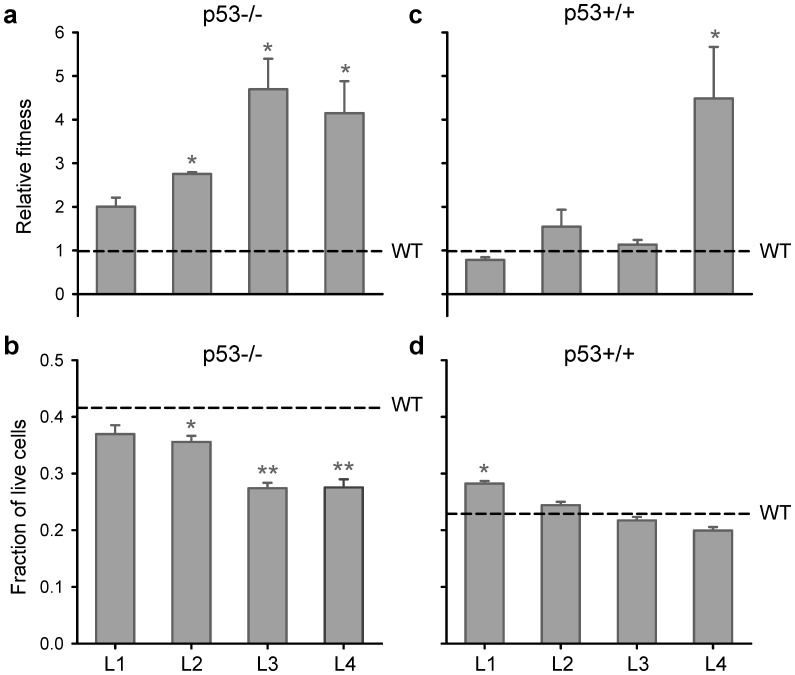
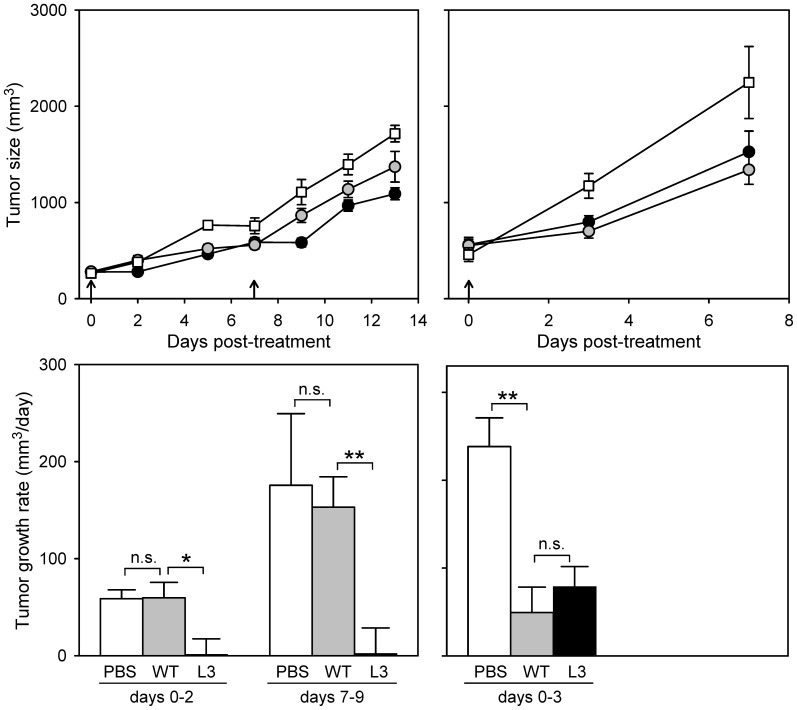
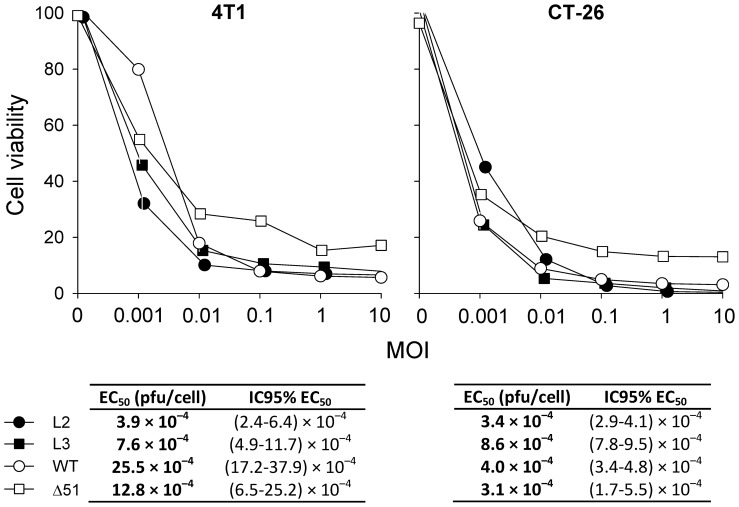
Experimental evolution has been used for various biotechnological applications including protein and microbial cell engineering, but less commonly in the field of oncolytic virotherapy. Here, we sought to adapt a rapidly evolving RNA virus to cells deficient for the tumor suppressor gene p53, a hallmark of cancer cells. To achieve this goal, we established four independent evolution lines of the vesicular stomatitis virus (VSV) in p53-knockout mouse embryonic fibroblasts (p53-/- MEFs) under conditions favoring the action of natural selection. We found that some evolved viruses showed increased fitness and cytotoxicity in p53-/- cells but not in isogenic p53+/+ cells, indicating gene-specific adaptation. However, full-length sequencing revealed no obvious or previously described genetic changes associated with oncolytic activity. Half-maximal effective dose (EC50) assays in mouse p53-positive colon cancer (CT26) and p53-deficient breast cancer (4T1) cells indicated that the evolved viruses were more effective against 4T1 cells than the parental virus or a reference oncolytic VSV (MΔ51), but showed no increased efficacy against CT26 cells. In vivo assays using 4T1 syngeneic tumor models showed that one of the evolved lines significantly delayed tumor growth compared to mice treated with the parental virus or untreated controls, and was able to induce transient tumor suppression. Our results show that RNA viruses can be specifically adapted typical cancer features such as p53 inactivation, and illustrate the usefulness of experimental evolution for oncolytic virotherapy.
实验进化已被用于各种生物技术应用,包括蛋白质和微生物细胞工程,但在溶瘤病毒疗法领域较少使用。在这里,我们试图使一种快速进化的RNA病毒适应缺乏肿瘤抑制基因p53的细胞,这是癌细胞的一个标志。为了实现这一目标,我们在有利于自然选择作用的条件下,在p53基因敲除的小鼠胚胎成纤维细胞(p53-/- MEFs)中建立了四个独立的水疱性口炎病毒(VSV)进化系。我们发现,一些进化后的病毒在p53-/-细胞中显示出更高的适应性和细胞毒性,但在同基因的p53+/+细胞中则没有,这表明了基因特异性适应。然而,全长测序未发现与溶瘤活性相关的明显或先前描述的基因变化。在小鼠p53阳性结肠癌(CT26)和p53缺陷乳腺癌(4T1)细胞中的半数最大有效剂量(EC50)测定表明,进化后的病毒对4T1细胞比亲本病毒或参考溶瘤VSV(MΔ51)更有效,但对CT26细胞没有显示出更高的疗效。使用4T1同基因肿瘤模型的体内试验表明,与用亲本病毒治疗的小鼠或未治疗的对照组相比,其中一个进化系显著延迟了肿瘤生长,并能够诱导短暂的肿瘤抑制。我们的结果表明,RNA病毒可以特异性地适应典型的癌症特征,如p53失活,并说明了实验进化在溶瘤病毒疗法中的有用性。