Al-Zaher Ahmed, Domingo-Calap Pilar, Sanjuán Rafael
Institute for Integrative Systems Biology (I2SysBio), Universitat de València-CSIC, C/ Catedrático Agustín Escardino 9, València 46980, Spain.
Virus Evol. 2021 May 6;7(1):veab045. doi: 10.1093/ve/veab045. eCollection 2021 Jan.
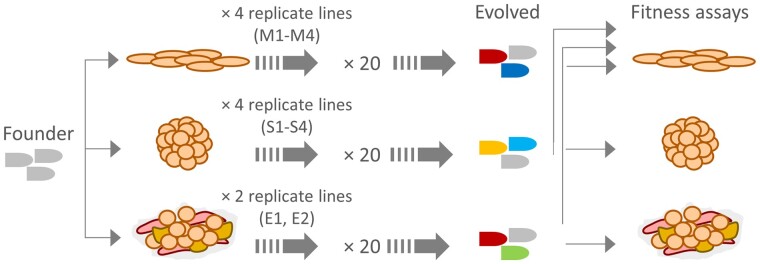
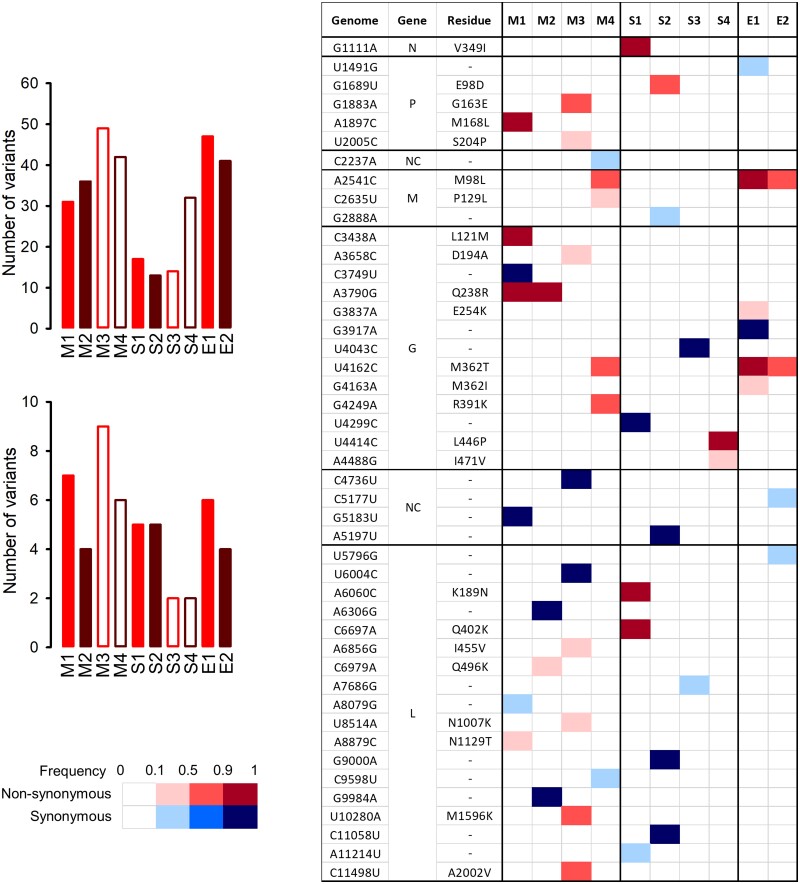
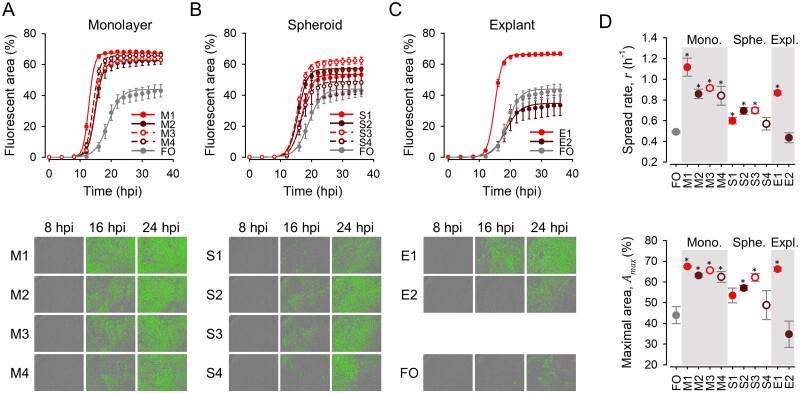
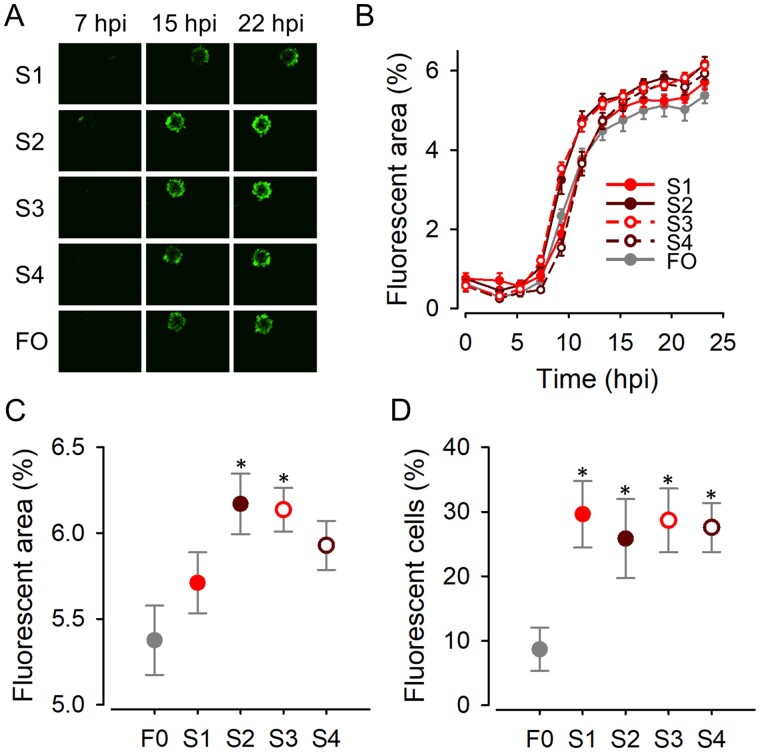
Viral laboratory evolution has been used for different applications, such as modeling viral emergence, drug-resistance prediction, and therapeutic virus optimization. However, these studies have been mainly performed in cell monolayers, a highly simplified environment, raising concerns about their applicability and relevance. To address this, we compared the evolution of a model virus in monolayers, spheroids, and tissue explants. We performed this analysis in the context of cancer virotherapy by performing serial transfers of an oncolytic vesicular stomatitis virus (VSV-Δ51) in 4T1 mouse mammary tumor cells. We found that VSV-Δ51 gained fitness in each of these three culture systems, and that adaptation to the more complex environments (spheroids or explants) correlated with increased fitness in monolayers. Most evolved lines improved their ability to suppress β-interferon secretion compared to the VSV-Δ51 founder, suggesting that the selective pressure exerted by antiviral innate immunity was important in the three systems. However, system-specific patterns were also found. First, viruses evolved in monolayers remained more oncoselective that those evolved in spheroids, since the latter showed concomitant adaptation to non-tumoral mouse cells. Second, deep sequencing indicated that viral populations evolved in monolayers or explants tended to be more genetically diverse than those evolved in spheroids. Finally, we found highly variable outcomes among independent evolutionary lines propagated in explants. We conclude that experimental evolution in monolayers tends to be more reproducible than in spheroids or explants, and better preserves oncoselectivity. Our results also suggest that monolayers capture at least some relevant selective pressures present in more complex systems.
病毒实验室进化已被用于不同的应用,如模拟病毒出现、预测耐药性以及优化治疗性病毒。然而,这些研究主要是在细胞单层中进行的,这是一个高度简化的环境,引发了对其适用性和相关性的担忧。为了解决这个问题,我们比较了一种模型病毒在单层、球体和组织外植体中的进化情况。我们通过在4T1小鼠乳腺肿瘤细胞中对溶瘤性水疱性口炎病毒(VSV-Δ51)进行连续传代,在癌症病毒治疗的背景下进行了这项分析。我们发现VSV-Δ51在这三种培养系统中的每一种中都获得了适应性,并且对更复杂环境(球体或外植体)的适应与在单层中的适应性增加相关。与VSV-Δ51原始毒株相比,大多数进化株提高了抑制β-干扰素分泌的能力,这表明抗病毒先天免疫施加的选择压力在这三种系统中都很重要。然而,也发现了系统特异性模式。首先,在单层中进化的病毒比在球体中进化的病毒更具肿瘤选择性,因为后者显示出对非肿瘤小鼠细胞的伴随适应性。其次,深度测序表明,在单层或外植体中进化的病毒群体往往比在球体中进化的病毒群体在基因上更加多样化。最后,我们发现在外植体中繁殖的独立进化株之间的结果差异很大。我们得出结论,在单层中的实验进化往往比在球体或外植体中更具可重复性,并且能更好地保持肿瘤选择性。我们的结果还表明,单层至少捕捉到了更复杂系统中存在的一些相关选择压力。