Wheelhouse Nick, Coyle Christopher, Barlow Peter G, Mitchell Stephen, Greub Gilbert, Baszler Tim, Rae Mick T, Longbottom David
Moredun Research Institute, Edinburgh, Midlothian, United Kingdom.
School of Life, Sport and Social Sciences, Edinburgh Napier University, Sighthill Campus, Edinburgh, United Kingdom.
PLoS One. 2014 Jul 10;9(7):e102386. doi: 10.1371/journal.pone.0102386. eCollection 2014.
Waddlia chondrophila (W. chondrophila) is an emerging abortifacient organism which has been identified in the placentae of humans and cattle. The organism is a member of the order Chlamydiales, and shares many similarities at the genome level and in growth studies with other well-characterised zoonotic chlamydial abortifacients, such as Chlamydia abortus (C. abortus). This study investigates the growth of the organism and its effects upon pro-inflammatory cytokine expression in a ruminant placental cell line which we have previously utilised in a model of C. abortus pathogenicity.
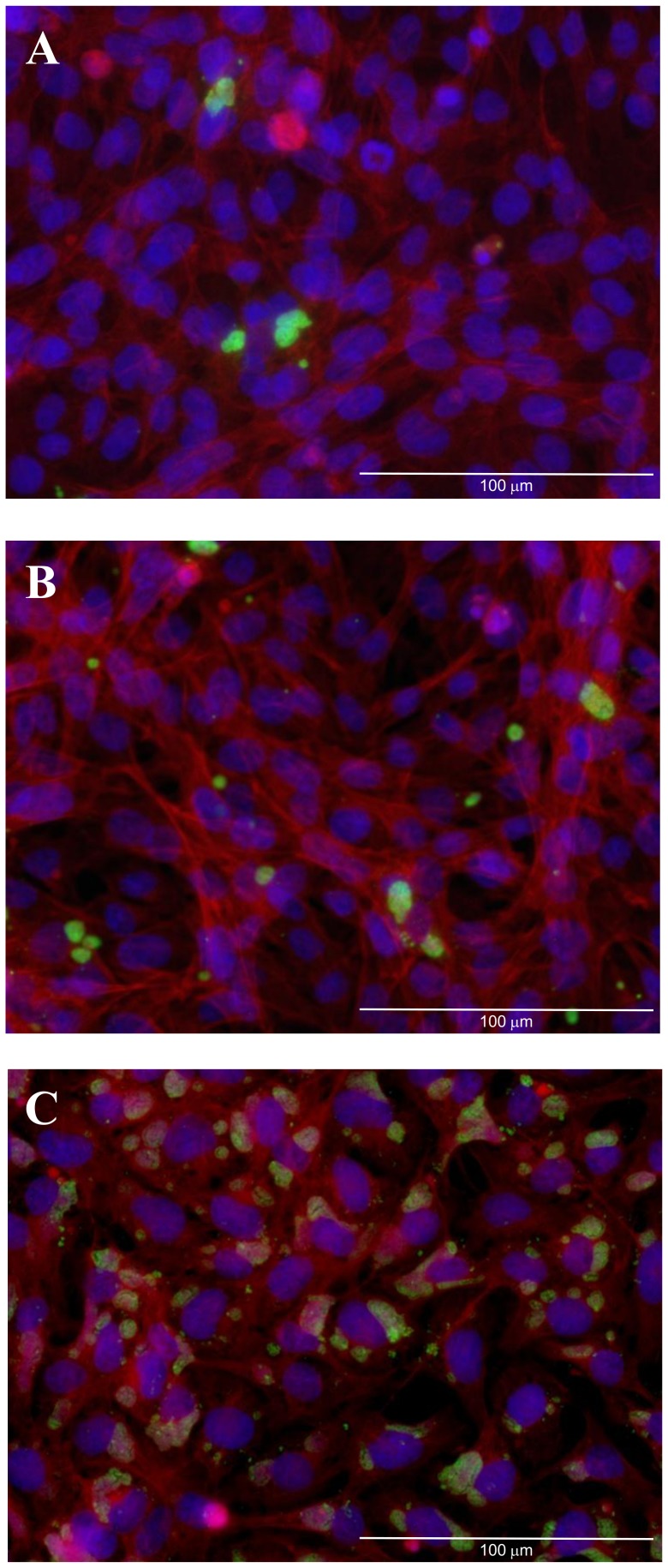
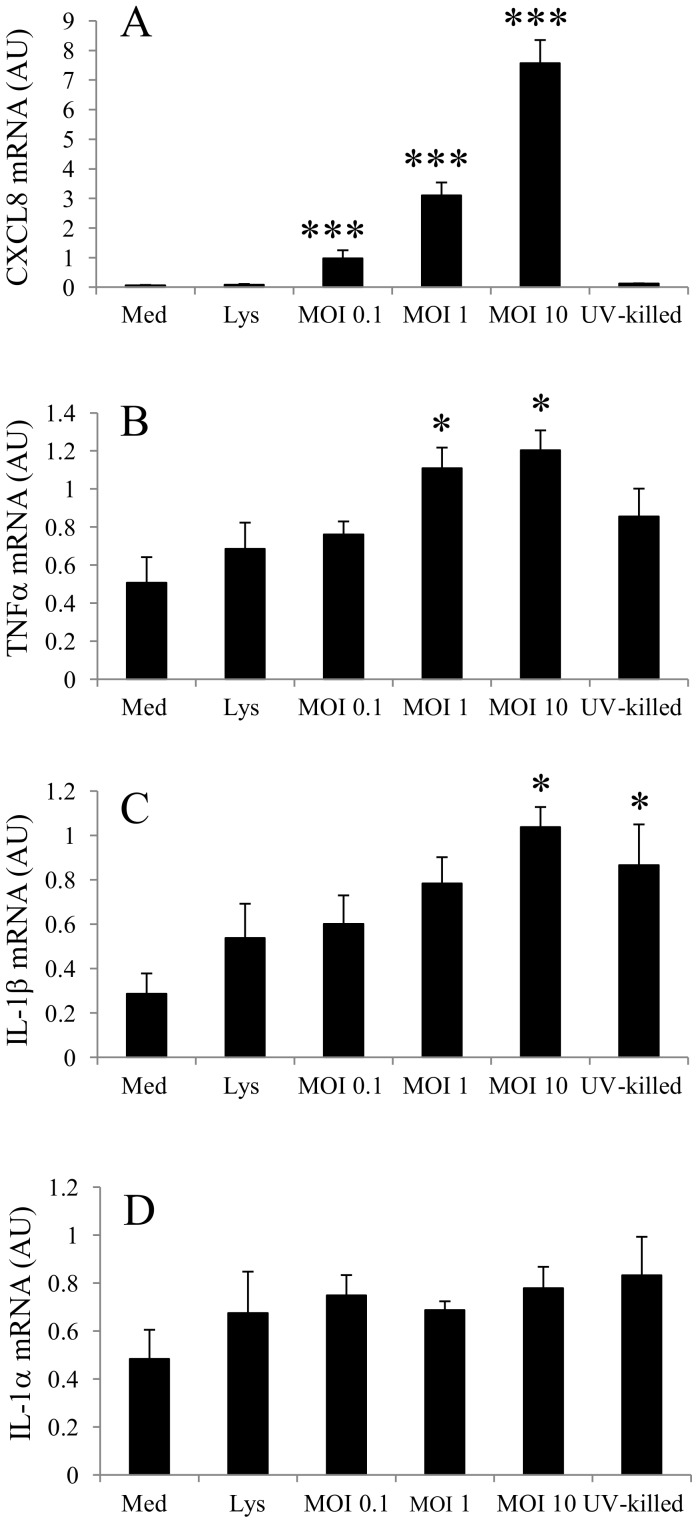
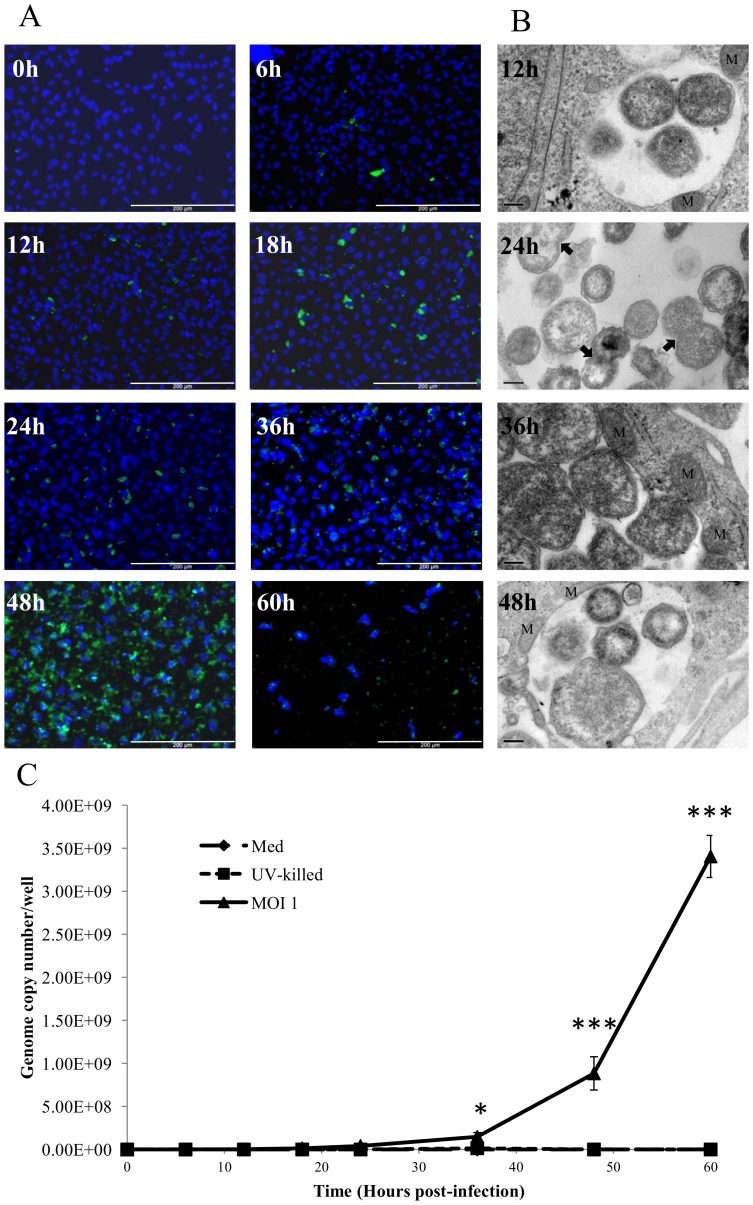
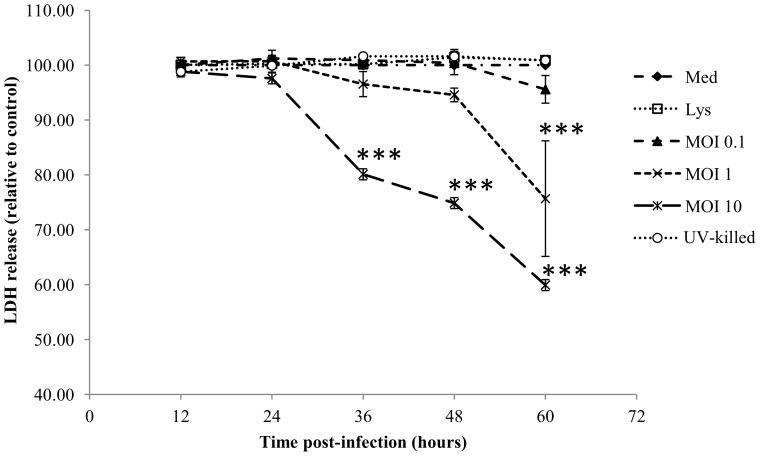
METHODOLOGY/PRINCIPAL FINDINGS: Using qPCR, fluorescent immunocytochemistry and electron microscopy, we characterised the infection and growth of W. chondrophila within the ovine trophoblast AH-1 cell line. Inclusions were visible from 6 h post-infection (p.i.) and exponential growth of the organism could be observed over a 60 h time-course, with significant levels of host cell lysis being observed only after 36 h p.i. Expression of CXCL8, TNF-α, IL-1α and IL-1β were determined 24 h p.i. A statistically significant response in the expression of CXCL8, TNF-α and IL-1β could be observed following active infection with W. chondrophila. However a significant increase in IL-1β expression was also observed following the exposure of cells to UV-killed organisms, indicating the stimulation of multiple innate recognition pathways.
CONCLUSIONS/SIGNIFICANCE: W. chondrophila infects and grows in the ruminant trophoblast AH-1 cell line exhibiting a complete chlamydial replicative cycle. Infection of the trophoblasts resulted in the expression of pro-inflammatory cytokines in a dose-dependent manner similar to that observed with C. abortus in previous studies, suggesting similarities in the pathogenesis of infection between the two organisms.
嗜软骨沃氏菌(Waddlia chondrophila,W. chondrophila)是一种新发现的可导致流产的病原体,已在人类和牛的胎盘组织中被鉴定出来。该菌属于衣原体目,在基因组水平以及生长研究方面,与其他特征明确的人兽共患衣原体流产病原体,如流产衣原体(Chlamydia abortus,C. abortus),有许多相似之处。本研究调查了该菌在反刍动物胎盘细胞系中的生长情况及其对促炎细胞因子表达的影响,我们之前曾在流产衣原体致病性模型中使用过该细胞系。
方法/主要发现:通过实时定量聚合酶链反应(qPCR)、荧光免疫细胞化学和电子显微镜技术,我们对嗜软骨沃氏菌在绵羊滋养层AH-1细胞系中的感染和生长情况进行了表征。感染后6小时(p.i.)可见包涵体,在60小时的时间进程中可观察到该菌呈指数生长,仅在感染后36小时后才观察到显著水平的宿主细胞裂解。在感染后24小时测定了CXCL8、肿瘤坏死因子-α(TNF-α)、白细胞介素-1α(IL-1α)和白细胞介素-1β(IL-1β)的表达。在嗜软骨沃氏菌活跃感染后,可观察到CXCL8、TNF-α和IL-1β表达有统计学意义的反应。然而,在细胞暴露于紫外线灭活的细菌后,也观察到IL-1β表达显著增加,这表明多种天然识别途径受到刺激。
结论/意义:嗜软骨沃氏菌在反刍动物滋养层AH-1细胞系中感染并生长,呈现出完整的衣原体复制周期。滋养层细胞感染导致促炎细胞因子以剂量依赖方式表达,类似于之前研究中流产衣原体观察到的情况,这表明两种病原体在感染发病机制上具有相似性。