Concha Claudia, Carretta María Daniella, Alarcón Pablo, Conejeros Ivan, Gallardo Diego, Hidalgo Alejandra Isabel, Tadich Nestor, Cáceres Dante Daniel, Hidalgo María Angélica, Burgos Rafael Agustín
Laboratory of Inflammation Pharmacology, Institute of Pharmacology and Morphophysiology, Faculty of Veterinary Science, Austral University of Chile, Valdivia 5110566, Chile. ; Master Science Program in Animal Health, Faculty of Veterinary Science, Austral University of Chile, Valdivia 5110566, Chile.
Laboratory of Inflammation Pharmacology, Institute of Pharmacology and Morphophysiology, Faculty of Veterinary Science, Austral University of Chile, Valdivia 5110566, Chile.
J Vet Sci. 2014;15(2):217-24. doi: 10.4142/jvs.2014.15.2.217. Epub 2014 Jun 16.
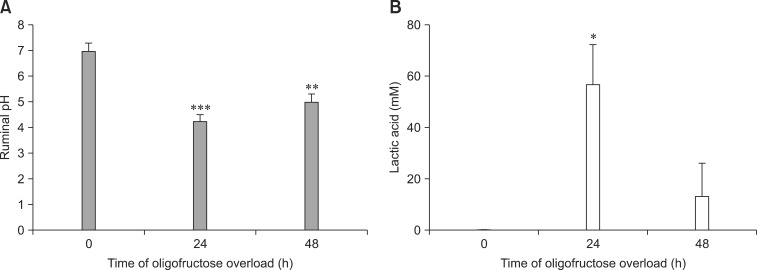
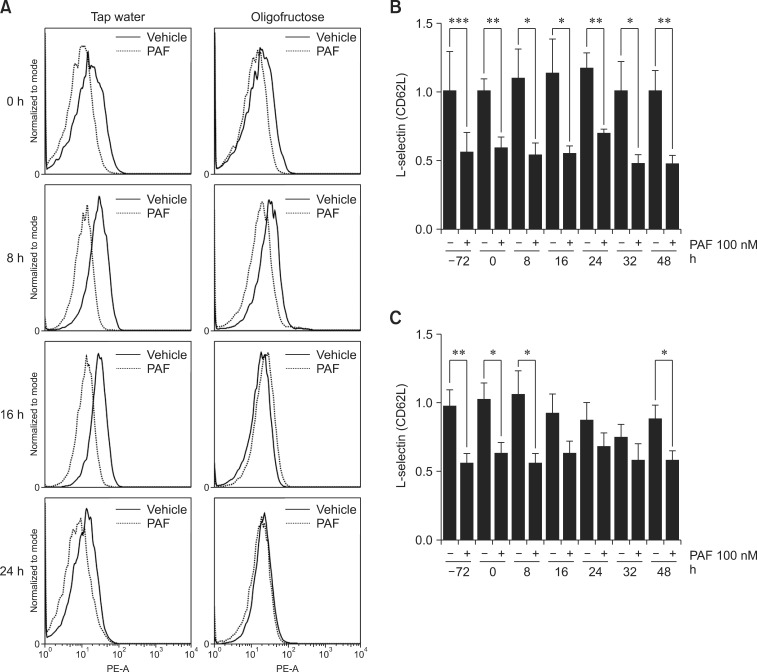
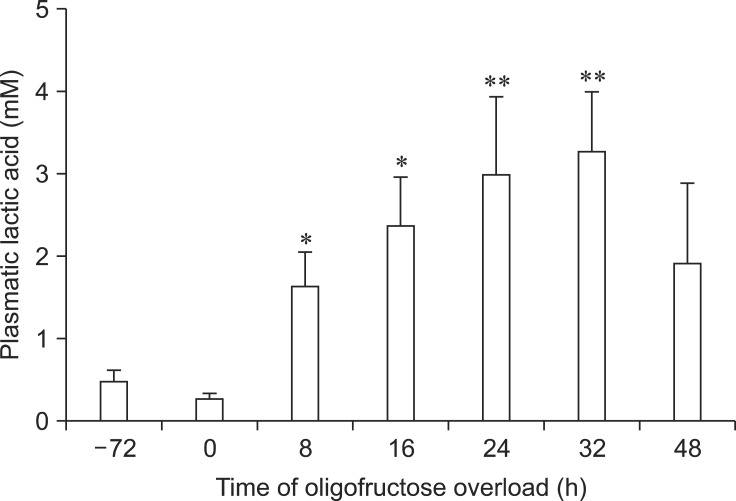
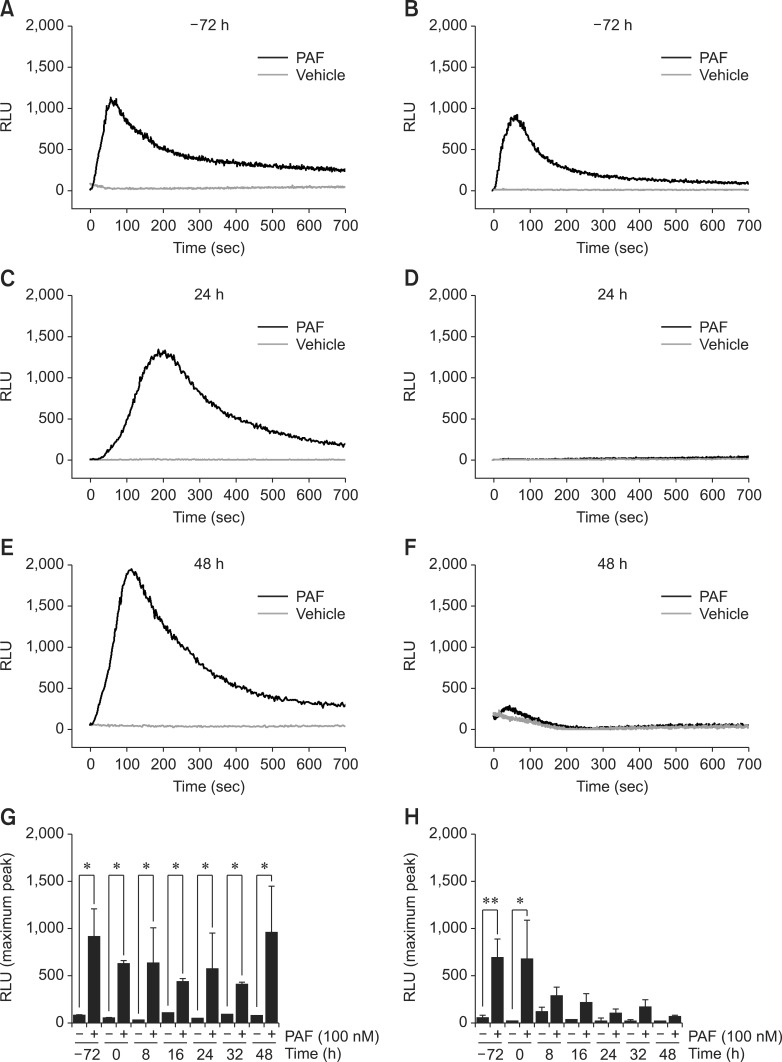
Reactive oxygen species (ROS) production is one of the main mechanisms used to kill microbes during innate immune response. D-lactic acid, which is augmented during acute ruminal acidosis, reduces platelet activating factor (PAF)-induced ROS production and L-selectin shedding in bovine neutrophils in vitro. This study was conducted to investigate whether acute ruminal acidosis induced by acute oligofructose overload in heifers interferes with ROS production and L-selectin shedding in blood neutrophils. Blood neutrophils and plasma were obtained by jugular venipuncture, while ruminal samples were collected using rumenocentesis. Lactic acid from plasma and ruminal samples was measured by HPLC. PAF-induced ROS production and L-selectin shedding were measured in vitro in bovine neutrophils by a luminol chemiluminescence assay and flow cytometry, respectively. A significant increase in ruminal and plasma lactic acid was recorded in these animals. Specifically, a decrease in PAF-induced ROS production was observed 8 h after oligofructose overload, and this was sustained until 48 h post oligofructose overload. A reduction in PAF-induced L-selectin shedding was observed at 16 h and 32 h post oligofructose overload. Overall, the results indicated that neutrophil PAF responses were altered in heifers with ruminal acidosis, suggesting a potential dysfunction of the innate immune response.
活性氧(ROS)的产生是先天性免疫反应中用于杀灭微生物的主要机制之一。D-乳酸在急性瘤胃酸中毒期间会增加,它在体外可减少血小板活化因子(PAF)诱导的牛中性粒细胞中ROS的产生以及L-选择素的脱落。本研究旨在调查小母牛急性低聚果糖超载诱导的急性瘤胃酸中毒是否会干扰血液中性粒细胞中ROS的产生和L-选择素的脱落。通过颈静脉穿刺获取血液中性粒细胞和血浆,同时使用瘤胃穿刺术采集瘤胃样本。通过高效液相色谱法测定血浆和瘤胃样本中的乳酸。分别通过鲁米诺化学发光法和流式细胞术在体外测定PAF诱导的牛中性粒细胞中ROS的产生和L-选择素的脱落。这些动物的瘤胃和血浆乳酸显著增加。具体而言,在低聚果糖超载后8小时观察到PAF诱导的ROS产生减少,并且这种情况持续到低聚果糖超载后48小时。在低聚果糖超载后16小时和32小时观察到PAF诱导的L-选择素脱落减少。总体而言,结果表明瘤胃酸中毒小母牛的中性粒细胞PAF反应发生了改变,提示先天性免疫反应可能存在功能障碍。