Molesti Eleonora, Ferrara Francesca, Lapini Giulia, Montomoli Emanuele, Temperton Nigel
Viral Pseudotype Unit, Medway School of Pharmacy, University of Kent, Central Avenue, Chatham Maritime, Chatham ME4 4TB, UK.
Department of Molecular and Developmental Medicine, University of Siena, Via Aldo Moro 3, 53100 Siena, Italy.
Biomed Res Int. 2014;2014:231365. doi: 10.1155/2014/231365. Epub 2014 Jun 11.
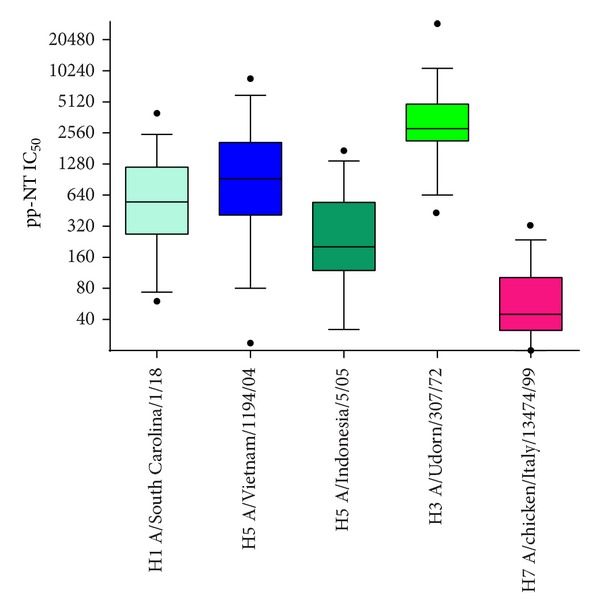
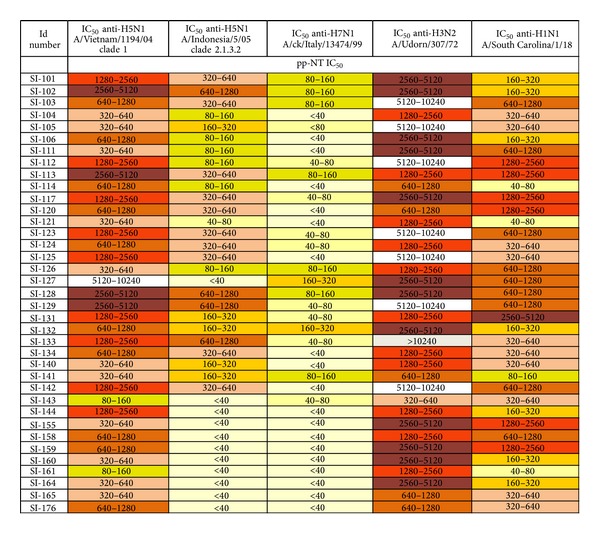
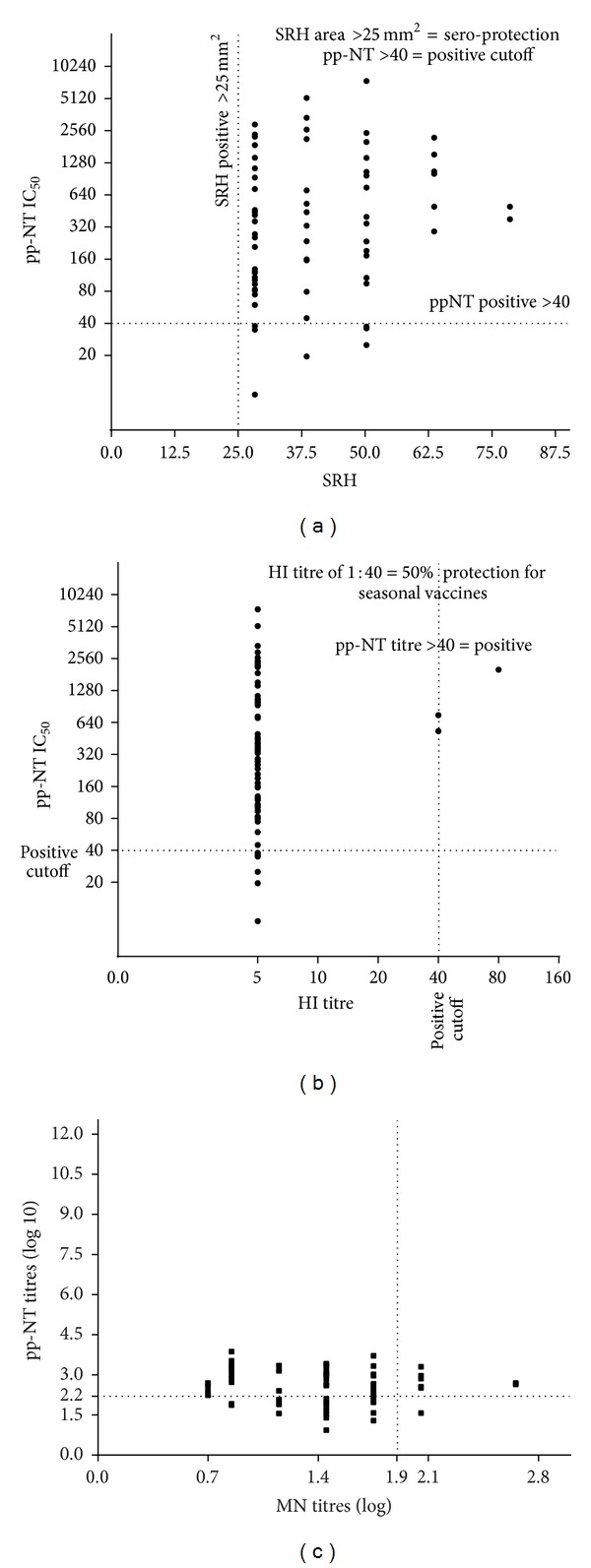
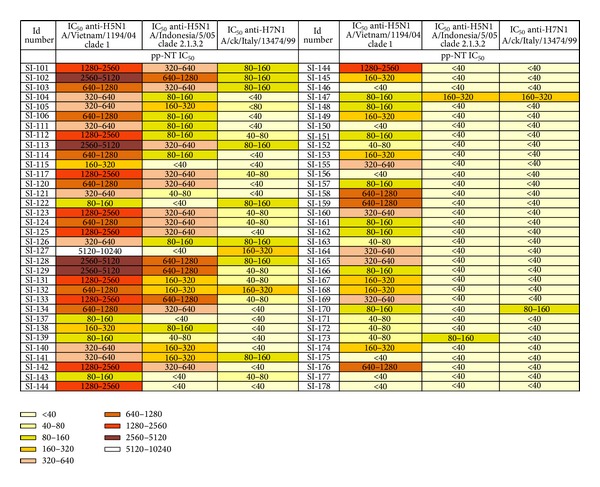
The human population is constantly exposed to multiple influenza A subtypes due to zoonotic spillover and rapid viral evolution driven by intrinsic error-prone replication and immunological pressure. In this context, antibody responses directed against the HA protein are of importance since they have been shown to correlate with protective immunity. Serological techniques, detecting these responses, play a critical role for influenza surveillance, vaccine development, and assessment. As the recent human pandemics and avian influenza outbreaks have demonstrated, there is an urgent need to be better prepared to assess the contribution of the antibody response to protection against newly emerged viruses and to evaluate the extent of preexisting heterosubtypic immunity in populations. In this study, 68 serum samples collected from the Italian population between 1992 and 2007 were found to be positive for antibodies against H5N1 as determined by single radial hemolysis (SRH), but most were negative when evaluated using haemagglutination inhibition (HI) and microneutralisation (MN) assays. As a result of these discordant serological findings, the increased sensitivity of lentiviral pseudotypes was exploited in pseudotype-based neutralisation (pp-NT) assays and the results obtained provide further insight into the complex nature of humoral immunity against influenza A viruses.
由于人畜共患病传播以及由内在的易出错复制和免疫压力驱动的病毒快速进化,人类不断接触多种甲型流感病毒亚型。在这种情况下,针对血凝素(HA)蛋白的抗体反应很重要,因为它们已被证明与保护性免疫相关。检测这些反应的血清学技术在流感监测、疫苗开发和评估中起着关键作用。正如最近的人类大流行和禽流感爆发所表明的那样,迫切需要做好更好的准备,以评估抗体反应对抵御新出现病毒的保护作用,并评估人群中预先存在的异亚型免疫程度。在本研究中,通过单辐射溶血(SRH)测定发现,1992年至2007年间从意大利人群中收集的68份血清样本对H5N1抗体呈阳性,但使用血凝抑制(HI)和微量中和(MN)试验评估时,大多数样本呈阴性。由于这些血清学结果不一致,基于慢病毒假型的中和(pp-NT)试验利用了慢病毒假型的更高敏感性,所获得的结果为深入了解针对甲型流感病毒的体液免疫的复杂性质提供了进一步的见解。