
p21激活激酶1生物活性肽对血管紧张素II诱导的心脏肥大及相关室性心律失常的抑制作用
Inhibition of angiotensin II-induced cardiac hypertrophy and associated ventricular arrhythmias by a p21 activated kinase 1 bioactive peptide.
作者信息
Wang Rui, Wang Yanwen, Lin Wee K, Zhang Yanmin, Liu Wei, Huang Kai, Terrar Derek A, Solaro R John, Wang Xin, Ke Yunbo, Lei Ming
机构信息
Institute for Cardiovascular Diseases, Union Hospital, Huazhong University of Science and Technology, Wuhan, P. R. China.
Institute of Cardiovascular Sciences, Faculty of Medicine and Human Science, University of Manchester, Manchester, United Kingdom; Department of Pharmacology, University of Oxford, Oxford, United Kingdom.
出版信息
PLoS One. 2014 Jul 11;9(7):e101974. doi: 10.1371/journal.pone.0101974. eCollection 2014.
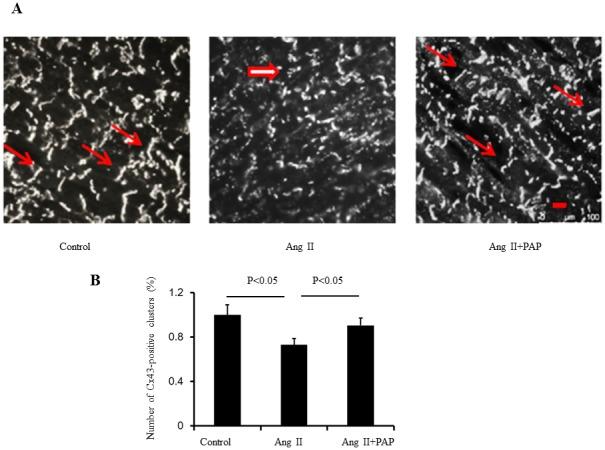
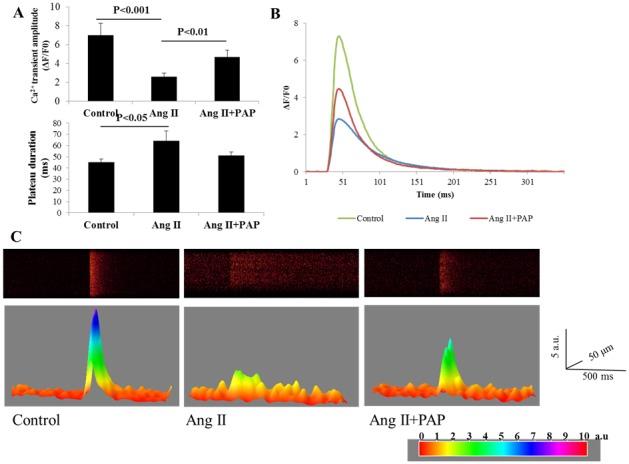
Cardiac hypertrophy increases the risk of morbidity and mortality of cardiovascular disease and thus inhibiting such hypertrophy is beneficial. In the present study, we explored the effect of a bioactive peptide (PAP) on angiotensin II (Ang II)-induced hypertrophy and associated ventricular arrhythmias in in vitro and in vivo models. PAP enhances p21 activated kinase 1 (Pak1) activity by increasing the level of phosphorylated Pak1 in cultured neonatal rat ventricular myocytes (NRVMs). Such PAP-induced Pak1 activation is associated with a significant reduction of Ang II-induced hypertrophy in NRVMs and C57BL/6 mice, in vitro and in vivo, respectively. Furthermore, PAP antagonizes ventricular arrhythmias associated with Ang II-induced hypertrophy in mice. Its antiarrhythmic effect is likely to be involved in multiple mechanisms to affect both substrate and trigger of ventricular arrhythmogenesis. Thus our results suggest that Pak1 activation achieved by specific bioactive peptide represents a potential novel therapeutic strategy for cardiac hypertrophy and associated ventricular arrhythmias.
心肌肥厚会增加心血管疾病发病和死亡的风险,因此抑制这种肥厚是有益的。在本研究中,我们在体外和体内模型中探究了一种生物活性肽(PAP)对血管紧张素II(Ang II)诱导的肥厚及相关室性心律失常的影响。PAP通过提高培养的新生大鼠心室肌细胞(NRVMs)中磷酸化Pak1的水平来增强p21活化激酶1(Pak1)的活性。这种PAP诱导的Pak1活化分别与体外和体内NRVMs及C57BL/6小鼠中Ang II诱导的肥厚显著减轻相关。此外,PAP可对抗小鼠中与Ang II诱导的肥厚相关的室性心律失常。其抗心律失常作用可能涉及多种机制,影响室性心律失常发生的底物和触发因素。因此,我们的结果表明,通过特定生物活性肽实现的Pak1活化代表了一种针对心肌肥厚及相关室性心律失常的潜在新型治疗策略。



 Zotero 插件