Zander Axel R, Lange Claudia, Westenfelder Christof
University Medical Center, Hamburg-Eppendorf, Clinic for Stem Cell Transplantation , Hamburg, Germany.
Section of Nephrology, George E. Wahlen VA Medical Center, University of Utah , Salt Lake City, Utah, USA; ; Department of Medicine, University of Utah College of Medicine , Salt Lake City, Utah, USA ; Department of Physiology, University of Utah College of Medicine , Salt Lake City, Utah, USA.
Kidney Int Suppl (2011). 2011 Sep;1(3):74-76. doi: 10.1038/kisup.2011.17.
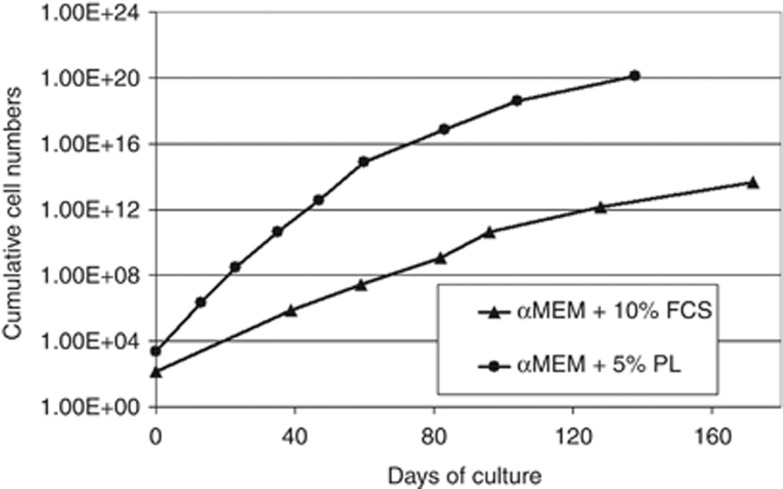
Mesenchymal stromal cells (mSCs) are presently studied for the prophylaxis and therapy of a variety of diseases such as acute graft-versus-host disease after allogeneic stem cell transplantation, cardiac indications, bone degeneration, Crohn's disease, and organ rejection, as well as prevention of acute renal failure in high-risk situations. mSCs appear to function through paracrine mechanisms that exert immunosuppressive, anti-inflammatory, anti-apoptotic, mitogenic, and other organ-protective and repair-stimulating actions. mSCs are either cultured in the presence of fetal calf serum (FCS) or platelet lysate (PL). PL lysate-generated mSCs exhibit faster doubling times, different gene expression profiles, and more potent immunosuppressive activity compared with FSC-generated mSCs. The utility of mSCs in the treatment of chronic inflammatory diseases is being evaluated in prospective studies.
间充质基质细胞(mSCs)目前正在用于多种疾病的预防和治疗,如异基因干细胞移植后的急性移植物抗宿主病、心脏疾病、骨质退变、克罗恩病、器官排斥反应,以及在高风险情况下预防急性肾衰竭。mSCs似乎通过旁分泌机制发挥作用,这些机制具有免疫抑制、抗炎、抗凋亡、促有丝分裂以及其他器官保护和刺激修复的作用。mSCs要么在胎牛血清(FCS)或血小板裂解液(PL)存在的情况下进行培养。与FCS培养的mSCs相比,PL裂解液培养的mSCs表现出更快的倍增时间、不同的基因表达谱以及更强的免疫抑制活性。前瞻性研究正在评估mSCs在慢性炎症性疾病治疗中的效用。