Jin Yazhong, Zhang Chong, Liu Wei, Qi Hongyan, Chen Hao, Cao Songxiao
Key Laboratory of Protected Horticulture of Education Ministry and Liaoning Province, Department of Horticulture, Shenyang Agricultural University, Shenyang, Liaoning, PR China; College of Agriculture, Heilongjiang Bayi Agricultural University, Daqing, Heilong jiang, PR China.
Key Laboratory of Protected Horticulture of Education Ministry and Liaoning Province, Department of Horticulture, Shenyang Agricultural University, Shenyang, Liaoning, PR China.
PLoS One. 2014 Jul 14;9(7):e101730. doi: 10.1371/journal.pone.0101730. eCollection 2014.
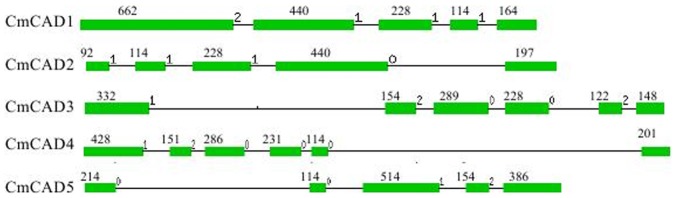
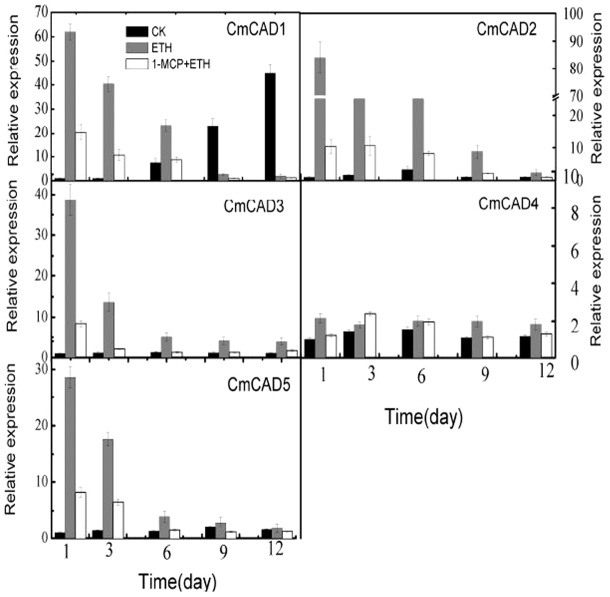
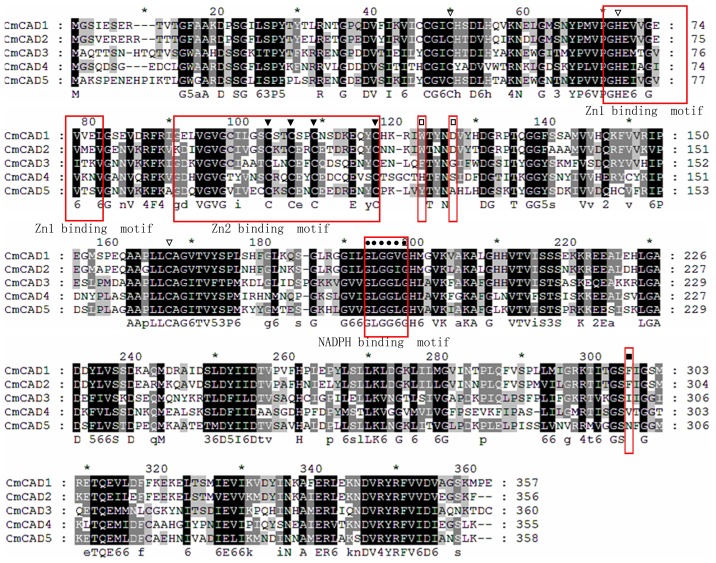
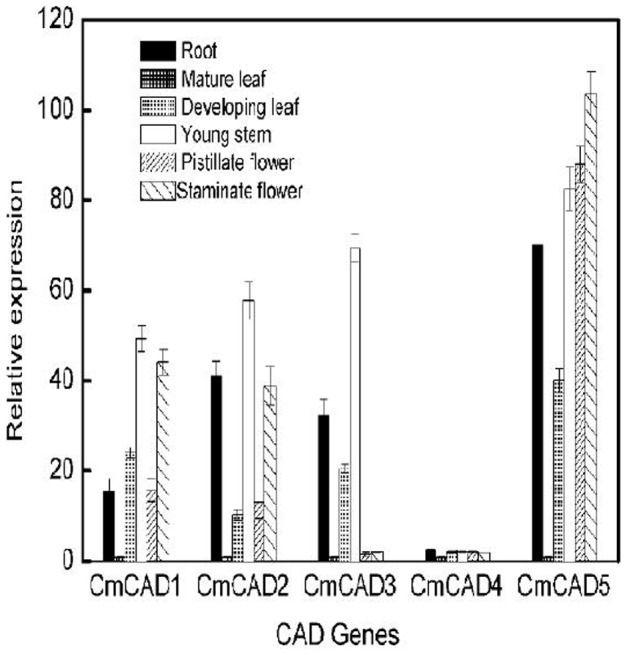
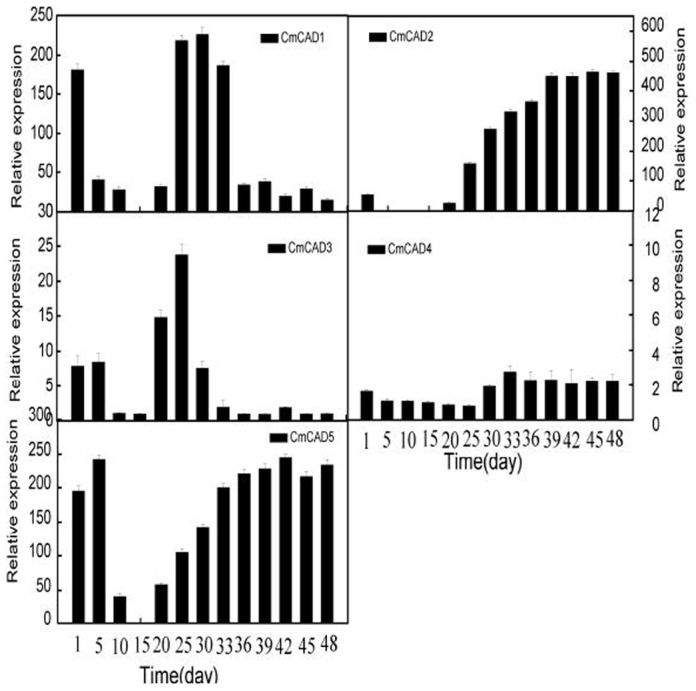
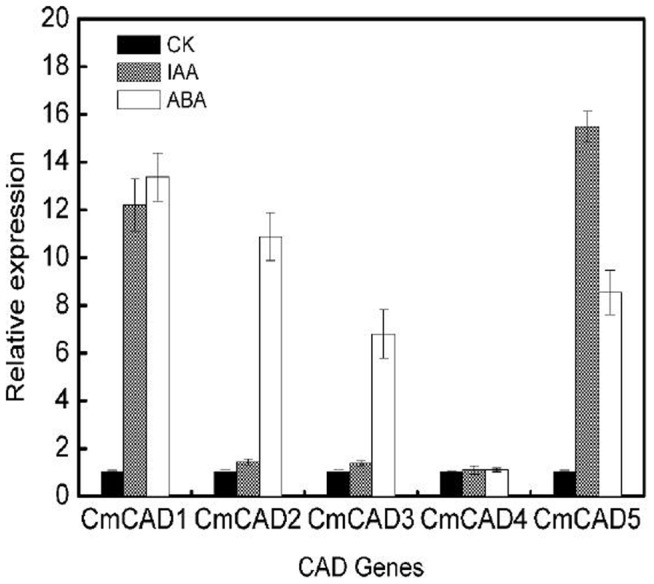
Cinnamyl alcohol dehydrogenase (CAD) is a key enzyme in lignin biosynthesis. However, little was known about CADs in melon. Five CAD-like genes were identified in the genome of melons, namely CmCAD1 to CmCAD5. The signal peptides analysis and CAD proteins prediction showed no typical signal peptides were found in all CmCADs and CmCAD proteins may locate in the cytoplasm. Multiple alignments implied that some motifs may be responsible for the high specificity of these CAD proteins, and may be one of the key residues in the catalytic mechanism. The phylogenetic tree revealed seven groups of CAD and melon CAD genes fell into four main groups. CmCAD1 and CmCAD2 belonged to the bona fide CAD group, in which these CAD genes, as representative from angiosperms, were involved in lignin synthesis. Other CmCADs were distributed in group II, V and VII, respectively. Semi-quantitative PCR and real time qPCR revealed differential expression of CmCADs, and CmCAD5 was expressed in different vegetative tissues except mature leaves, with the highest expression in flower, while CmCAD2 and CmCAD5 were strongly expressed in flesh during development. Promoter analysis revealed several motifs of CAD genes involved in the gene expression modulated by various hormones. Treatment of abscisic acid (ABA) elevated the expression of CmCADs in flesh, whereas the transcript levels of CmCAD1 and CmCAD5 were induced by auxin (IAA); Ethylene induced the expression of CmCADs, while 1-MCP repressed the effect, apart from CmCAD4. Taken together, these data suggested that CmCAD4 may be a pseudogene and that all other CmCADs may be involved in the lignin biosynthesis induced by both abiotic and biotic stresses and in tissue-specific developmental lignification through a CAD genes family network, and CmCAD2 may be the main CAD enzymes for lignification of melon flesh and CmCAD5 may also function in flower development.
肉桂醇脱氢酶(CAD)是木质素生物合成中的关键酶。然而,人们对甜瓜中的CAD了解甚少。在甜瓜基因组中鉴定出了5个类CAD基因,即CmCAD1至CmCAD5。信号肽分析和CAD蛋白预测表明,所有CmCAD中均未发现典型信号肽,且CmCAD蛋白可能定位于细胞质中。多序列比对表明,一些基序可能决定了这些CAD蛋白的高特异性,并且可能是催化机制中的关键残基之一。系统发育树显示CAD分为七组,甜瓜CAD基因分为四个主要组。CmCAD1和CmCAD2属于真正的CAD组,这些来自被子植物的CAD基因参与木质素合成。其他CmCAD分别分布在第二、第五和第七组中。半定量PCR和实时定量PCR显示CmCAD的表达存在差异,CmCAD5在除成熟叶片外的不同营养组织中均有表达,在花中的表达量最高,而CmCAD2和CmCAD5在发育过程中的果肉中强烈表达。启动子分析揭示了CAD基因的几个基序参与了受多种激素调控的基因表达。脱落酸(ABA)处理可提高果肉中CmCAD的表达,而生长素(IAA)可诱导CmCAD1和CmCAD5的转录水平;乙烯诱导CmCAD的表达,而1-甲基环丙烯(1-MCP)可抑制这种作用,但对CmCAD4除外。综上所述,这些数据表明CmCAD4可能是一个假基因,所有其他CmCAD可能通过CAD基因家族网络参与非生物和生物胁迫诱导的木质素生物合成以及组织特异性发育木质化,并且CmCAD2可能是甜瓜果肉木质化的主要CAD酶,CmCAD5也可能在花发育中起作用。