Li Haipeng, Zhang Shulin, Zhao Yunlei, Zhao Xulong, Xie Wenfei, Guo Yutao, Wang Yujie, Li Kun, Guo Jinggong, Zhu Qian-Hao, Zhang Xuebin, Jia Kun-Peng, Miao Yuchen
State Key Laboratory of Cotton Biology, Henan Joint International Laboratory for Crop Multi-Omics Research, School of Life Sciences, Henan University, Kaifeng, China.
College of Biology and Food Engineering, Innovation and Practice Base for Postdoctors, Anyang Institute of Technology, Anyang, China.
Front Plant Sci. 2022 Apr 28;13:840397. doi: 10.3389/fpls.2022.840397. eCollection 2022.
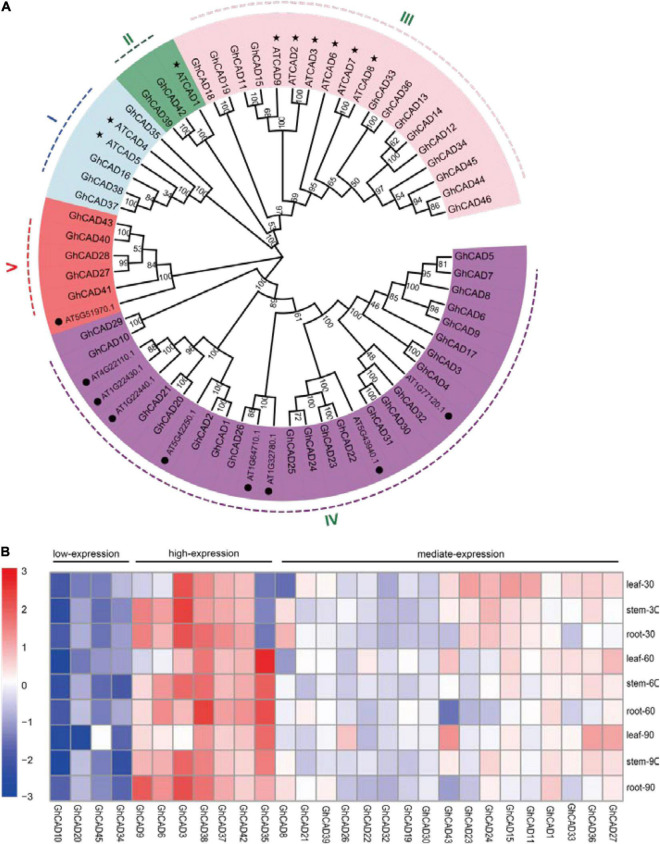
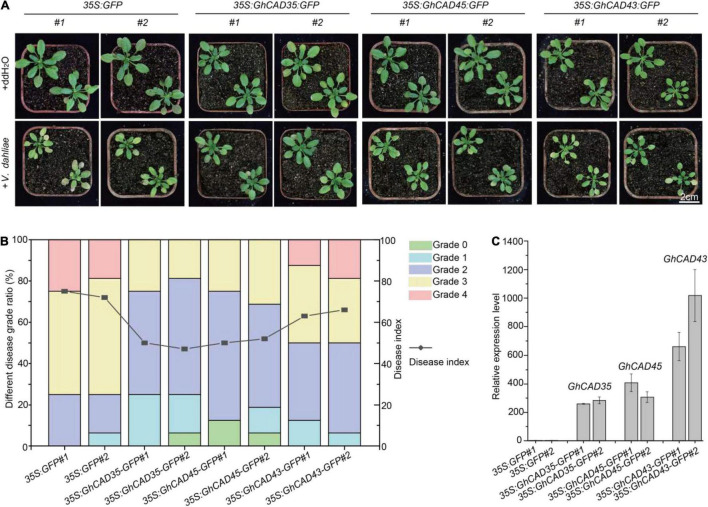
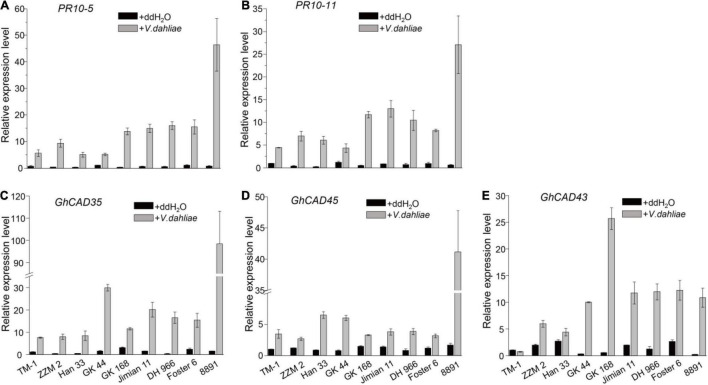
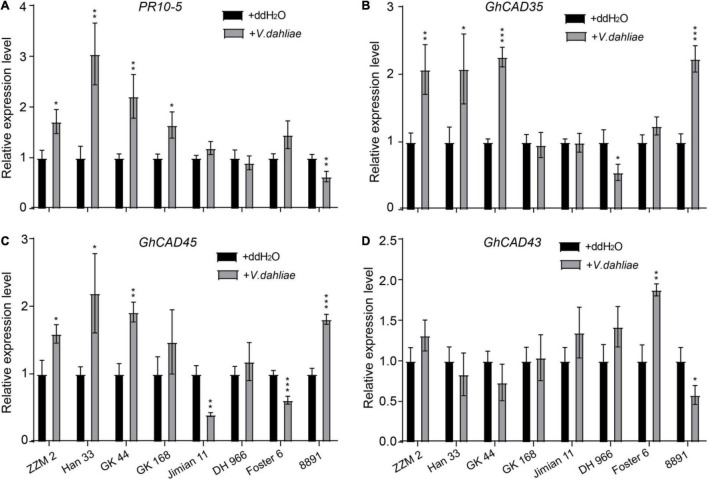
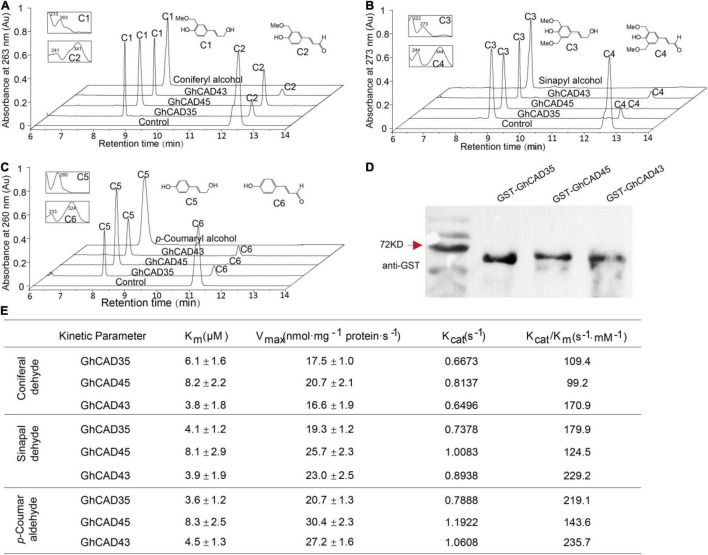
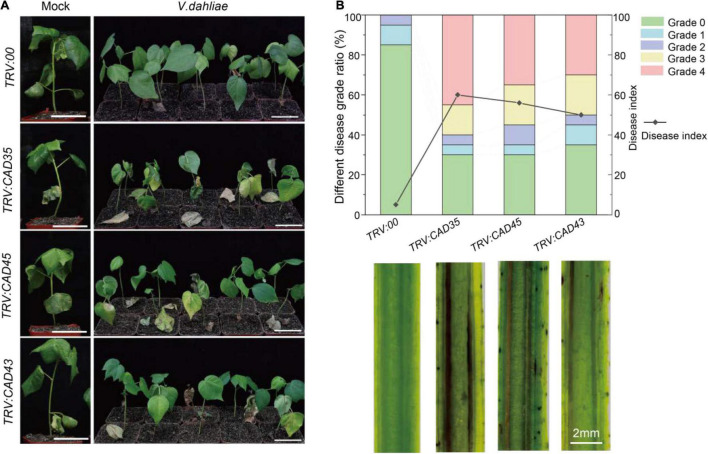
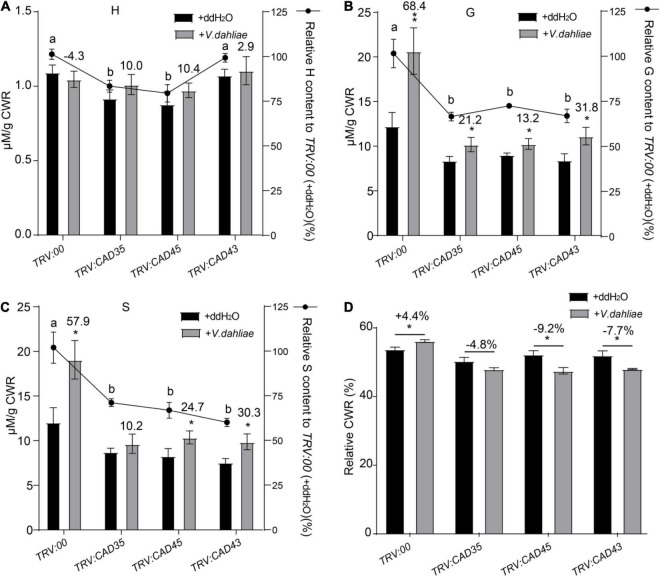
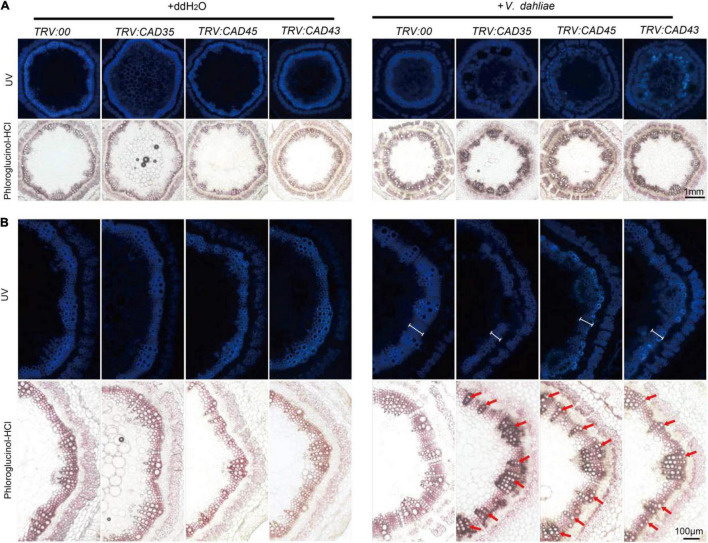
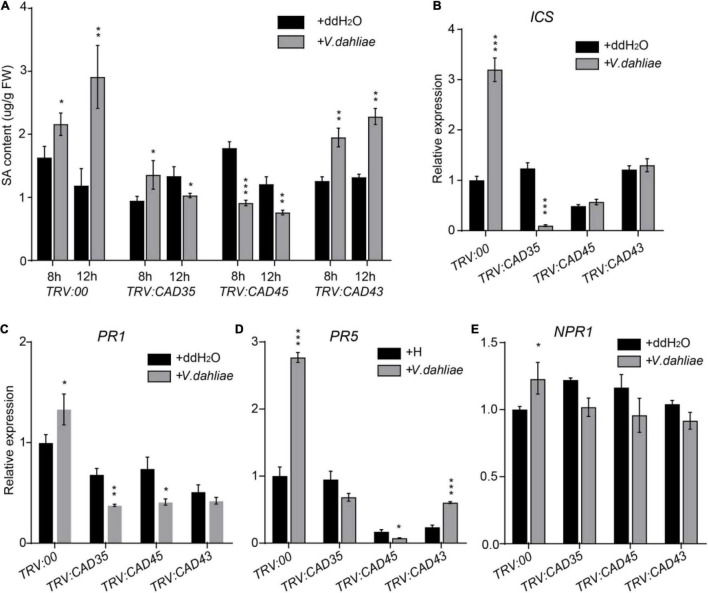
Verticillium wilt, caused by the soil-borne fungus , is one of the most devastating diseases in cotton ( spp.). Lignin in the cell wall forms a physical barrier to inhibit pathogen invasion, and defense-induced lignification reinforces secondary cell wall to prevent pathogens from further spreading. Cinnamyl alcohol dehydrogenases (CADs) catalyze the production of three main monolignols, -coumaryl- (H), coniferyl- (G), and sinapyl-alcohols (S), which are the fundamental blocks of lignin. Here, we identified genes in , analyzed their expression profiles in cotton leaf, stem, and root from different developmental stages, and selected , , and , which were consistently induced by inoculation in cultivars resistant or susceptible to . On the basis of confirmation of the enzymatic activity of the three proteins in generation of the three monolignols, we used virus-induced gene silencing (VIGS) to investigate the effects of silencing of , , or on resistance to as well as on deposition and the composition of lignin. Silencing each of the three s impaired the defense-induced lignification and salicylic acid biosynthesis in stem, and compromised resistance to . Moreover, our study showed that silencing the three s severely affected the biosynthesis of S-lignin, leading to a decrease of the syringyl/guaiacyl (S/G) ratio. Heterogeneous overexpression of , , or in enhanced disease resistance. Taken together, our study demonstrates a role of the three s in defense-induced lignin biosynthesis and resistance to in .
由土壤传播的真菌引起的棉花黄萎病是棉花(棉属物种)中最具毁灭性的病害之一。细胞壁中的木质素形成物理屏障以抑制病原体入侵,防御诱导的木质化强化次生细胞壁以防止病原体进一步扩散。肉桂醇脱氢酶(CADs)催化三种主要单木质醇的生成,即对香豆醇(H)、松柏醇(G)和芥子醇(S),它们是木质素的基本组成单元。在此,我们在棉花中鉴定了多个CAD基因,分析了它们在不同发育阶段的棉花叶片、茎和根中的表达谱,并选择了在对黄萎病菌有抗性或易感性的棉花品种中接种黄萎病菌后均持续被诱导的三个基因。基于对这三种蛋白质在生成三种单木质醇过程中的酶活性的确认,我们利用病毒诱导基因沉默(VIGS)来研究沉默这三个基因中的一个、两个或三个对棉花抗黄萎病能力以及对木质素沉积和组成的影响。沉默这三个基因中的每一个都会损害茎中防御诱导的木质化和水杨酸生物合成,并削弱对黄萎病菌的抗性。此外,我们的研究表明,沉默这三个基因严重影响S-木质素的生物合成,导致紫丁香基/愈创木基(S/G)比率降低。在烟草中异源过表达这三个基因中的一个、两个或三个可增强抗病性。综上所述,我们的研究证明了这三个CAD基因在棉花防御诱导的木质素生物合成和抗黄萎病中的作用。