Lomnitz Jason G, Savageau Michael A
Department of Biomedical Engineering and ‡Microbiology Graduate Group, University of California , Davis, California 95616, United States.
ACS Synth Biol. 2014 Sep 19;3(9):686-701. doi: 10.1021/sb500236e. Epub 2014 Jul 24.
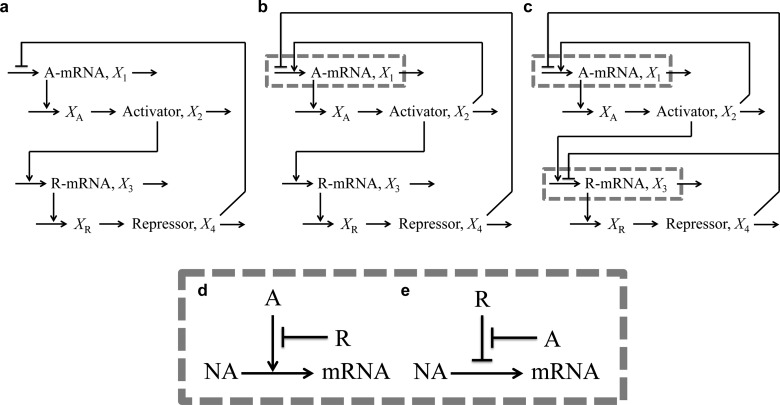
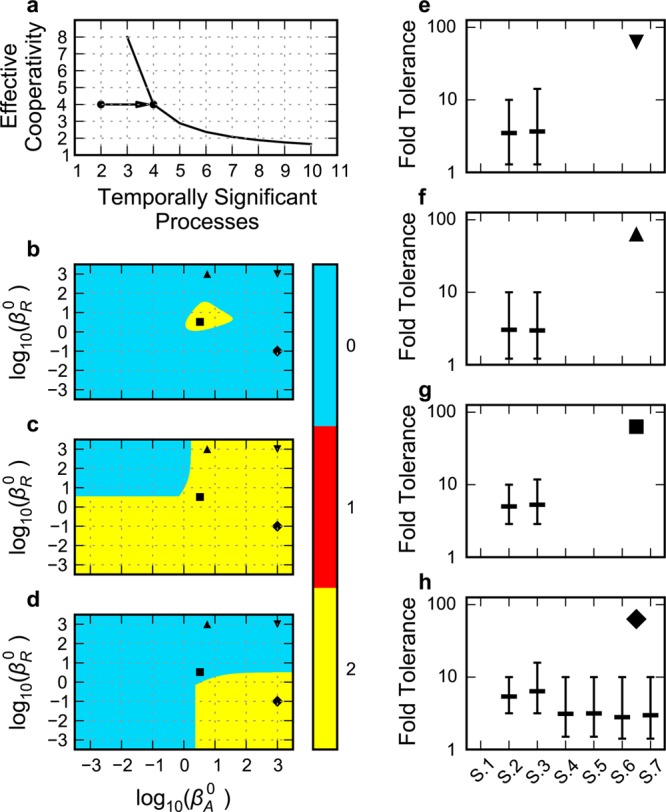
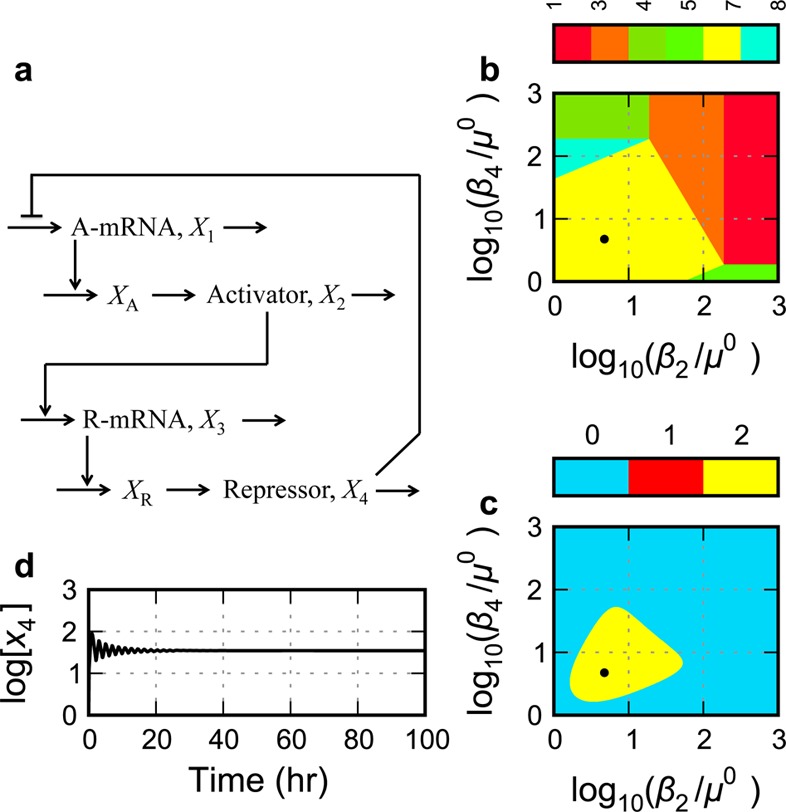
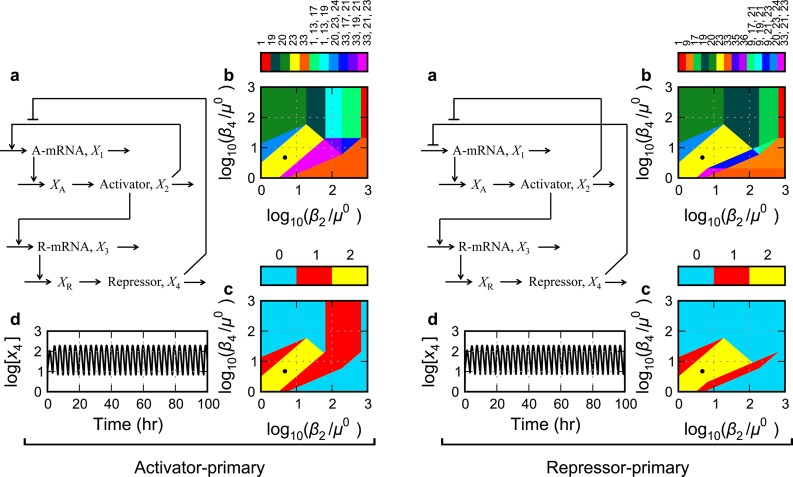
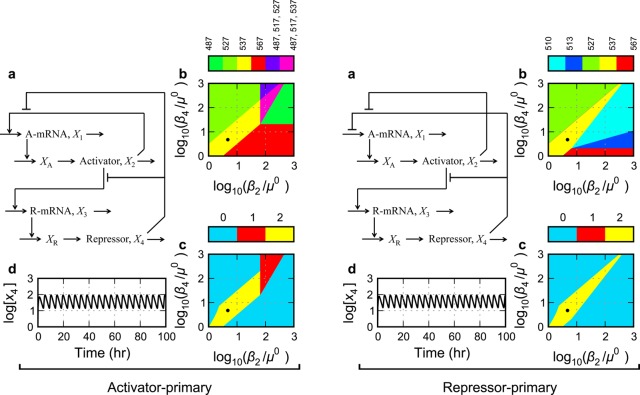
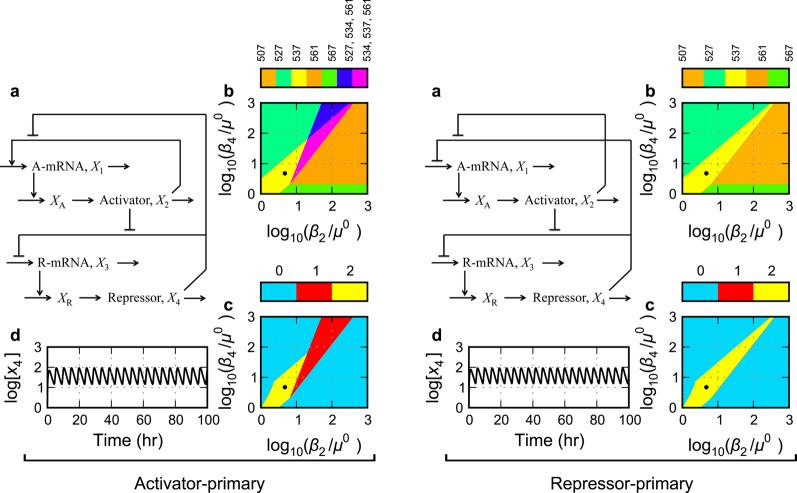
Considerable progress has been made in identifying and characterizing the component parts of genetic oscillators, which play central roles in all organisms. Nonlinear interaction among components is sufficiently complex that mathematical models are required to elucidate their elusive integrated behavior. Although natural and synthetic oscillators exhibit common architectures, there are numerous differences that are poorly understood. Utilizing synthetic biology to uncover basic principles of simpler circuits is a way to advance understanding of natural circadian clocks and rhythms. Following this strategy, we address the following questions: What are the implications of different architectures and molecular modes of transcriptional control for the phenotypic repertoire of genetic oscillators? Are there designs that are more realizable or robust? We compare synthetic oscillators involving one of three architectures and various combinations of the two modes of transcriptional control using a methodology that provides three innovations: a rigorous definition of phenotype, a procedure for deconstructing complex systems into qualitatively distinct phenotypes, and a graphical representation for illuminating the relationship between genotype, environment, and the qualitatively distinct phenotypes of a system. These methods provide a global perspective on the behavioral repertoire, facilitate comparisons of alternatives, and assist the rational design of synthetic gene circuitry. In particular, the results of their application here reveal distinctive phenotypes for several designs that have been studied experimentally as well as a best design among the alternatives that has yet to be constructed and tested.
在识别和表征遗传振荡器的组成部分方面已经取得了相当大的进展,这些组成部分在所有生物体中都起着核心作用。组件之间的非线性相互作用足够复杂,需要数学模型来阐明其难以捉摸的综合行为。尽管天然和合成振荡器表现出共同的架构,但仍有许多差异尚未得到充分理解。利用合成生物学来揭示更简单电路的基本原理是一种推进对自然生物钟和节律理解的方法。按照这一策略,我们解决以下问题:转录控制的不同架构和分子模式对遗传振荡器的表型库有何影响?是否存在更易于实现或更稳健的设计?我们使用一种提供三项创新的方法,比较了涉及三种架构之一以及两种转录控制模式的各种组合的合成振荡器:对表型的严格定义、将复杂系统解构为定性不同表型的程序,以及用于阐明基因型、环境和系统定性不同表型之间关系的图形表示。这些方法提供了关于行为库的全局视角,便于对替代方案进行比较,并有助于合成基因电路的合理设计。特别是,此处应用这些方法的结果揭示了几种已通过实验研究的设计的独特表型,以及尚未构建和测试的替代方案中的最佳设计。