Department of Biochemistry, Institute of Integrative Biology, University of Liverpool , Liverpool , United Kingdom.
PeerJ. 2014 Jun 26;2:e461. doi: 10.7717/peerj.461. eCollection 2014.
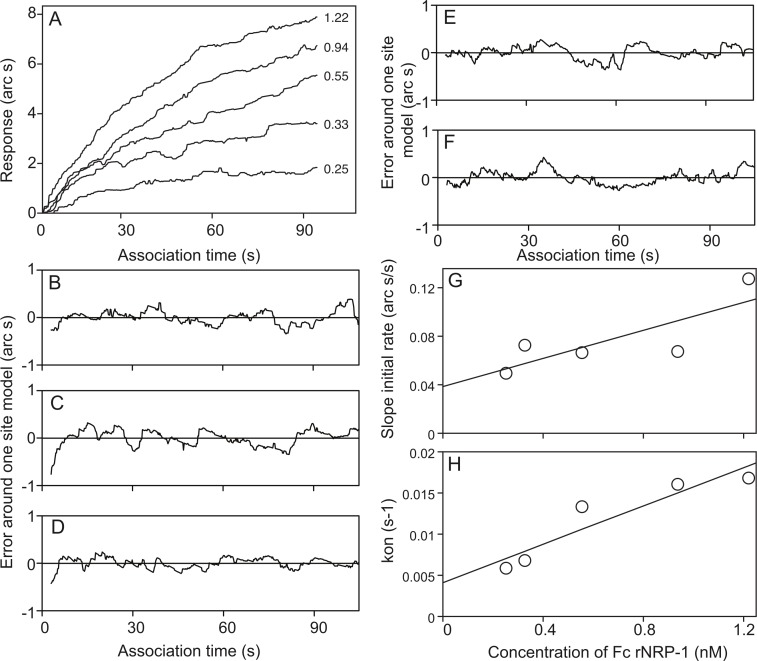
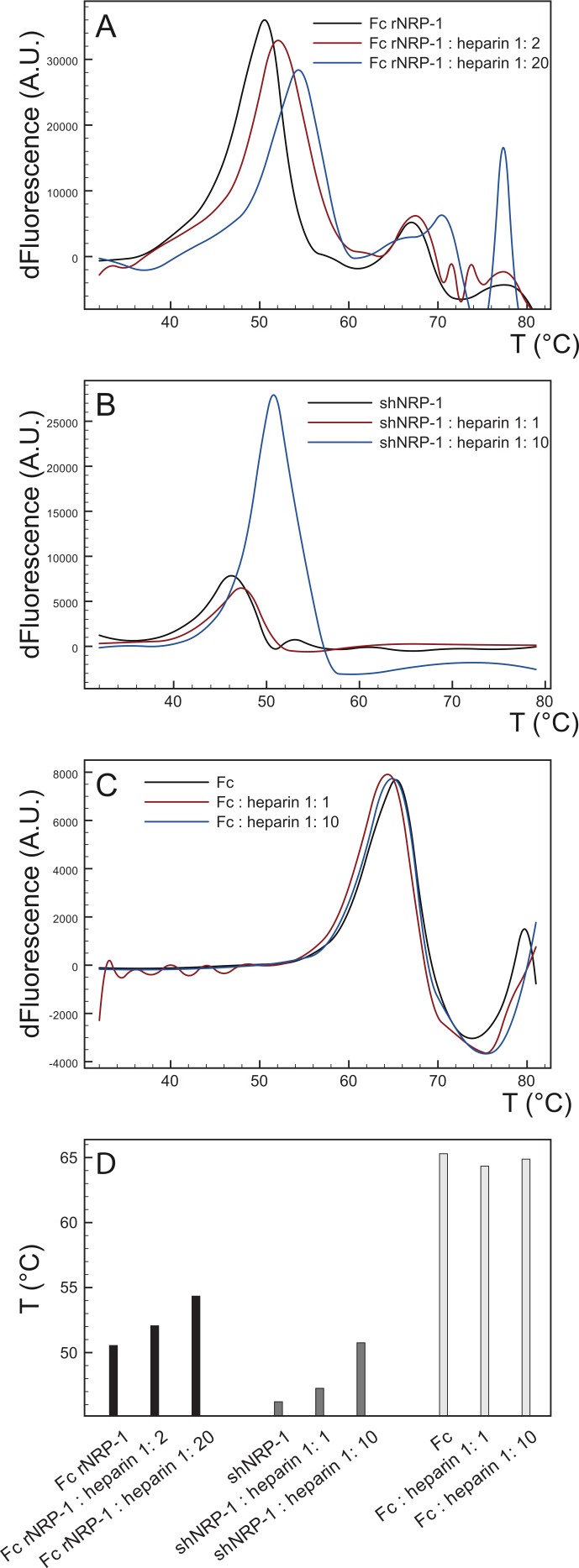
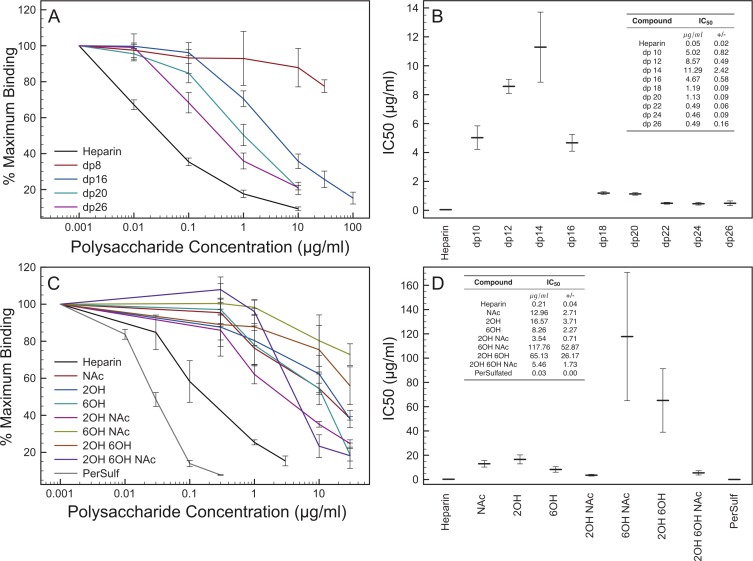
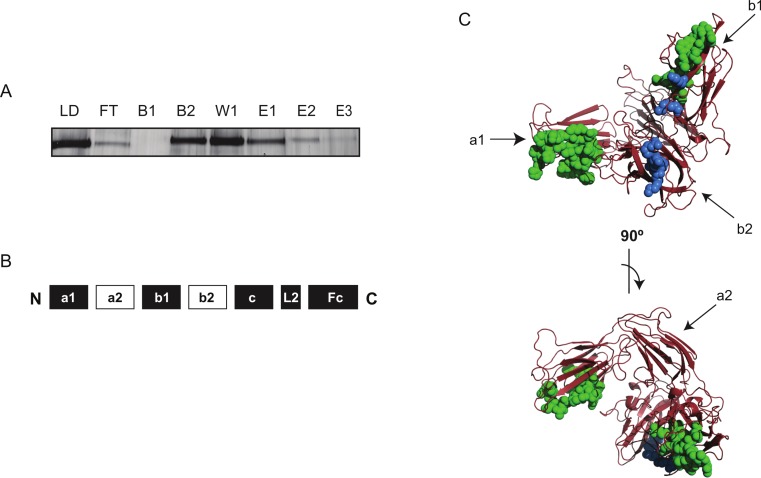
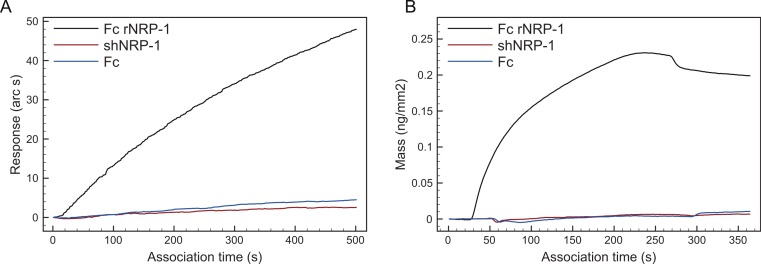
Background. Neuropilin-1 (NRP-1) is a multidomain membrane protein with soluble isoforms interacting with a complex network of other membrane receptors, their respective ligands and heparan sulfate (HS). It is involved in the development of vasculature, neural patterning, immunological responses and pathological angiogenesis. Methods. We have characterised the binding of a Fc fusion of rat NRP-1 (Fc rNRP-1) and of a soluble isoform, corresponding to the first four extracellular domains of human NRP-1, shNRP-1, using optical biosensor-based binding assays with a library of heparin derivatives. Selective labelling of lysines protected upon heparin binding allowed their identification by mass spectrometry. Results. Fc rNRP-1 bound to heparin with high affinity (2.5 nM) and fast ka (9.8 × 10(6) M(-1)s(-1)). Unusually, NRP-1 bound both highly sulfated and completely desulfated stretches of heparin and exhibited a complex pattern of preferences for chemically modified heparins possessing one or two sulfate groups, e.g., it bound heparin with just a 6-O sulfate group better than heparin with any two of N-sulfate, 6-O sulfate and 2-O sulfate. Mass-spectrometry based mapping identified that, in addition to the expected the b1 domain, the a1, and c domains and the L2 linker were also involved in the interaction. In contrast, shNRP-1 bound heparin far more weakly. This could only be shown by affinity chromatography and by differential scanning fluorimetry. Discussion. The results suggest that the interaction of NRP-1 with HS is more complex than anticipated and involving a far greater extent of the protein than just the b1-b2 domains. NRP-1's preference for binding long saccharide structures suggests it has the potential to bind large segments of HS chains and so organise their local structure. In contrast, the four domain soluble isoform, shNRP-1 binds heparin weakly and so would be expected to diffuse away rapidly from the source cell.
神经纤毛蛋白-1(NRP-1)是一种具有多个结构域的膜蛋白,其可溶性异构体与其他膜受体、各自的配体和肝素硫酸盐(HS)的复杂网络相互作用。它参与了脉管系统的发育、神经模式形成、免疫反应和病理性血管生成。方法:我们使用基于光学生物传感器的结合测定法,用肝素衍生物文库对大鼠 NRP-1(Fc rNRP-1)和可溶性同种型(对应于人 NRP-1 的前四个细胞外结构域)shNRP-1 的结合进行了表征。肝素结合保护的赖氨酸的选择性标记允许通过质谱法对其进行鉴定。结果:Fc rNRP-1 与肝素具有高亲和力(2.5 nM)和快速 ka(9.8×10(6)M(-1)s(-1))。不同寻常的是,NRP-1 结合了高度硫酸化和完全去硫酸化的肝素片段,并表现出对具有一个或两个硫酸基团的化学修饰肝素的复杂偏好模式,例如,它与仅具有 6-O 硫酸基团的肝素的结合比具有任何两个 N-硫酸、6-O 硫酸和 2-O 硫酸的肝素更好。基于质谱的作图确定,除了预期的 b1 结构域外,a1 结构域、c 结构域和 L2 接头也参与了相互作用。相比之下,shNRP-1 与肝素的结合要弱得多。这只能通过亲和层析和差示扫描荧光法来显示。讨论:结果表明,NRP-1 与 HS 的相互作用比预期的更为复杂,涉及的蛋白区域远远超出 b1-b2 结构域。NRP-1 对结合长糖链结构的偏好表明,它有可能结合 HS 链的大段,从而组织其局部结构。相比之下,四结构域可溶性同种型 shNRP-1 与肝素的结合较弱,因此预计会迅速从源细胞扩散。