Hamilton Garth, Abraham Aswin G, Morton Jennifer, Sampson Oliver, Pefani Dafni E, Khoronenkova Svetlana, Grawenda Anna, Papaspyropoulos Angelos, Jamieson Nigel, McKay Colin, Sansom Owen, Dianov Grigory L, O'Neill Eric
Cancer Research UK/MRC Oxford Institute, Department of Oncology, University of Oxford, Old Road Campus, Roosevelt Drive, UK; These authors contributed equally to this work.
Beatson Institute for Cancer Research, Garscube Estate, Switchback Road, Glasgow, UK.
Oncotarget. 2014 Aug 15;5(15):6142-67. doi: 10.18632/oncotarget.2178.
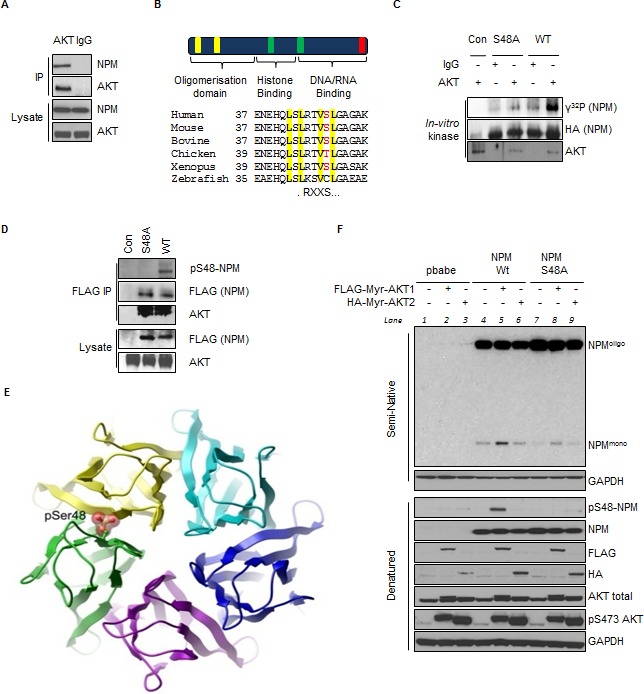
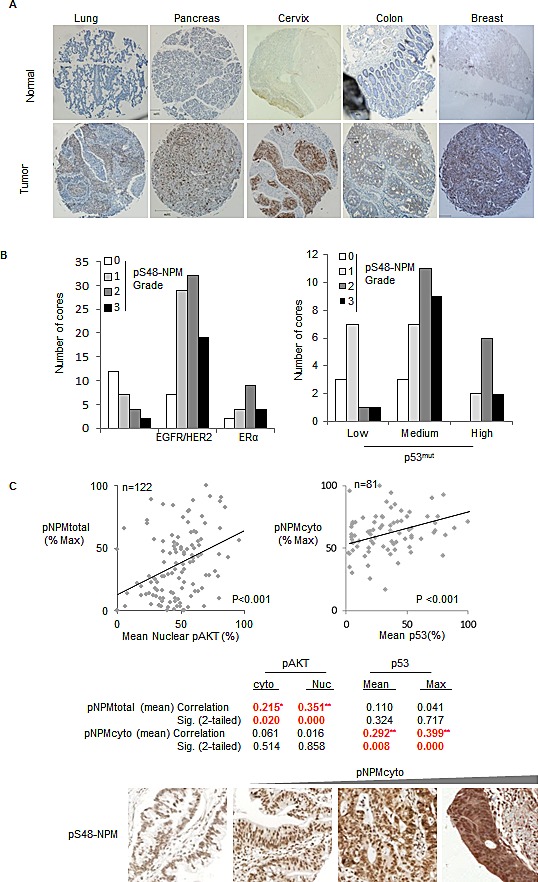
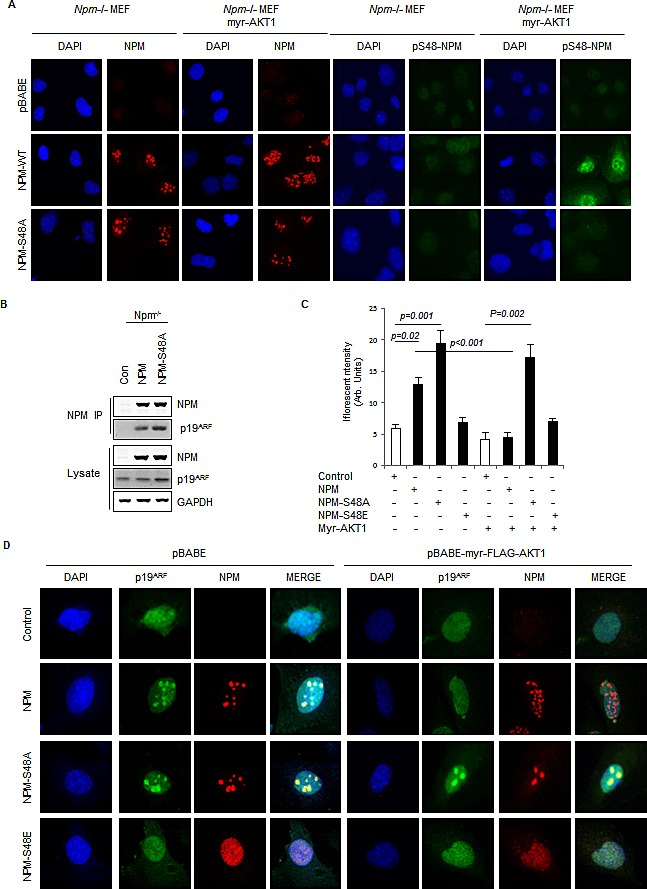
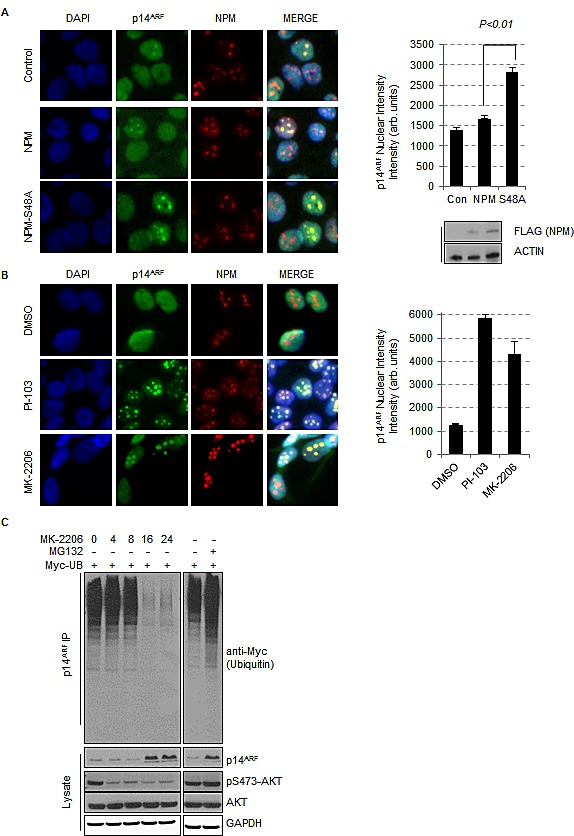
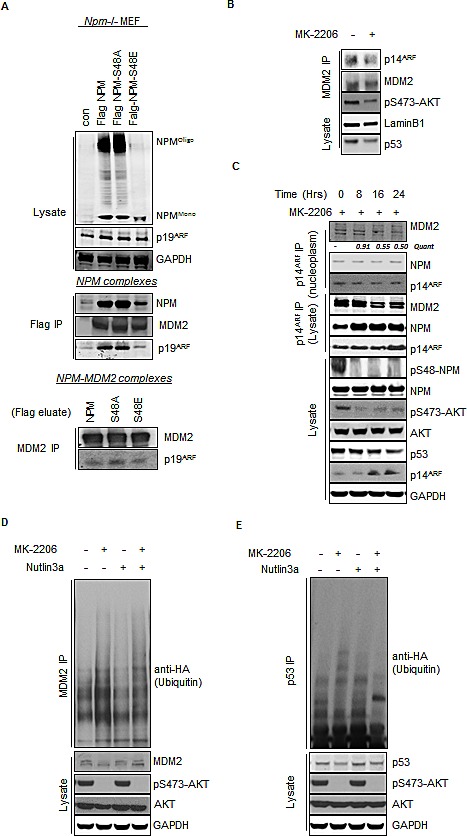
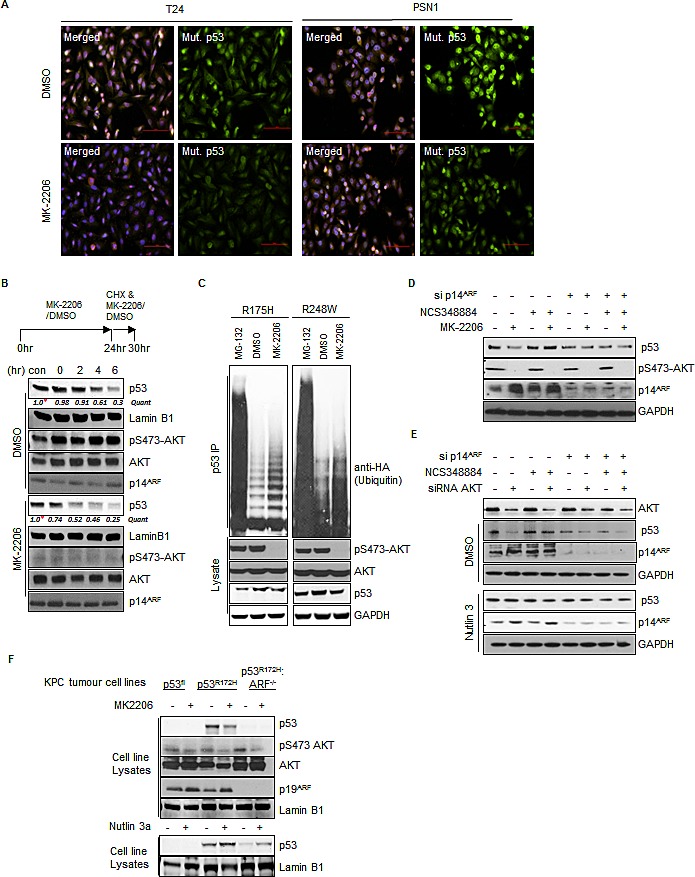
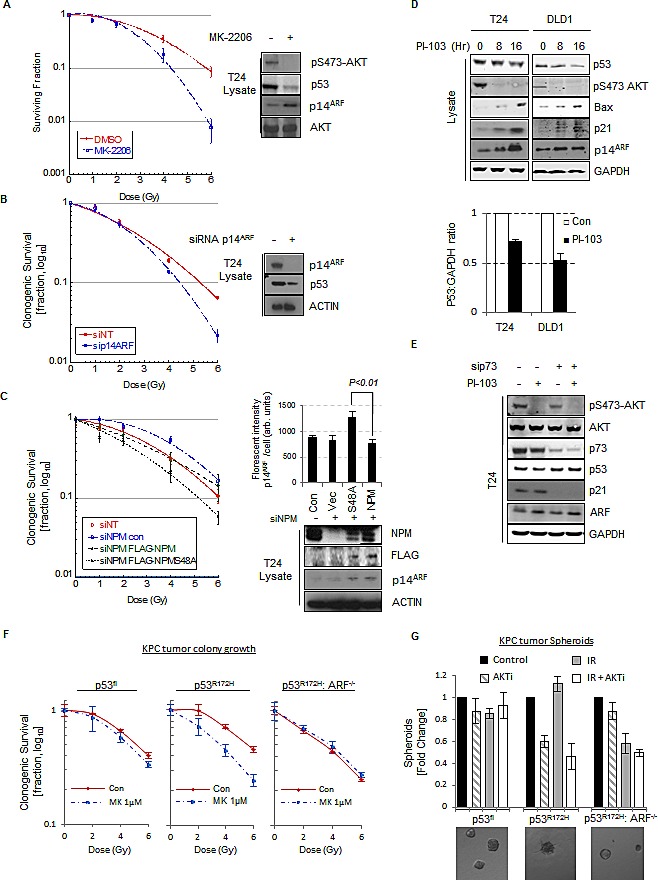
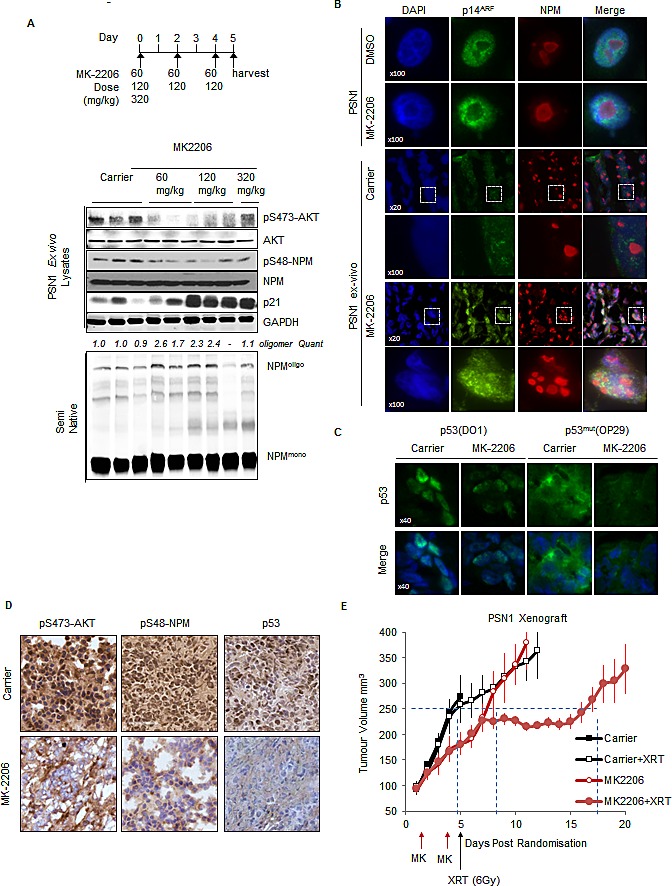
Nucleophosmin (NPM) is known to regulate ARF subcellular localization and MDM2 activity in response to oncogenic stress, though the precise mechanism has remained elusive. Here we describe how NPM and ARF associate in the nucleoplasm to form a MDM2 inhibitory complex. We find that oligomerization of NPM drives nucleolar accumulation of ARF. Moreover, the formation of NPM and ARF oligomers antagonizes MDM2 association with the inhibitory complex, leading to activation of MDM2 E3-ligase activity and targeting of p53. We find that AKT phosphorylation of NPM-Ser48 prevents oligomerization that results in nucleoplasmic localization of ARF, constitutive MDM2 inhibition and stabilization of p53. We also show that ARF promotes p53 mutant stability in tumors and suppresses p73 mediated p21 expression and senescence. We demonstrate that AKT and PI3K inhibitors may be effective in treatment of therapeutically resistant tumors with elevated AKT and carrying gain of function mutations in p53. Our results show that the clinical candidate AKT inhibitor MK-2206 promotes ARF nucleolar localization, reduced p53(mut) stability and increased sensitivity to ionizing radiation in a xenograft model of pancreatic cancer. Analysis of human tumors indicates that phospho-S48-NPM may be a useful biomarker for monitoring AKT activity and in vivo efficacy of AKT inhibitor treatment. Critically, we propose that combination therapy involving PI3K-AKT inhibitors would benefit from a patient stratification rationale based on ARF and p53(mut) status.
已知核仁磷酸蛋白(NPM)可响应致癌应激调节ARF的亚细胞定位和MDM2活性,但其确切机制仍不清楚。在此,我们描述了NPM和ARF如何在核质中结合形成MDM2抑制复合物。我们发现NPM的寡聚化驱动ARF在核仁中积累。此外,NPM和ARF寡聚体的形成拮抗MDM2与抑制复合物的结合,导致MDM2 E3连接酶活性的激活和p53的靶向作用。我们发现NPM-Ser48的AKT磷酸化可防止寡聚化,从而导致ARF的核质定位、MDM2的组成性抑制和p53的稳定。我们还表明,ARF可促进肿瘤中p53突变体的稳定性,并抑制p73介导的p21表达和衰老。我们证明,AKT和PI3K抑制剂可能对治疗具有升高的AKT且携带p53功能获得性突变的治疗抗性肿瘤有效。我们的结果表明,临床候选AKT抑制剂MK-2206在胰腺癌异种移植模型中促进ARF核仁定位、降低p53(mut)稳定性并增加对电离辐射的敏感性。对人类肿瘤的分析表明,磷酸化S48-NPM可能是监测AKT活性和AKT抑制剂治疗体内疗效的有用生物标志物。至关重要的是,我们提出基于ARF和p53(mut)状态的患者分层理论将使涉及PI3K-AKT抑制剂的联合治疗受益。