Experimental 7T MRI Unit, IDIBAPS, Institut d'Investigacions Biomèdiques August Pi i Sunyer Barcelona, Spain.
Expert Ymaging S.L. Barcelona, Spain.
Front Aging Neurosci. 2014 Jul 23;6:167. doi: 10.3389/fnagi.2014.00167. eCollection 2014.
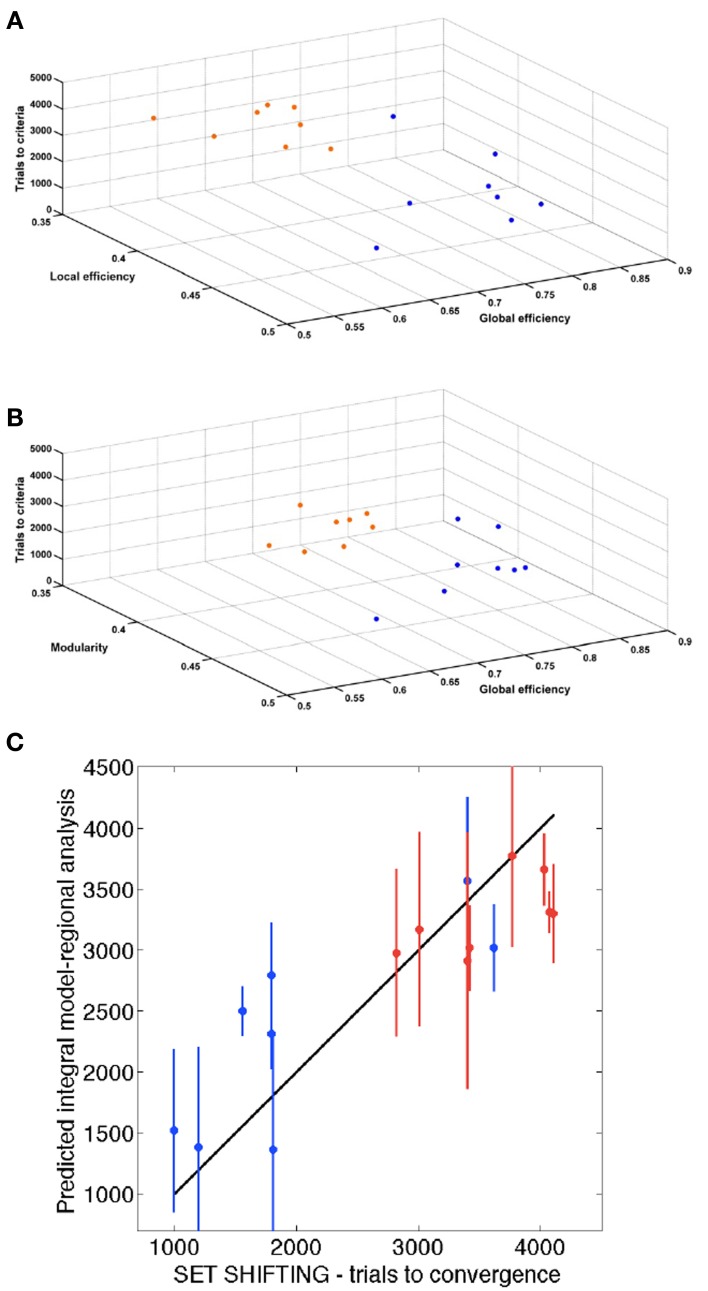
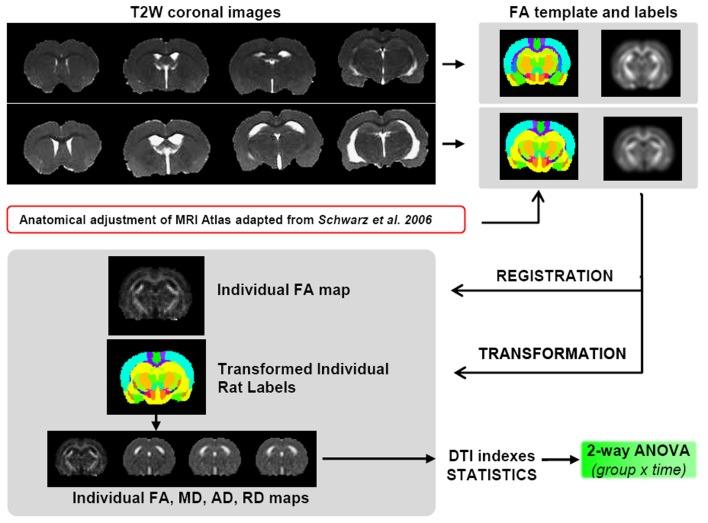
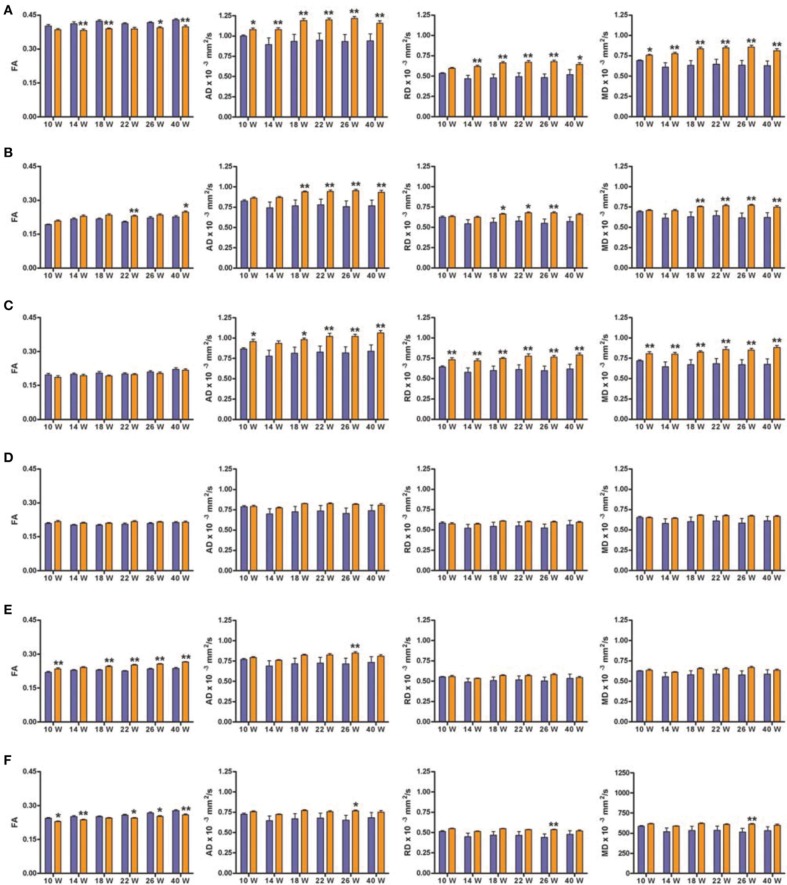
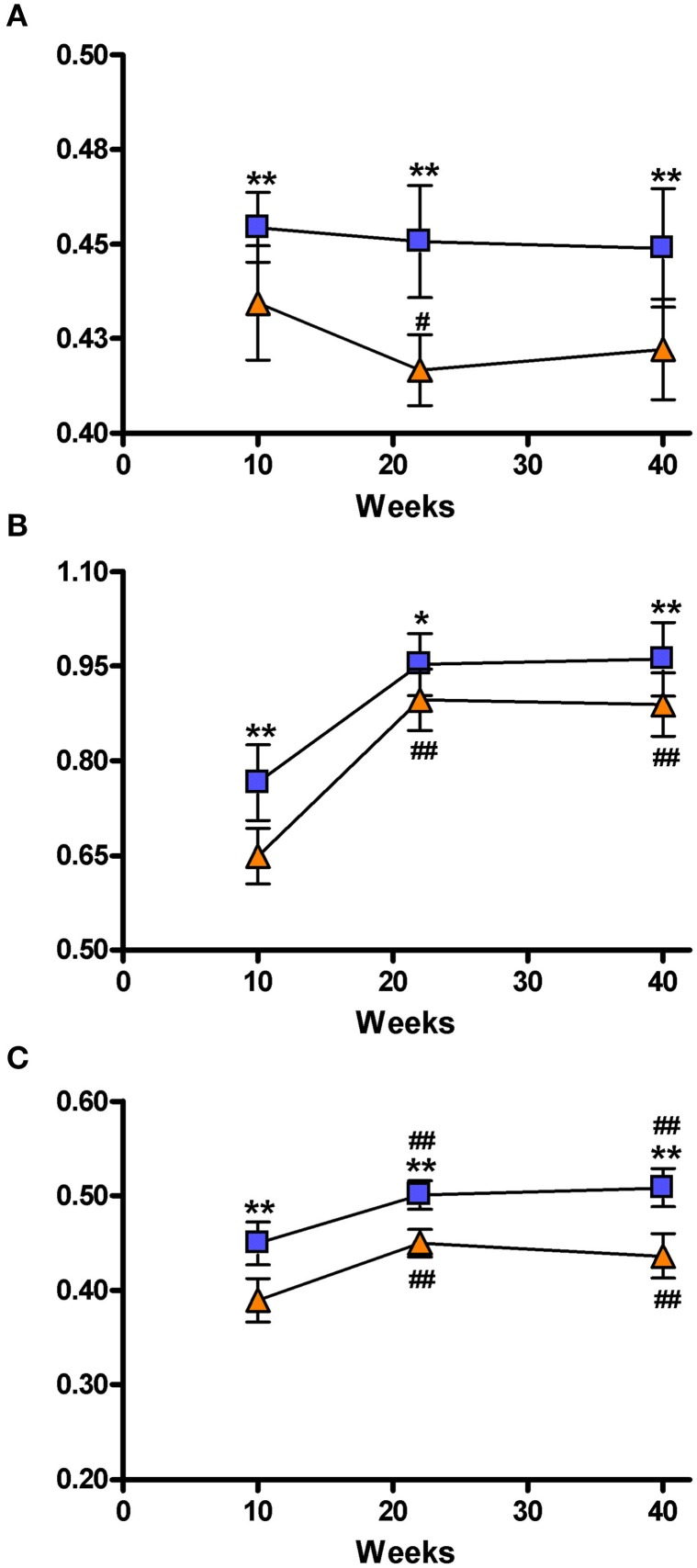
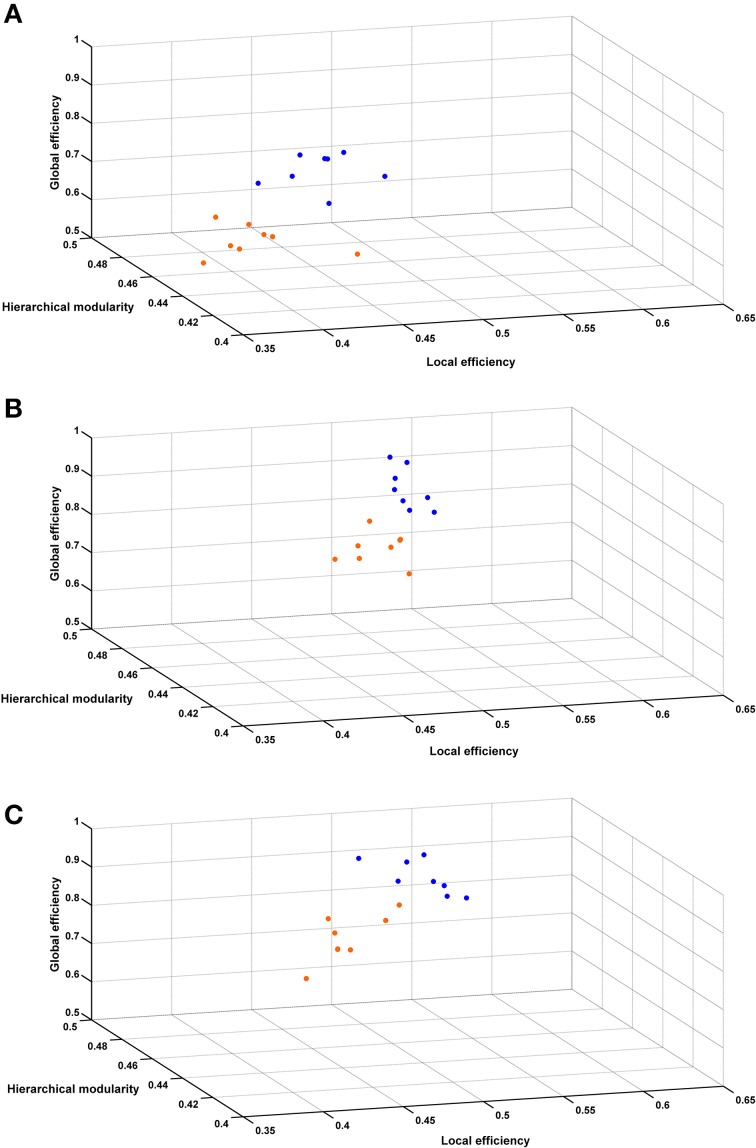
The identification of biomarkers of vascular cognitive impairment is urgent for its early diagnosis. The aim of this study was to detect and monitor changes in brain structure and connectivity, and to correlate them with the decline in executive function. We examined the feasibility of early diagnostic magnetic resonance imaging (MRI) to predict cognitive impairment before onset in an animal model of chronic hypertension: Spontaneously Hypertensive Rats. Cognitive performance was tested in an operant conditioning paradigm that evaluated learning, memory, and behavioral flexibility skills. Behavioral tests were coupled with longitudinal diffusion weighted imaging acquired with 126 diffusion gradient directions and 0.3 mm(3) isometric resolution at 10, 14, 18, 22, 26, and 40 weeks after birth. Diffusion weighted imaging was analyzed in two different ways, by regional characterization of diffusion tensor imaging (DTI) indices, and by assessing changes in structural brain network organization based on Q-Ball tractography. Already at the first evaluated times, DTI scalar maps revealed significant differences in many regions, suggesting loss of integrity in white and gray matter of spontaneously hypertensive rats when compared to normotensive control rats. In addition, graph theory analysis of the structural brain network demonstrated a significant decrease of hierarchical modularity, global and local efficacy, with predictive value as shown by regional three-fold cross validation study. Moreover, these decreases were significantly correlated with the behavioral performance deficits observed at subsequent time points, suggesting that the diffusion weighted imaging and connectivity studies can unravel neuroimaging alterations even overt signs of cognitive impairment become apparent.
血管性认知障碍生物标志物的鉴定对于其早期诊断至关重要。本研究旨在检测和监测脑结构和连接的变化,并将其与执行功能下降相关联。我们研究了磁共振成像(MRI)在慢性高血压动物模型中早期诊断以预测认知障碍的可行性:自发性高血压大鼠。认知性能通过操作性条件反射范式进行测试,该范式评估了学习、记忆和行为灵活性技能。行为测试与纵向扩散加权成像相结合,在出生后 10、14、18、22、26 和 40 周时使用 126 个扩散梯度方向和 0.3mm³等距分辨率进行采集。扩散加权成像通过两种不同的方式进行分析,一种是通过弥散张量成像(DTI)指数的区域特征化,另一种是通过评估基于 Q 球轨迹的结构脑网络组织的变化。在第一次评估时,DTI 标量图已经显示出许多区域的显著差异,这表明与正常血压对照大鼠相比,自发性高血压大鼠的白质和灰质完整性丧失。此外,结构脑网络的图论分析表明,层次模块化、全局和局部效率显著降低,区域三倍交叉验证研究表明具有预测价值。此外,这些降低与随后时间点观察到的行为表现缺陷显著相关,表明扩散加权成像和连接研究可以揭示神经影像学改变,即使认知障碍的明显迹象变得明显。