von Rundstedt Friedrich Carl, Lerner Seth P, Godoy Guilherme, Amiel Gilad, Wheeler Thomas M, Truong Luan D, Shen Steven S
Scott Department of Urology, Department of Pathology, Baylor College of Medicine, Houston, Texas; Department of Pathology and Genomic Medicine, Houston Methodist Hospital (LDT, SSS), Houston, Texas.
Scott Department of Urology, Department of Pathology, Baylor College of Medicine, Houston, Texas; Department of Pathology and Genomic Medicine, Houston Methodist Hospital (LDT, SSS), Houston, Texas.
J Urol. 2015 Jan;193(1):58-63. doi: 10.1016/j.juro.2014.07.114. Epub 2014 Aug 12.
We determined the likelihood that transurethral resection biopsy of the prostatic urethra adjacent to the verumontanum would detect prostatic involvement of urothelial carcinoma in patients with bladder carcinoma.
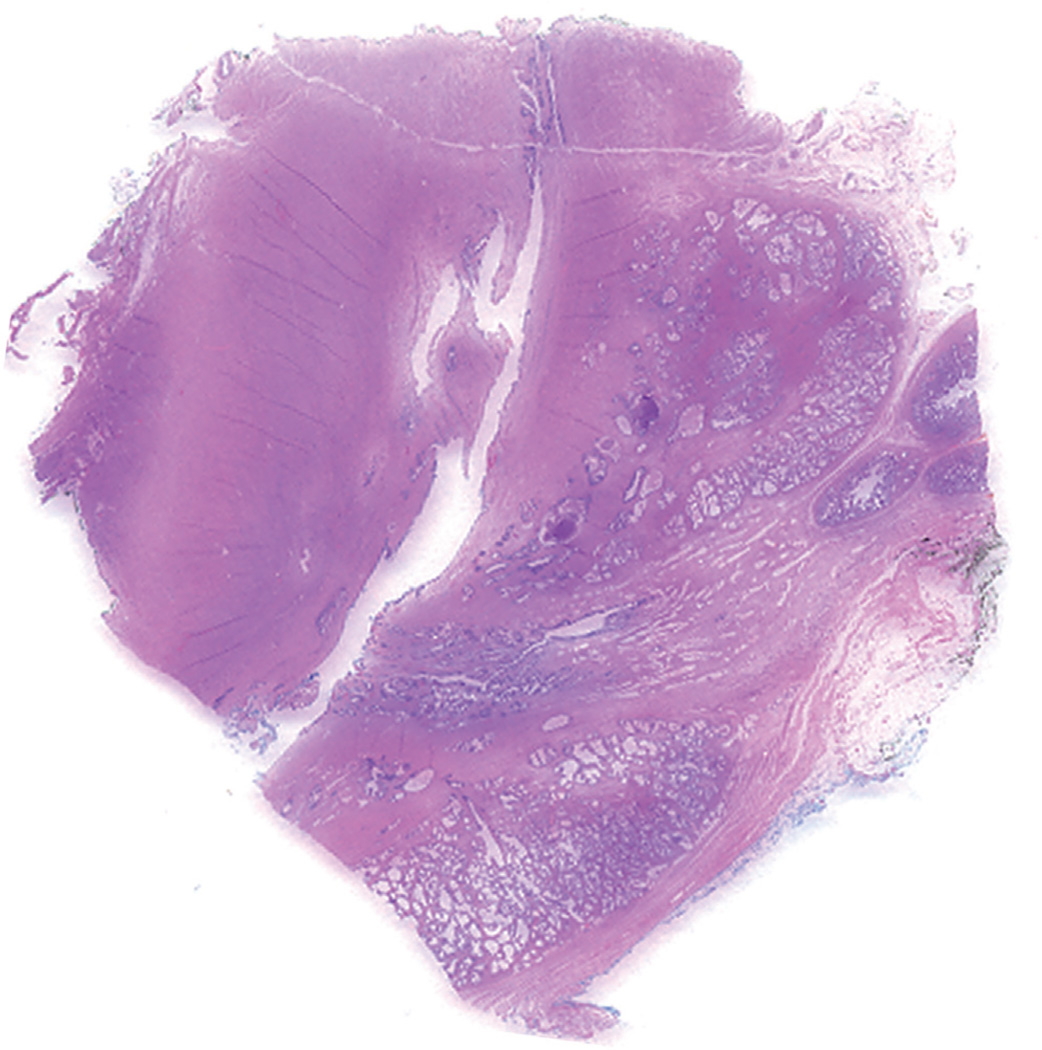
We compared precystectomy transurethral resection biopsy specimens of the prostatic urethra with those of the matched radical cystoprostatectomy in 272 patients with urothelial carcinoma of the bladder. All prostates were evaluated by whole mount step sections.
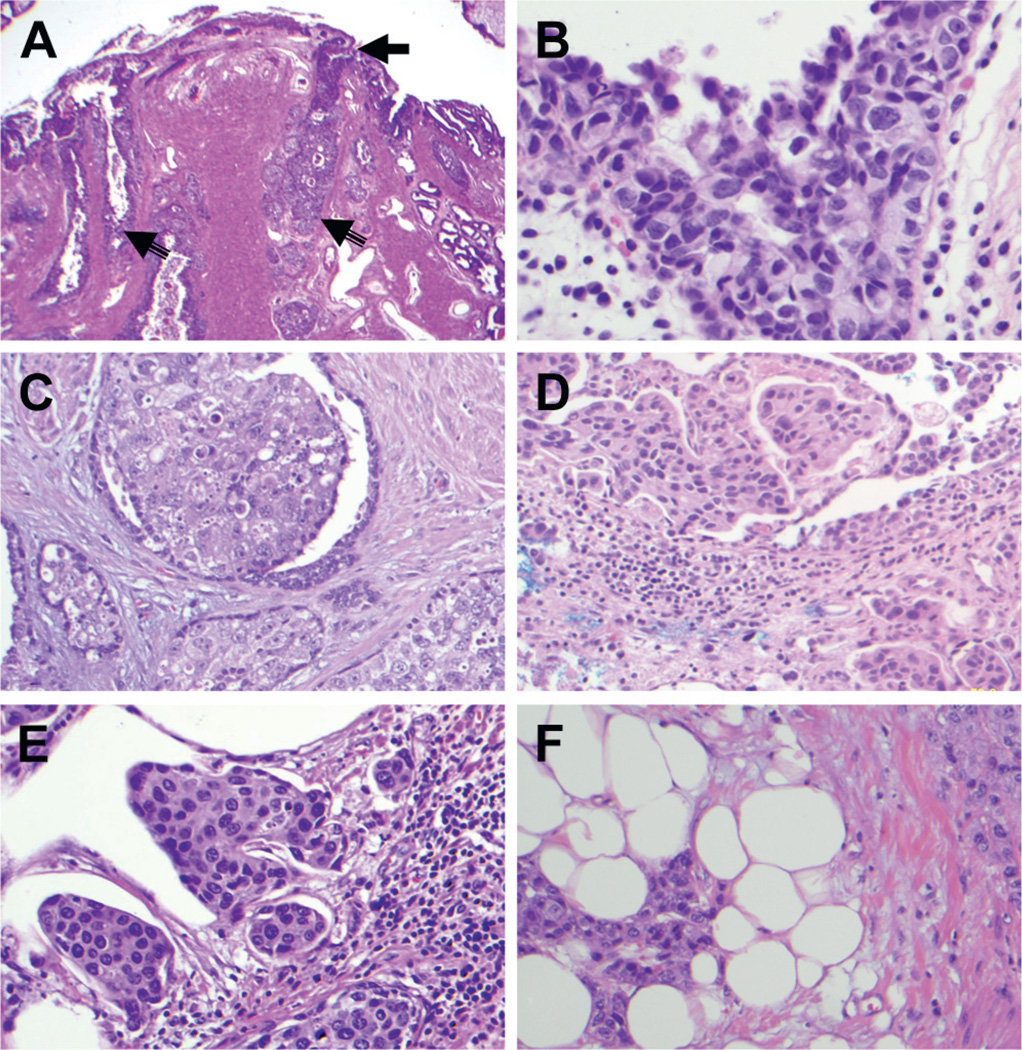
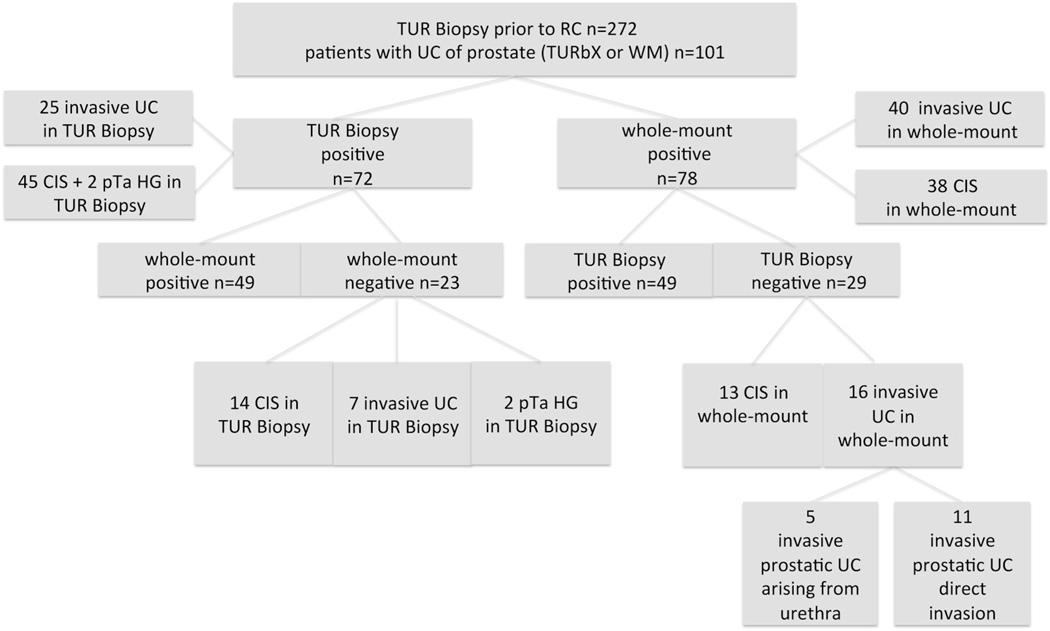
Prostatic involvement by urothelial carcinoma was detected by transurethral resection biopsy or radical cystoprostatectomy in 101 patients (37.1%). Transurethral resection biopsy detected urothelial carcinoma in 72 cases with 71.3% sensitivity and 100% specificity. The overall accuracy of transurethral resection biopsy to detect urothelial carcinoma of the prostate was 89% (positive and negative predictive values 100% and 86%, respectively). Invasive prostatic urothelial carcinoma arising from the prostatic urethra was detected by transurethral resection biopsy in 21 of 26 patients (81%) while prostatic carcinoma in situ was detected in 39 of 52 (75%). Transurethral resection biopsy detected prostatic invasive urothelial carcinoma resulting from transmural invasion of a bladder tumor in 4 of 15 patients.
Prostatic involvement by urothelial carcinoma of the bladder was found in 37.1% of patients. Transurethral resection biopsy missed most tumors resulting from transmural invasion of the bladder primary lesion. Carcinoma in situ and invasive urothelial carcinoma arising from the prostatic urethra were detected in most cases. Transurethral resection biopsy of the prostatic urethra can complement staging and support clinical decision making with respect to neoadjuvant chemotherapy and planning for an orthotopic neobladder.
我们确定了对精阜附近前列腺尿道进行经尿道切除活检,以检测膀胱癌患者前列腺是否受尿路上皮癌侵犯的可能性。
我们比较了272例膀胱尿路上皮癌患者在膀胱切除术前前列腺尿道的经尿道切除活检标本与配对的根治性膀胱前列腺切除术标本。所有前列腺均通过连续整块切片进行评估。
101例患者(37.1%)经经尿道切除活检或根治性膀胱前列腺切除术检测到前列腺受尿路上皮癌侵犯。经尿道切除活检在72例中检测到尿路上皮癌,敏感性为71.3%,特异性为100%。经尿道切除活检检测前列腺尿路上皮癌的总体准确率为89%(阳性预测值和阴性预测值分别为100%和86%)。经尿道切除活检在26例患者中的21例(81%)检测到起源于前列腺尿道的浸润性前列腺尿路上皮癌,而在52例中的39例(75%)检测到前列腺原位癌。经尿道切除活检在15例患者中的4例检测到由膀胱肿瘤透壁侵犯导致的前列腺浸润性尿路上皮癌。
37.1%的患者发现膀胱尿路上皮癌侵犯前列腺。经尿道切除活检漏诊了大多数由膀胱原发病变透壁侵犯导致的肿瘤。大多数情况下检测到了起源于前列腺尿道的原位癌和浸润性尿路上皮癌。前列腺尿道的经尿道切除活检可补充分期,并为新辅助化疗和原位新膀胱的规划提供临床决策支持。