Chen Ci-Di, Tung Tze Yu, Liang Jennifer, Zeldich Ella, Tucker Zhou Tracey B, Turk Benjamin E, Abraham Carmela R
Departments of Biochemistry, ‡Biology, and §Pharmacology and Experimental Therapeutics, Boston University School of Medicine , Boston, Massachusetts 02118, United States.
Biochemistry. 2014 Sep 2;53(34):5579-87. doi: 10.1021/bi500409n. Epub 2014 Aug 20.
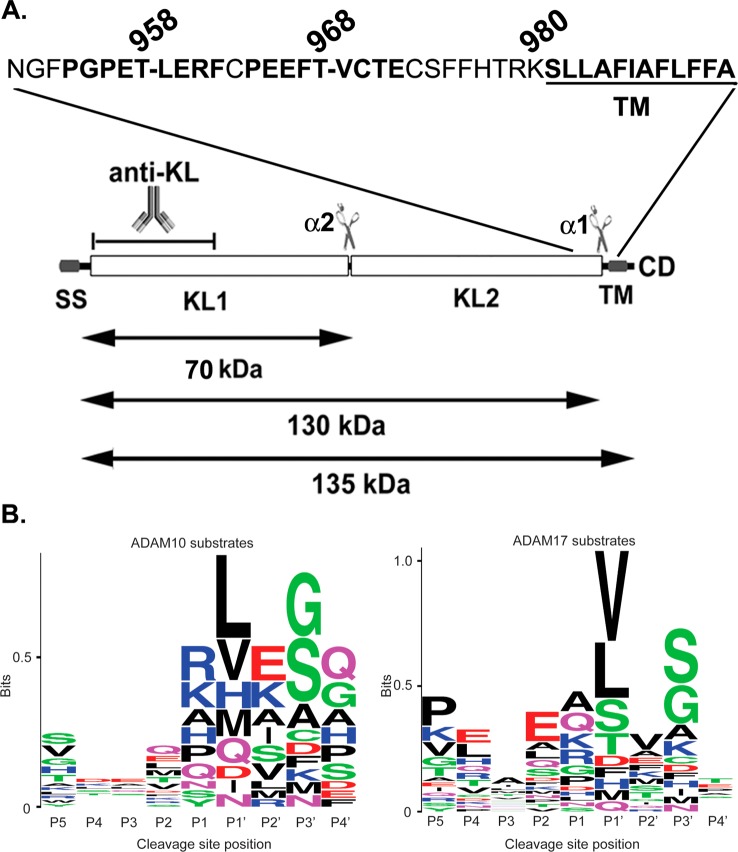
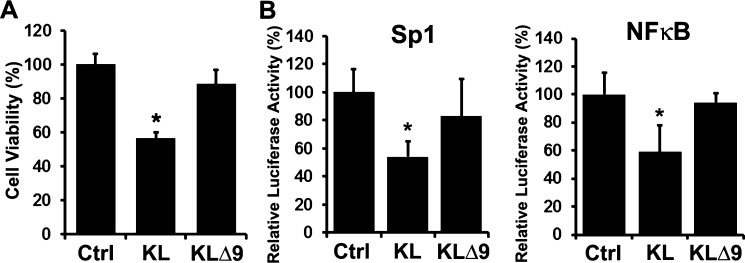
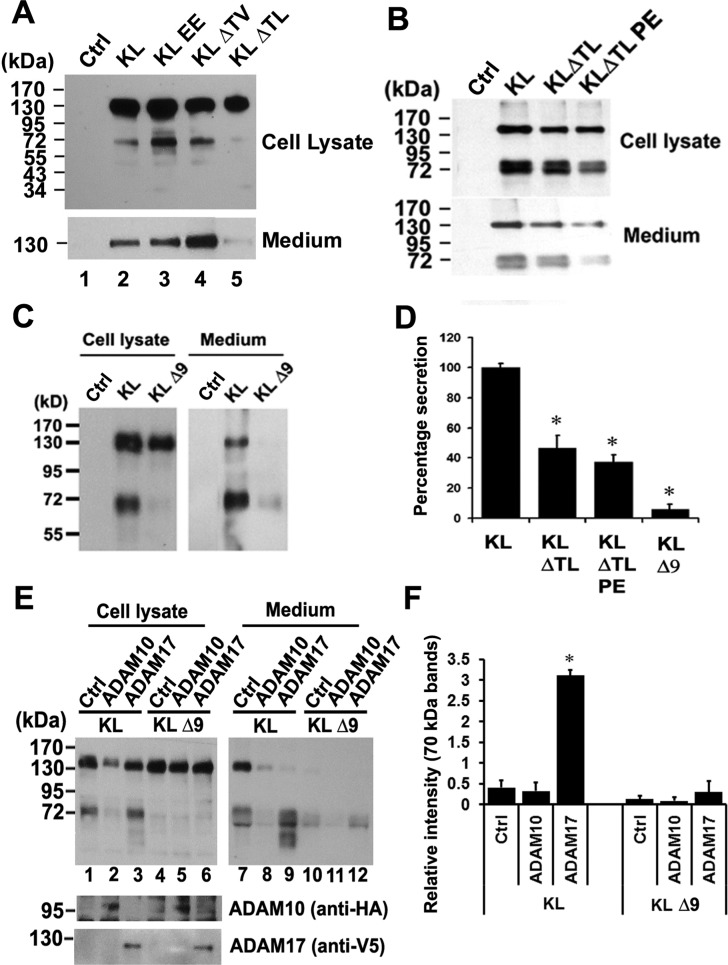
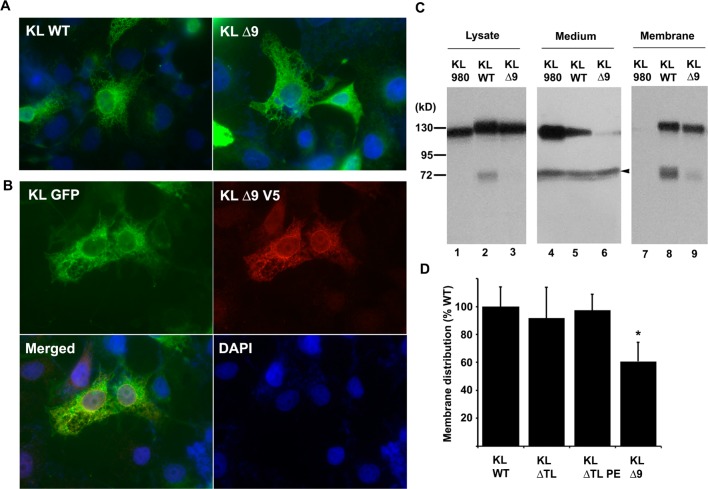
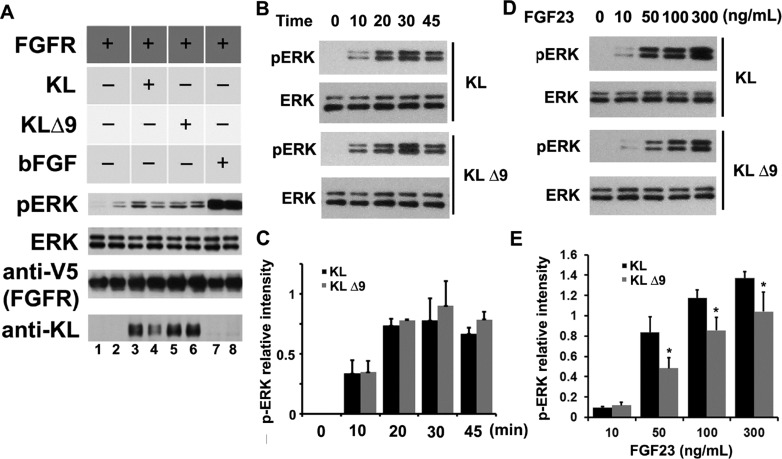
Membrane protein shedding is a critical step in many normal and pathological processes. The anti-aging protein klotho (KL), mainly expressed in kidney and brain, is secreted into the serum and CSF, respectively. KL is proteolytically released, or shed, from the cell surface by ADAM10 and ADAM17, which are the α-secretases that also cleave the amyloid precursor protein and other proteins. The transmembrane KL is a coreceptor with the FGF receptor for FGF23, whereas the shed form acts as a circulating hormone. However, the precise cleavage sites in KL are unknown. KL contains two major cleavage sites: one close to the juxtamembrane region and another between the KL1 and KL2 domains. We identified the cleavage site involved in KL release by mutating potential sheddase(s) recognition sequences and examining the production of the KL extracellular fragments in transfected COS-7 cells. Deletion of amino acids T958 and L959 results in a 50-60% reduction in KL shedding, and an additional P954E mutation results in further reduction of KL shedding by 70-80%. Deletion of amino acids 954-962 resulted in a 94% reduction in KL shedding. This mutant also had moderately decreased cell surface expression, yet had overall similar subcellular localization as that of WT KL, as demonstrated by immunofluorescence. Cleavage-resistant mutants could function as a FGFR coreceptor for FGF23, but they lost activity as a soluble form of KL in proliferation and transcriptional reporter assays. Cleavage between the KL1 and KL2 domains is dependent on juxtamembrane cleavage. Our results shed light onto mechanisms underlying KL release from the cell membrane and provide a target for potential pharmacologic interventions aimed at regulating KL secretion.
膜蛋白脱落是许多正常和病理过程中的关键步骤。抗衰老蛋白α-klotho(KL)主要在肾脏和大脑中表达,分别分泌到血清和脑脊液中。KL通过ADAM10和ADAM17从细胞表面被蛋白水解释放或脱落,这两种α-分泌酶也能切割淀粉样前体蛋白和其他蛋白质。跨膜KL是FGF23的FGF受体的共受体,而脱落形式则作为循环激素发挥作用。然而,KL中确切的切割位点尚不清楚。KL包含两个主要切割位点:一个靠近跨膜区,另一个位于KL1和KL2结构域之间。我们通过突变潜在的脱落酶识别序列并检测转染的COS-7细胞中KL细胞外片段的产生,确定了参与KL释放的切割位点。缺失氨基酸T958和L959会导致KL脱落减少50%-60%,额外的P954E突变会使KL脱落进一步减少70%-80%。缺失氨基酸954-962会导致KL脱落减少94%。通过免疫荧光证实,该突变体的细胞表面表达也适度降低,但其亚细胞定位与野生型KL总体相似。抗切割突变体可以作为FGF23的FGFR共受体发挥作用,但在增殖和转录报告基因检测中,它们失去了作为可溶性KL的活性。KL1和KL2结构域之间的切割依赖于跨膜区切割。我们的研究结果揭示了KL从细胞膜释放的潜在机制,并为旨在调节KL分泌的潜在药物干预提供了靶点。