Suktitipat Bhoom, Naktang Chaiwat, Mhuantong Wuttichai, Tularak Thitima, Artiwet Paramita, Pasomsap Ekawat, Jongjaroenprasert Wallaya, Fuchareon Suthat, Mahasirimongkol Surakameth, Chantratita Wasan, Yimwadsana Boonsit, Charoensawan Varodom, Jinawath Natini
Department of Biochemistry, Faculty of Medicine Siriraj Hospital, Mahidol University, Bangkok, Thailand; Integrative Computation BioScience Center (ICBS), Mahidol University, Nakhon Prathom, Thailand.
Department of Biochemistry, Faculty of Science, Mahidol University, Bangkok, Thailand.
PLoS One. 2014 Aug 13;9(8):e104355. doi: 10.1371/journal.pone.0104355. eCollection 2014.
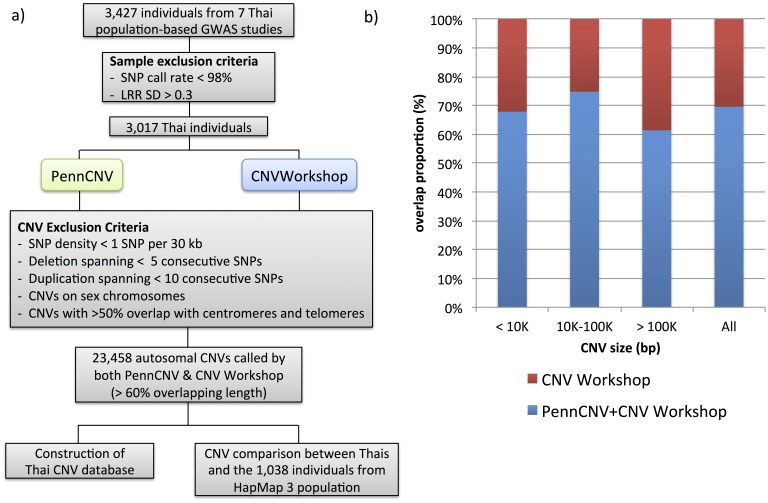
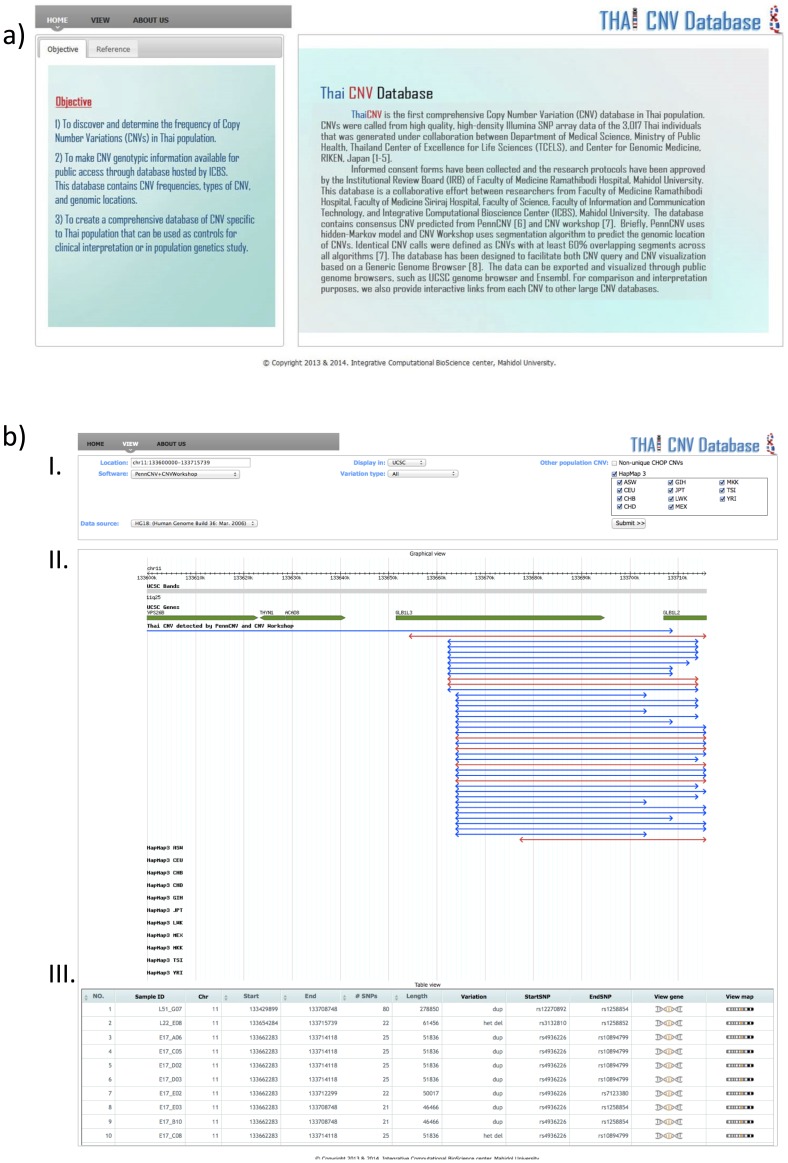
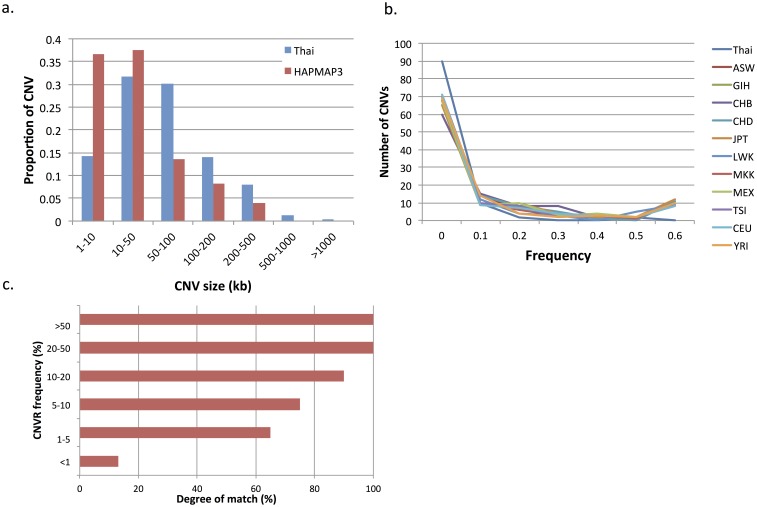
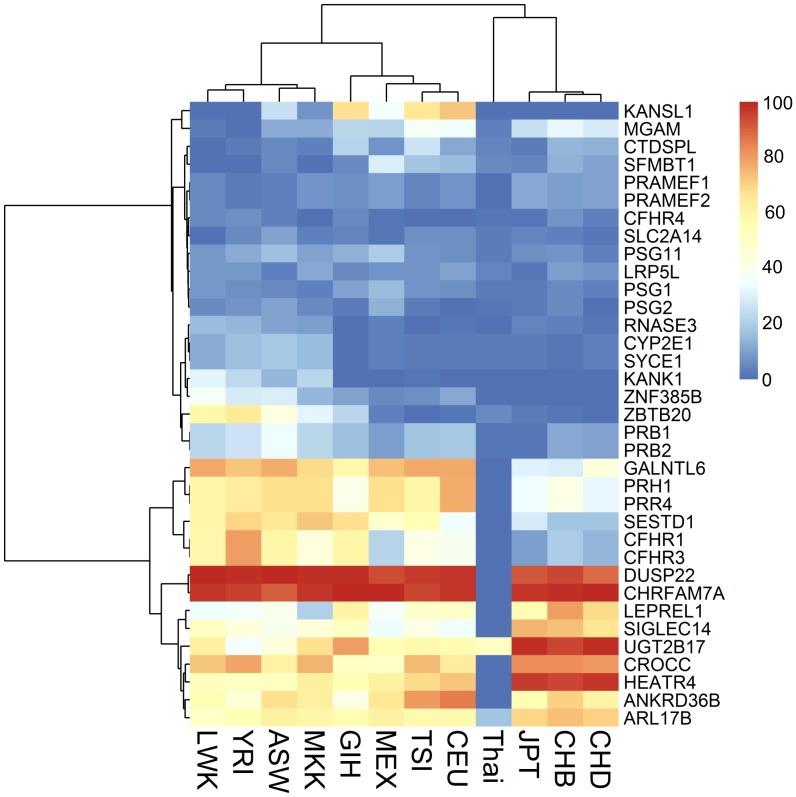
Copy number variation (CNV) is a major genetic polymorphism contributing to genetic diversity and human evolution. Clinical application of CNVs for diagnostic purposes largely depends on sufficient population CNV data for accurate interpretation. CNVs from general population in currently available databases help classify CNVs of uncertain clinical significance, and benign CNVs. Earlier studies of CNV distribution in several populations worldwide showed that a significant fraction of CNVs are population specific. In this study, we characterized and analyzed CNVs in 3,017 unrelated Thai individuals genotyped with the Illumina Human610, Illumina HumanOmniexpress, or Illumina HapMap550v3 platform. We employed hidden Markov model and circular binary segmentation methods to identify CNVs, extracted 23,458 CNVs consistently identified by both algorithms, and cataloged these high confident CNVs into our publicly available Thai CNV database. Analysis of CNVs in the Thai population identified a median of eight autosomal CNVs per individual. Most CNVs (96.73%) did not overlap with any known chromosomal imbalance syndromes documented in the DECIPHER database. When compared with CNVs in the 11 HapMap3 populations, CNVs found in the Thai population shared several characteristics with CNVs characterized in HapMap3. Common CNVs in Thais had similar frequencies to those in the HapMap3 populations, and all high frequency CNVs (>20%) found in Thai individuals could also be identified in HapMap3. The majorities of CNVs discovered in the Thai population, however, were of low frequency, or uniquely identified in Thais. When performing hierarchical clustering using CNV frequencies, the CNV data were clustered into Africans, Europeans, and Asians, in line with the clustering performed with single nucleotide polymorphism (SNP) data. As CNV data are specific to origin of population, our population-specific reference database will serve as a valuable addition to the existing resources for the investigation of clinical significance of CNVs in Thais and related ethnicities.
拷贝数变异(CNV)是一种主要的遗传多态性,对遗传多样性和人类进化有重要贡献。将CNV用于诊断目的的临床应用很大程度上依赖于足够的人群CNV数据以进行准确解读。当前可用数据库中普通人群的CNV有助于对临床意义不确定的CNV以及良性CNV进行分类。早期对全球多个群体中CNV分布的研究表明,相当一部分CNV是群体特异性的。在本研究中,我们对3017名无关的泰国个体进行了特征分析和CNV分析,这些个体使用Illumina Human610、Illumina HumanOmniexpress或Illumina HapMap550v3平台进行基因分型。我们采用隐马尔可夫模型和循环二元分割方法来识别CNV,提取了两种算法一致识别出的23458个CNV,并将这些高可信度的CNV编入我们公开可用的泰国CNV数据库。对泰国人群中CNV的分析确定每个个体常染色体CNV的中位数为8个。大多数CNV(96.73%)与DECIPHER数据库中记录的任何已知染色体不平衡综合征均无重叠。与11个HapMap3群体中的CNV相比,泰国人群中发现的CNV与HapMap3中特征化的CNV具有一些共同特征。泰国人中常见CNV的频率与HapMap3群体中的相似,并且在泰国个体中发现的所有高频CNV(>20%)在HapMap3中也能被识别。然而,在泰国人群中发现的大多数CNV频率较低,或为泰国人所特有。当使用CNV频率进行层次聚类时,CNV数据被聚类为非洲人、欧洲人和亚洲人,这与使用单核苷酸多态性(SNP)数据进行的聚类一致。由于CNV数据具有群体特异性,我们的群体特异性参考数据库将作为现有资源的宝贵补充,用于研究泰国人和相关种族中CNV的临床意义。