Griebe Martin, Amann Michael, Hirsch Jochen G, Achtnichts Lutz, Hennerici Michael G, Gass Achim, Szabo Kristina
Department of Neurology, MR Research Neurology, UniversitätsMedizin Mannheim, University of Heidelberg, Mannheim, Germany.
Department of Neurology, University Hospital Basel, Basel, Switzerland; Division of Diagnostic and Interventional Neuroradiology, Department of Radiology, Basel, Switzerland.
PLoS One. 2014 Aug 13;9(8):e103359. doi: 10.1371/journal.pone.0103359. eCollection 2014.
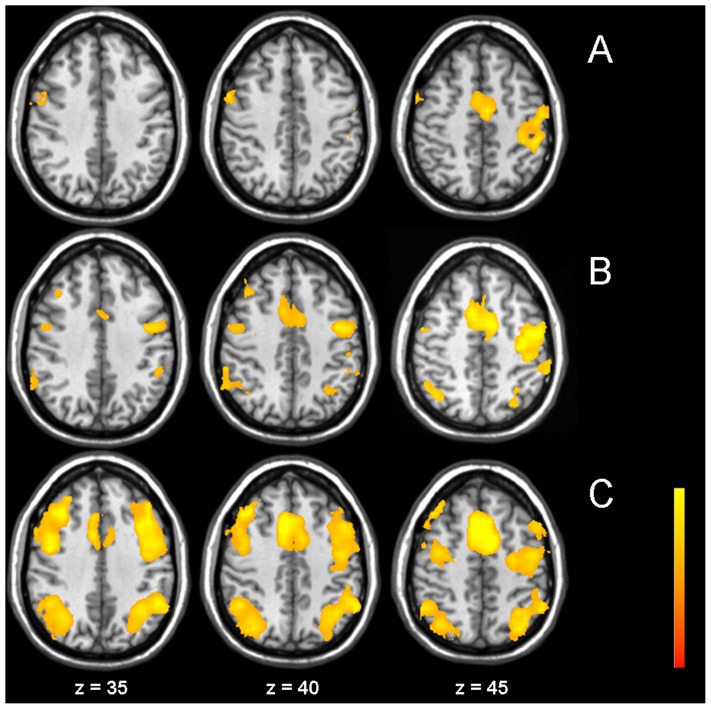
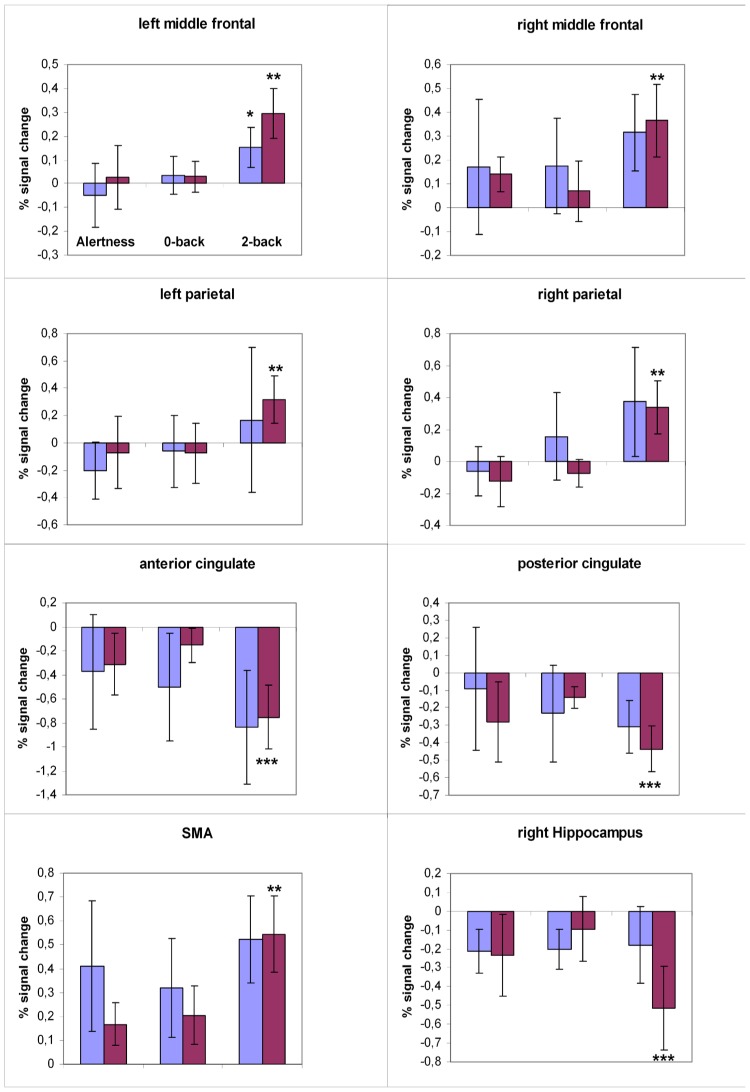
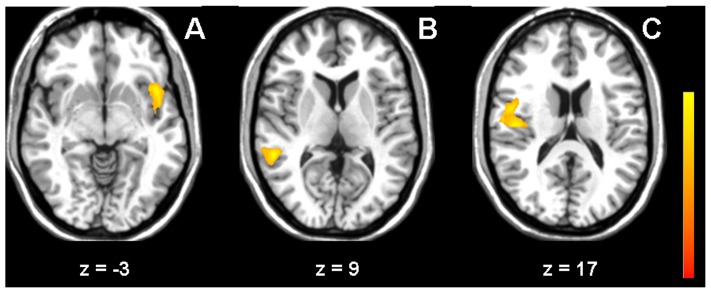
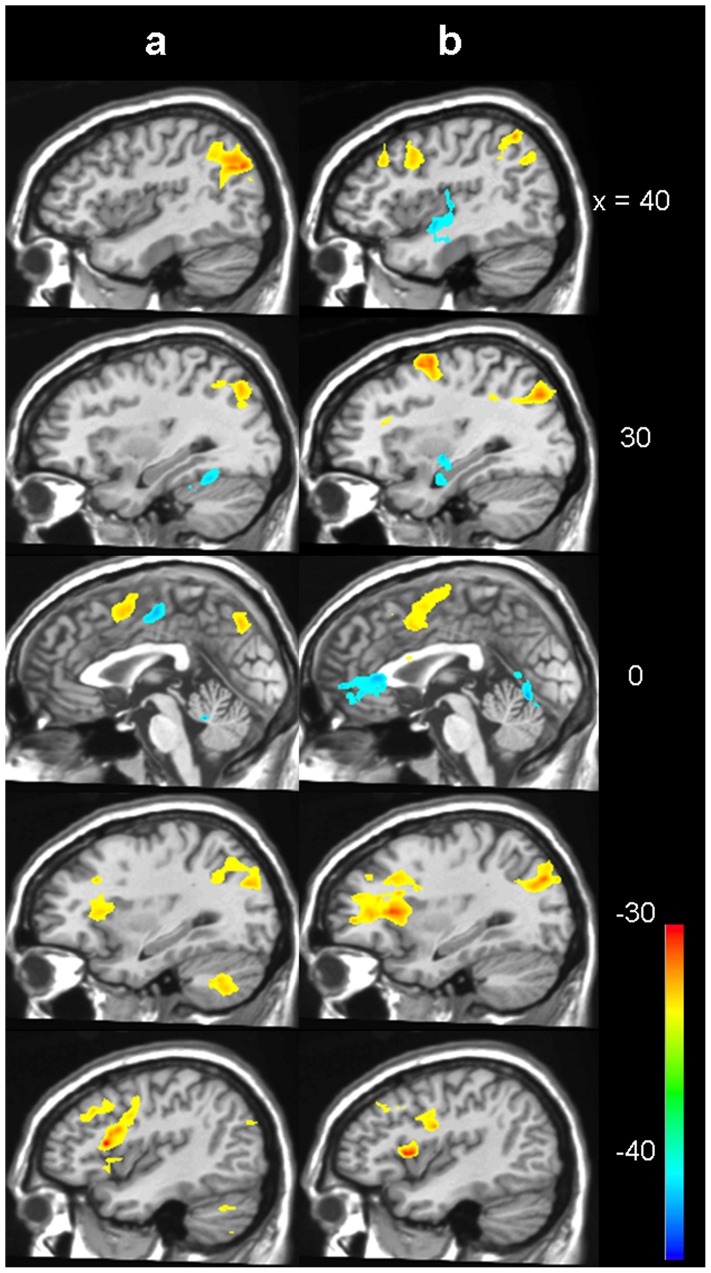
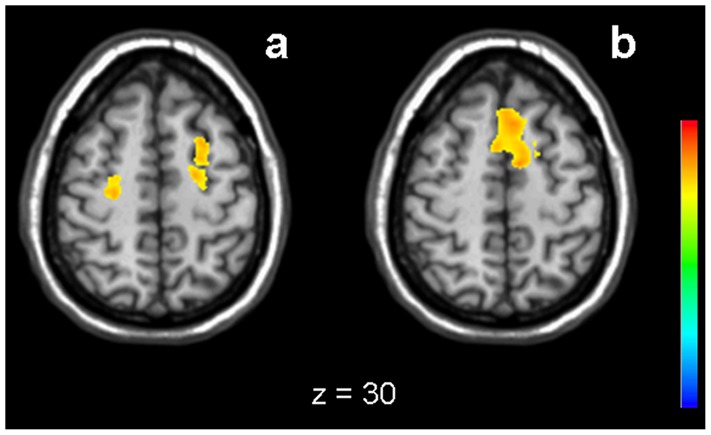
Subcortical age-related white matter changes (ARWMC) are a frequent finding in healthy elderly people suggested to cause secondary tissue changes and possibly affecting cognitive processes. We aimed to determine the influence of the extent of ARWMC load on attention and working memory processes in healthy elderly individuals. Fourteen healthy elderly subjects (MMSE >26; age 55-80 years) performed three fMRI tasks with increasing difficulty assessing alertness, attention (0-back), and working memory (2-back). We compared activation patterns in those with only minimal ARWMC (Fazekas 0-1) to those with moderate to severe ARWMC (Fazekas 2-3). During the fMRI experiments, the study population showed activation in brain areas typically involved in attention and working memory with a recruitment of cortical areas with increasing task difficulty. Subjects with higher lesion load showed a higher activation at all task levels with only sparse increase of signal with increasing complexity. In the lower lesion load group, rising task difficulty lead to a significant and widely distributed increase of activation. Although the number of patients included in the study is small, these findings suggest that even clinically silent ARWMC may affect cognitive processing and lead to compensatory activation during cognitive tasks. This can be interpreted as a reduction of functional reserve and may pose a risk for cognitive decline in these patients.
皮质下年龄相关白质变化(ARWMC)在健康老年人中很常见,提示会导致继发性组织变化,并可能影响认知过程。我们旨在确定ARWMC负荷程度对健康老年人注意力和工作记忆过程的影响。14名健康老年受试者(MMSE>26;年龄55 - 80岁)进行了三项难度递增的功能磁共振成像(fMRI)任务,分别评估警觉性、注意力(0-back)和工作记忆(2-back)。我们将仅有轻微ARWMC(Fazekas 0 - 1级)的受试者与中度至重度ARWMC(Fazekas 2 - 3级)的受试者的激活模式进行了比较。在fMRI实验过程中,研究人群在通常参与注意力和工作记忆的脑区出现激活,且随着任务难度增加,皮质区域的募集也增加。病变负荷较高的受试者在所有任务水平上均表现出更高的激活,且随着复杂度增加,信号仅稀疏增加。在病变负荷较低的组中,任务难度增加导致激活显著且广泛分布。尽管纳入研究的患者数量较少,但这些发现表明,即使临床上无症状的ARWMC也可能影响认知加工,并在认知任务期间导致代偿性激活。这可以解释为功能储备的减少,可能对这些患者的认知衰退构成风险。