The Heart and Vascular Center, Case Western Reserve University/MetroHealth, Cleveland, OH, USA.
Ther Clin Risk Manag. 2014 Aug 2;10:603-14. doi: 10.2147/TCRM.S35664. eCollection 2014.
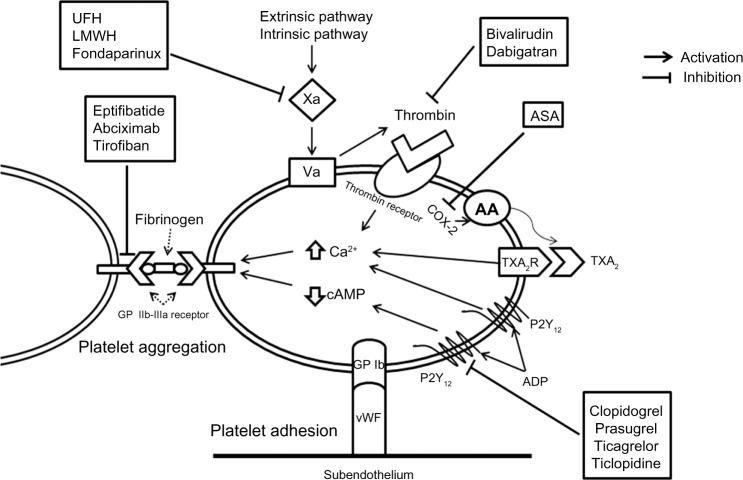
Platelet adhesion and aggregation at the site of coronary stenting can have catastrophic clinical and economic consequences. Therefore, effective platelet inhibition is vital during and after percutaneous coronary intervention. Eptifibatide is an intravenous antiplatelet agent that blocks the final common pathway of platelet aggregation and thrombus formation by binding to glycoprotein IIb/IIIa receptors on the surface of platelets. In clinical studies, eptifibatide was associated with a significant reduction of mortality, myocardial infarction, or target vessel revascularization in patients with acute coronary syndrome undergoing percutaneous coronary intervention. However, recent trials conducted in the era of dual antiplatelet therapy and newer anticoagulants failed to demonstrate similar results. The previously seen favorable benefit of eptifibatide was mainly offset by the increased risk of bleeding. Current American College of Cardiology/American Heart Association guidelines recommend its use as an adjunct in high-risk patients who are undergoing percutaneous coronary intervention with traditional anticoagulants (heparin or enoxaparin), who are not otherwise at high risk of bleeding. In patients receiving bivalirudin (a newer safer anticoagulant), routine use of eptifibatide is discouraged except in select situations (eg, angiographic complications). Although older pharmacoeconomic studies favor eptifibatide, in the current era of P2Y12 inhibitors and newer safer anticoagulants, the increased costs associated with bleeding make the routine use of eptifibatide an economically nonviable option. The cost-effectiveness of eptifibatide with the use of strategies that decrease the bleeding risk (eg, transradial access) is unknown. This review provides an overview of key clinical and economic studies of eptifibatide well into the current era of potent antiplatelet agents, novel safer anticoagulants, and contemporary percutaneous coronary intervention.
血小板在冠状动脉支架部位的黏附和聚集可能会产生灾难性的临床和经济后果。因此,经皮冠状动脉介入治疗期间和之后有效的血小板抑制至关重要。依替巴肽是一种静脉内抗血小板药物,通过与血小板表面的糖蛋白 IIb/IIIa 受体结合,阻断血小板聚集和血栓形成的最终共同途径。在临床研究中,依替巴肽可显著降低急性冠状动脉综合征患者行经皮冠状动脉介入治疗后的死亡率、心肌梗死或靶血管血运重建。然而,在双重抗血小板治疗和新型抗凝剂时代进行的最近试验未能显示出类似的结果。依替巴肽以前看到的有利益处主要被出血风险增加所抵消。目前的美国心脏病学会/美国心脏协会指南建议将其用作在接受传统抗凝剂(肝素或依诺肝素)行经皮冠状动脉介入治疗的高危患者的辅助治疗,这些患者没有其他出血高风险。在接受比伐卢定(一种较新的更安全的抗凝剂)的患者中,除非在特定情况下(例如,血管造影并发症),不鼓励常规使用依替巴肽。尽管较旧的药物经济学研究倾向于使用依替巴肽,但在当前 P2Y12 抑制剂和新型更安全的抗凝剂时代,与出血相关的增加成本使得常规使用依替巴肽在经济上不可行。在降低出血风险的策略(例如,经桡动脉入路)中使用依替巴肽的成本效益尚不清楚。本综述提供了在当前强效抗血小板药物、新型更安全抗凝剂和当代经皮冠状动脉介入治疗时代,有关依替巴肽的关键临床和经济研究的概述。