Palmer Nathan A, Saathoff Aaron J, Tobias Christian M, Twigg Paul, Xia Yuannan, Vogel Kenneth P, Madhavan Soundararajan, Sattler Scott E, Sarath Gautam
United States Department of Agriculture-Agricultural Research Service, Grain, Forage and Bioenergy Research Unit and Department of Agronomy and Horticulture, University of Nebraska, Lincoln, Nebraska, United States of America.
United States Department of Agriculture-Agricultural Research Service, Genomics and Gene Discovery Research Unit, Western Regional Research Center, Albany, California, United States of America.
PLoS One. 2014 Aug 18;9(8):e105138. doi: 10.1371/journal.pone.0105138. eCollection 2014.
Switchgrass (Panicum virgatum L.) is being developed as a bioenergy crop for many temperate regions of the world. One way to increase biomass yields is to move southern adapted lowland cultivars to more northern latitudes. However, many southerly adapted switchgrass germplasm can suffer significant winter kill in northerly climes.
Here, we have applied next-generation sequencing in combination with biochemical analyses to query the metabolism of crowns and rhizomes obtained from two contrasting switchgrass cultivars. Crowns and rhizomes from field-grown lowland (cv Kanlow) and upland (cv Summer) switchgrass cultivars were collected from three randomly selected post-flowering plants. Summer plants were senescing, whereas Kanlow plants were not at this harvest date.
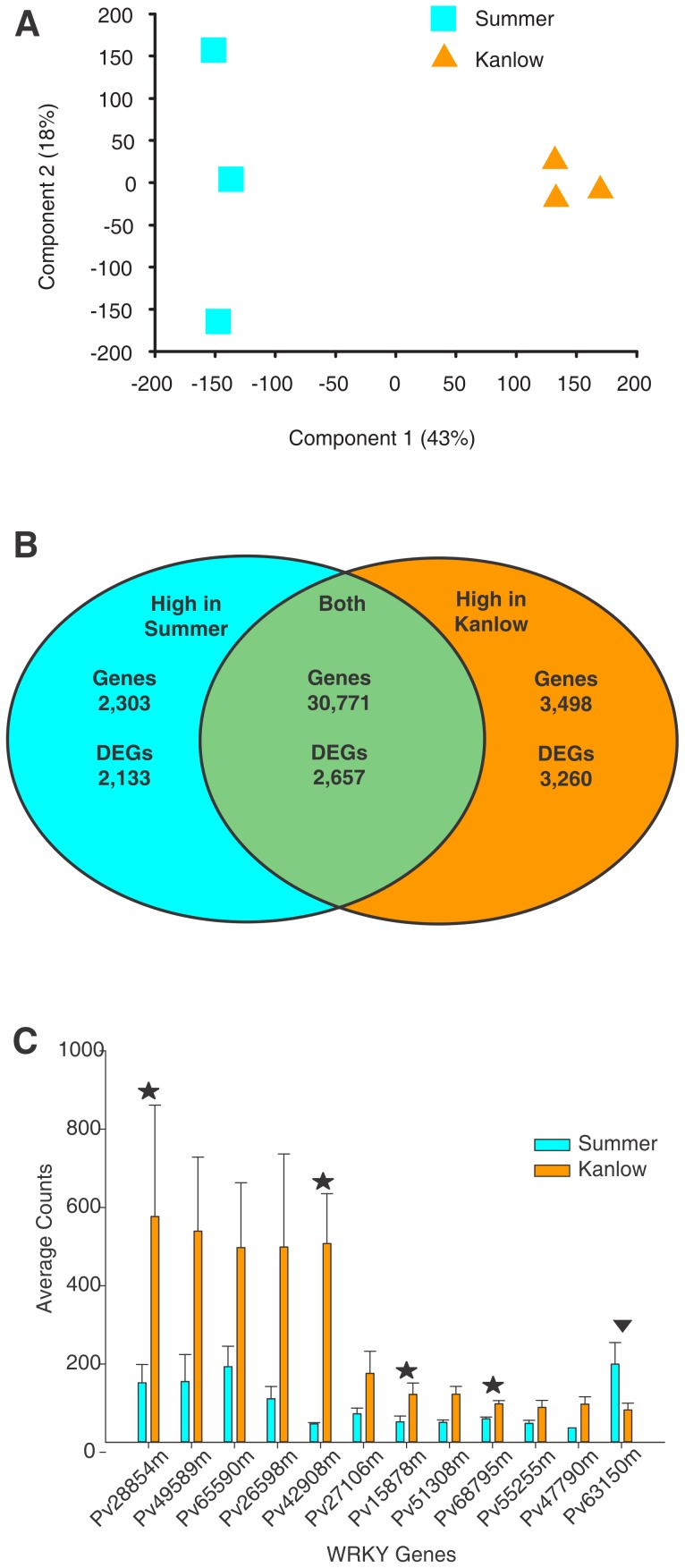
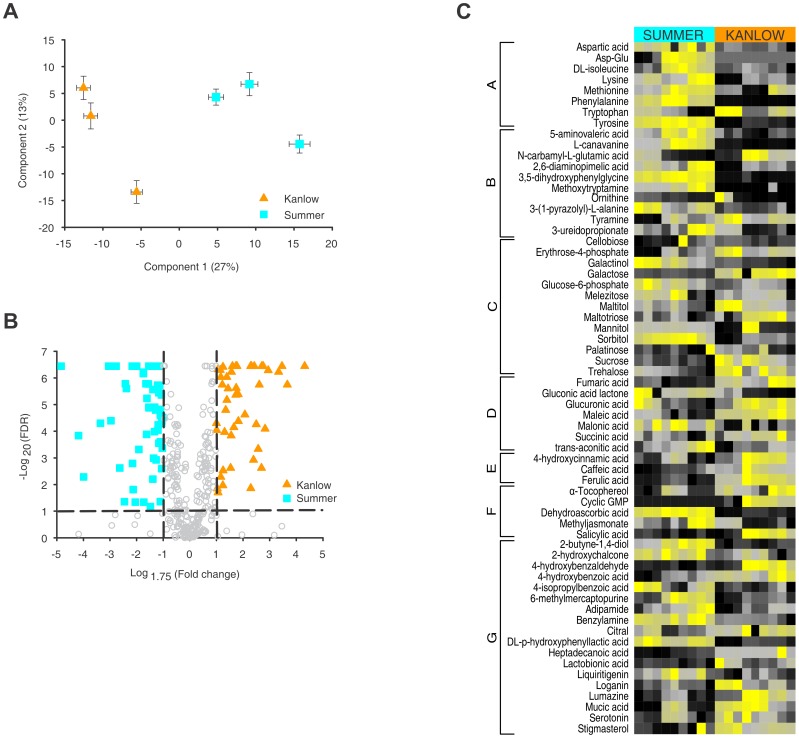
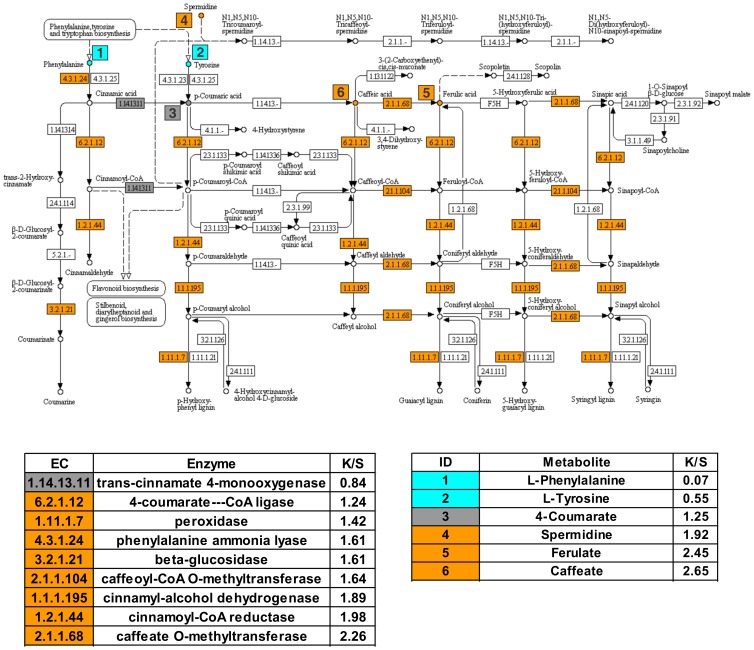
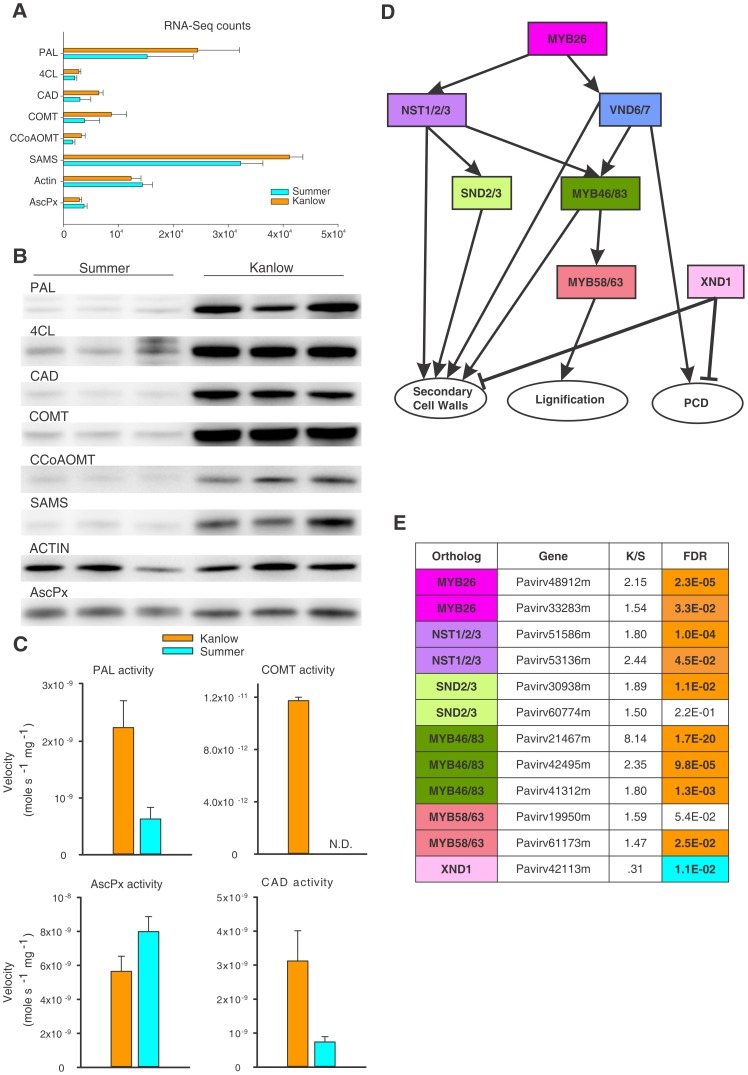
Principal component analysis (PCA) differentiated between both the Summer and Kanlow transcriptomes and metabolomes. Significant differences in transcript abundances were detected for 8,050 genes, including transcription factors such as WRKYs and those associated with phenylpropanoid biosynthesis. Gene-set enrichment analyses showed that a number of pathways were differentially up-regulated in the two populations. For both populations, protein levels and enzyme activities agreed well with transcript abundances for genes involved in the phenylpropanoid pathway that were up-regulated in Kanlow crowns and rhizomes. The combination of these datasets suggests that dormancy-related mechanisms had been triggered in the crowns and rhizomes of the Summer plants, whereas the crowns and rhizomes of Kanlow plants had yet to enter dormancy.
Delayed establishment of dormancy at more northerly latitudes could be one factor that reduces winter-survival in the high-yielding Kanlow plants. Understanding the cellular signatures that accompany the transition to dormancy can be used in the future to select plants with improved winter hardiness.
柳枝稷(Panicum virgatum L.)正被开发为一种适用于世界许多温带地区的生物能源作物。提高生物量产量的一种方法是将适应南方环境的低地品种转移到更靠北的纬度地区。然而,许多适应南方环境的柳枝稷种质在北方气候条件下可能会遭受严重的冬季冻害。
在此,我们将下一代测序与生化分析相结合,以探究从两个对比鲜明的柳枝稷品种获得的冠和根茎的代谢情况。从田间种植的低地(品种Kanlow)和高地(品种Summer)柳枝稷品种的冠和根茎中,采集自三株随机选取的开花后植株。Summer植株处于衰老阶段,而在这个收获日期,Kanlow植株尚未进入该阶段。
主成分分析(PCA)区分了Summer和Kanlow的转录组和代谢组。检测到8050个基因的转录丰度存在显著差异,包括WRKY等转录因子以及与苯丙烷生物合成相关的基因。基因集富集分析表明,多个通路在两个群体中差异上调。对于两个群体,蛋白质水平和酶活性与Kanlow冠和根茎中上调的参与苯丙烷途径的基因的转录丰度高度一致。这些数据集的组合表明,Summer植株的冠和根茎中与休眠相关的机制已被触发,而Kanlow植株的冠和根茎尚未进入休眠状态。
在更靠北的纬度地区延迟进入休眠可能是导致高产的Kanlow植株冬季存活率降低的一个因素。了解伴随休眠转变的细胞特征未来可用于选择抗寒性更强的植株。