Respiratory Epidemiology and Clinical Research Unit, Montreal Chest Institute, 3650 St. Urbain Street, Montreal, PQ, H2X 2P4, Canada.
Infect Dis Ther. 2013 Dec;2(2):123-44. doi: 10.1007/s40121-013-0009-3. Epub 2013 Aug 2.
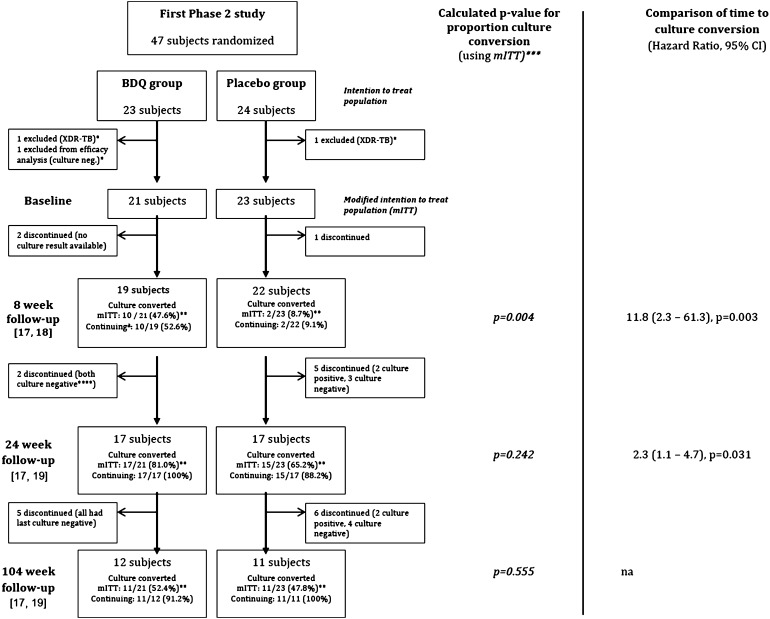
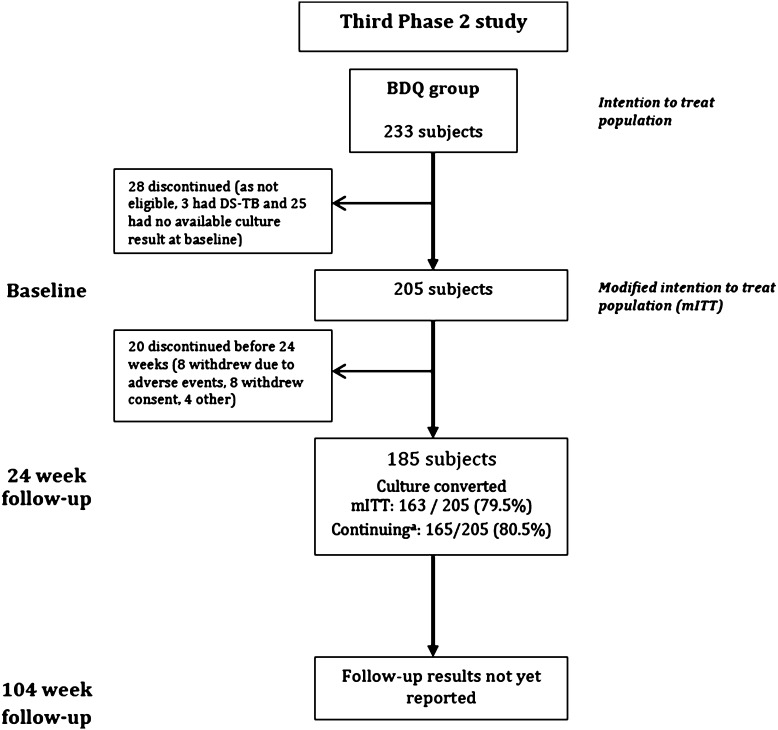
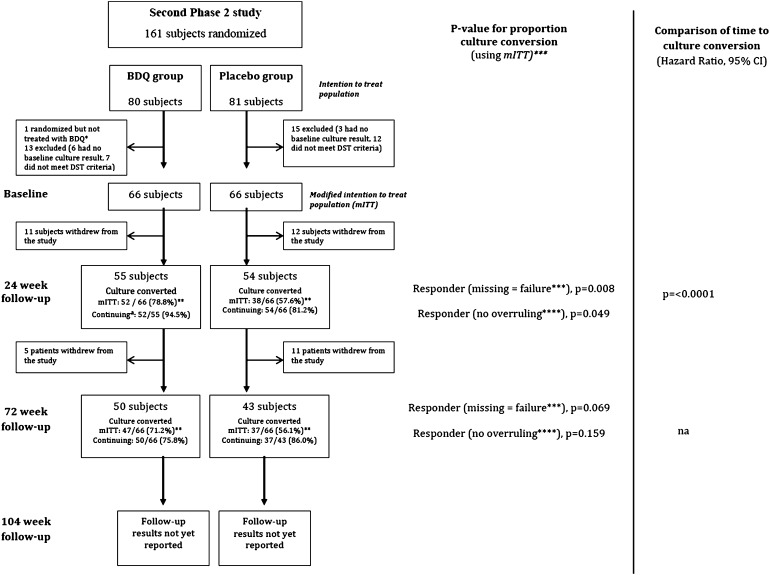
Existing therapies for multi-drug resistant tuberculosis (MDR-TB) have substantial limitations, in terms of their effectiveness, side-effect profile, and complexity of administration. Bedaquiline is a novel diarylquinoline antibiotic that has recently been investigated as an adjunct to existing therapies for MDR-TB. Currently, limited clinical data are available to evaluate the drug's safety and effectiveness. In two small randomized-controlled clinical studies, bedaquiline given for 8 or 24 weeks has been shown to improve surrogate microbiological markers of treatment response, but trials have not yet evaluated its impact on clinical failure and relapse. Safety concerns include an increased mortality in the bedaquiline arm of one study, an increased incidence of QT segment prolongation on electrocardiogram, and hepatotoxicity. Until further research data are available, the use of bedaquiline should be confined to settings where carefully selected patients can be closely monitored.
现有的耐多药结核病(MDR-TB)治疗方法在疗效、副作用谱和给药复杂性方面存在很大的局限性。贝达喹啉是一种新型的二芳基喹啉类抗生素,最近被研究作为现有 MDR-TB 治疗方法的辅助手段。目前,可用的临床数据有限,无法评估该药物的安全性和有效性。在两项小型随机对照临床试验中,贝达喹啉治疗 8 周或 24 周可改善治疗反应的替代微生物学标志物,但试验尚未评估其对临床失败和复发的影响。安全性问题包括一项研究中贝达喹啉组的死亡率增加、心电图 QT 段延长的发生率增加以及肝毒性。在进一步的研究数据可用之前,贝达喹啉的使用应限于能够对精心选择的患者进行密切监测的环境。