Molecular and Cellular Pathology of Alcohol Laboratory, Prince Felipe Research Center Valencia, Spain.
Front Cell Neurosci. 2014 Aug 1;8:216. doi: 10.3389/fncel.2014.00216. eCollection 2014.
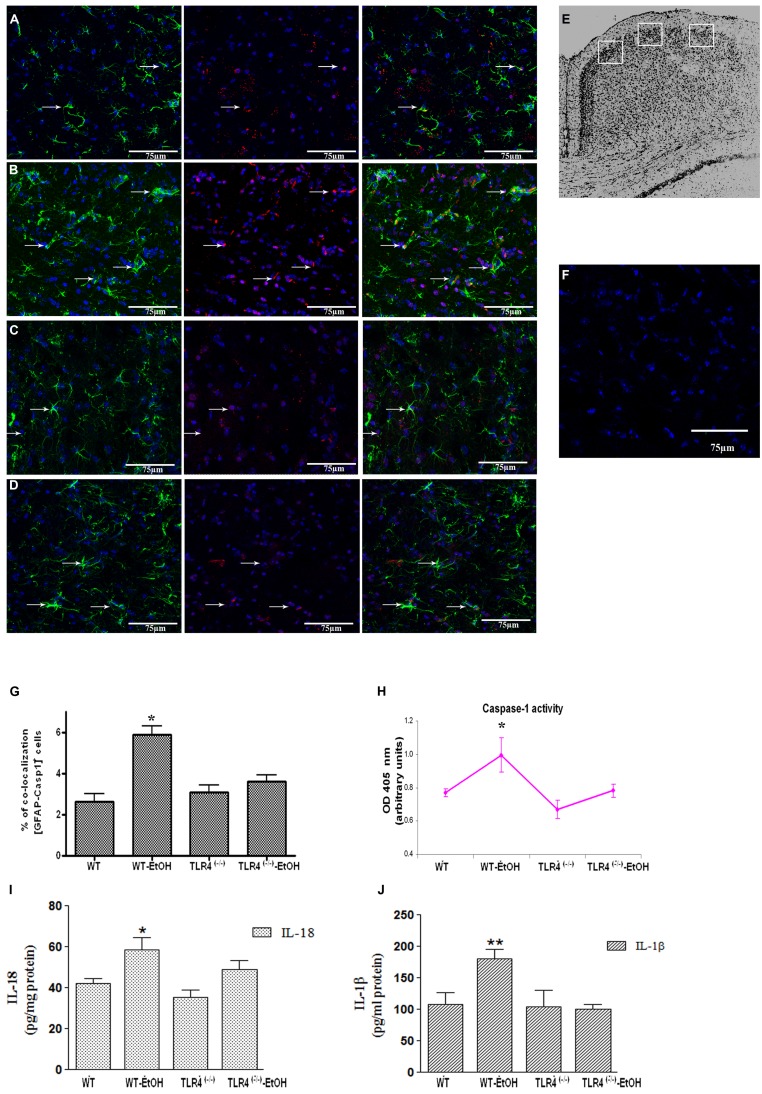
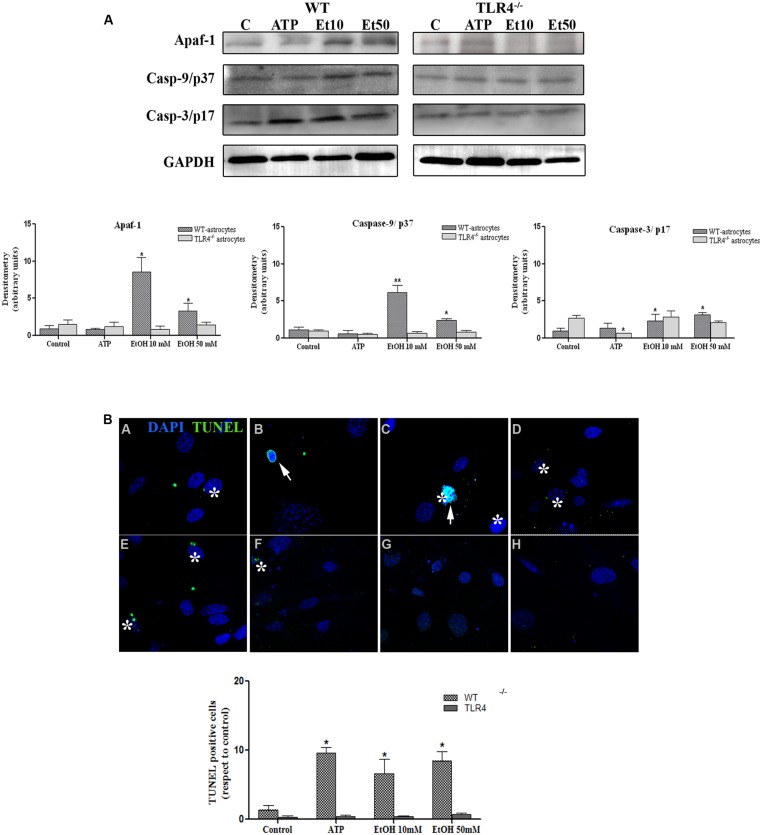
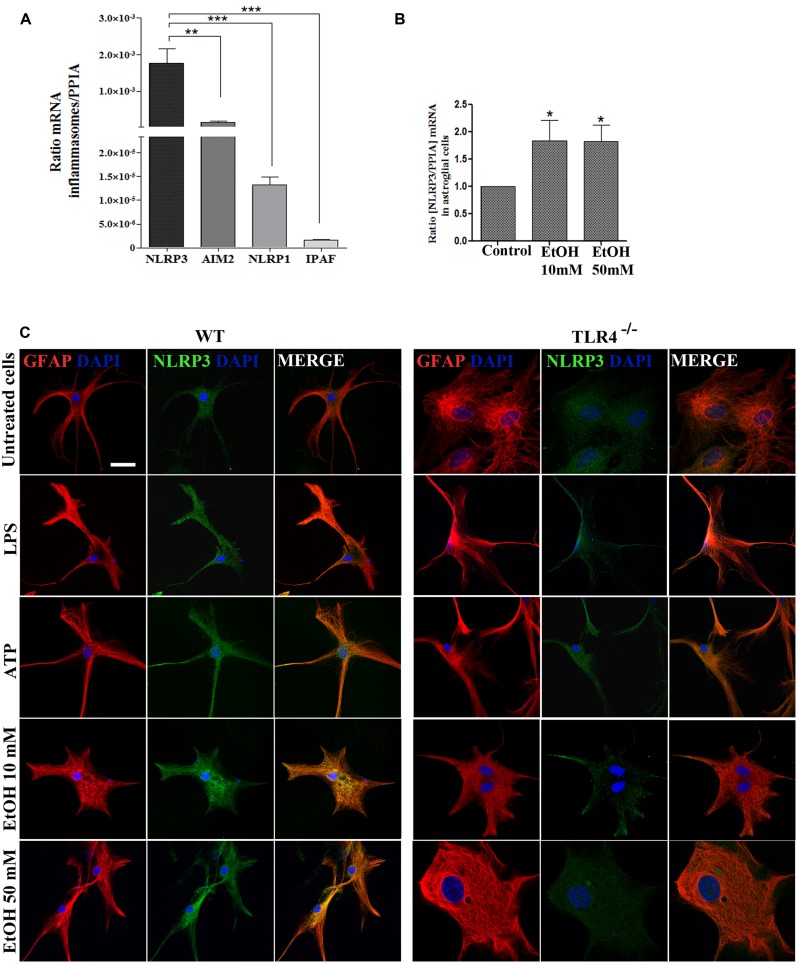
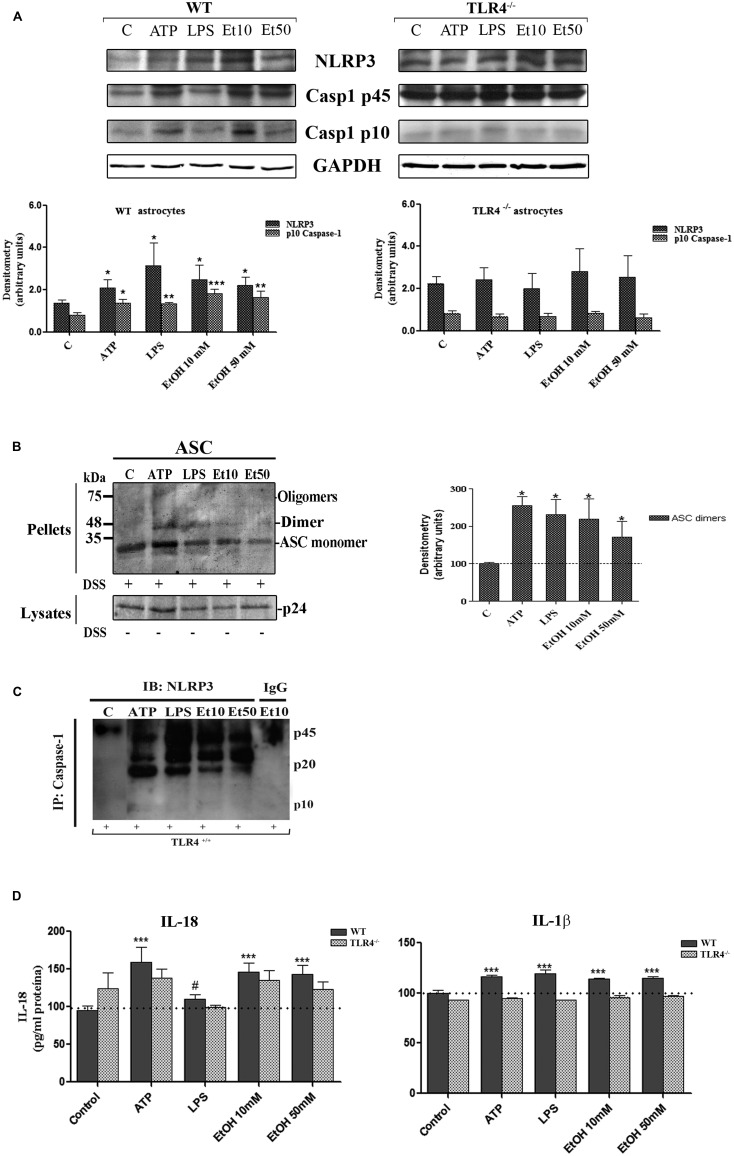
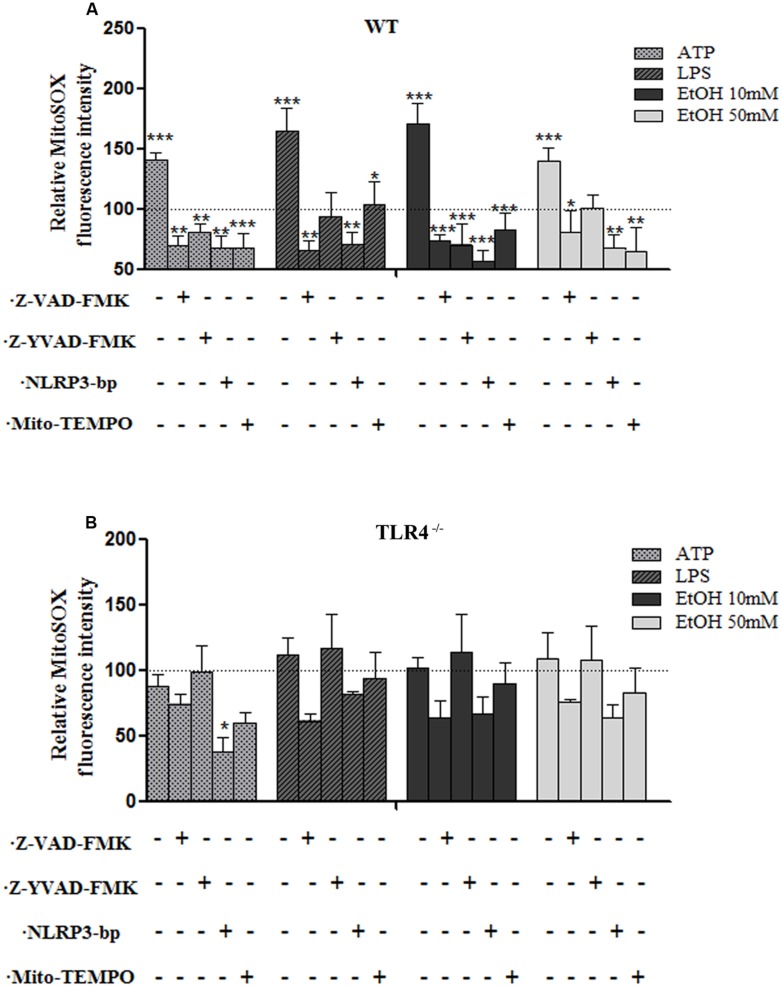
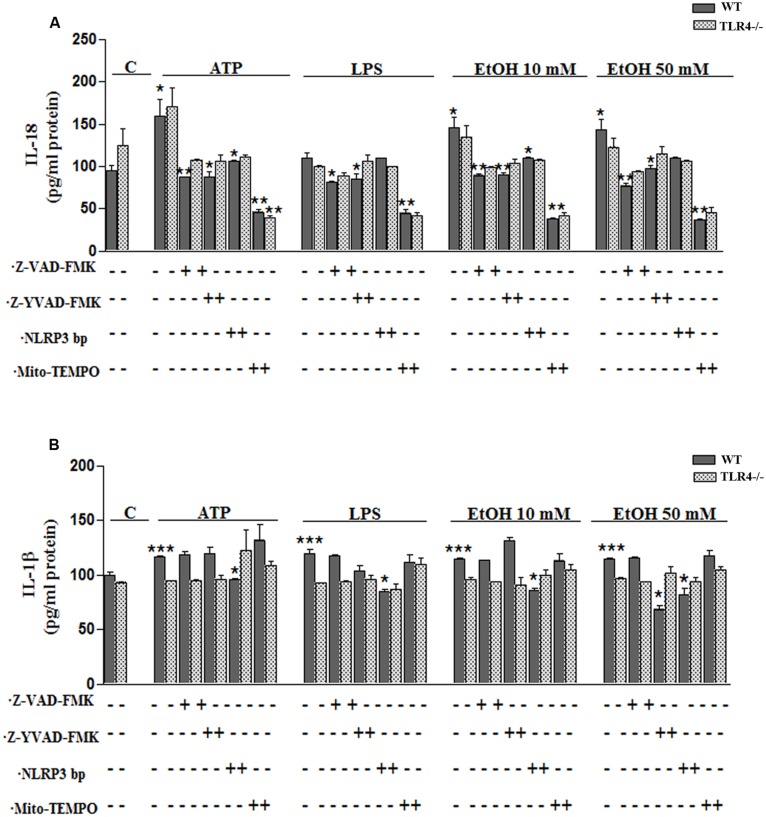
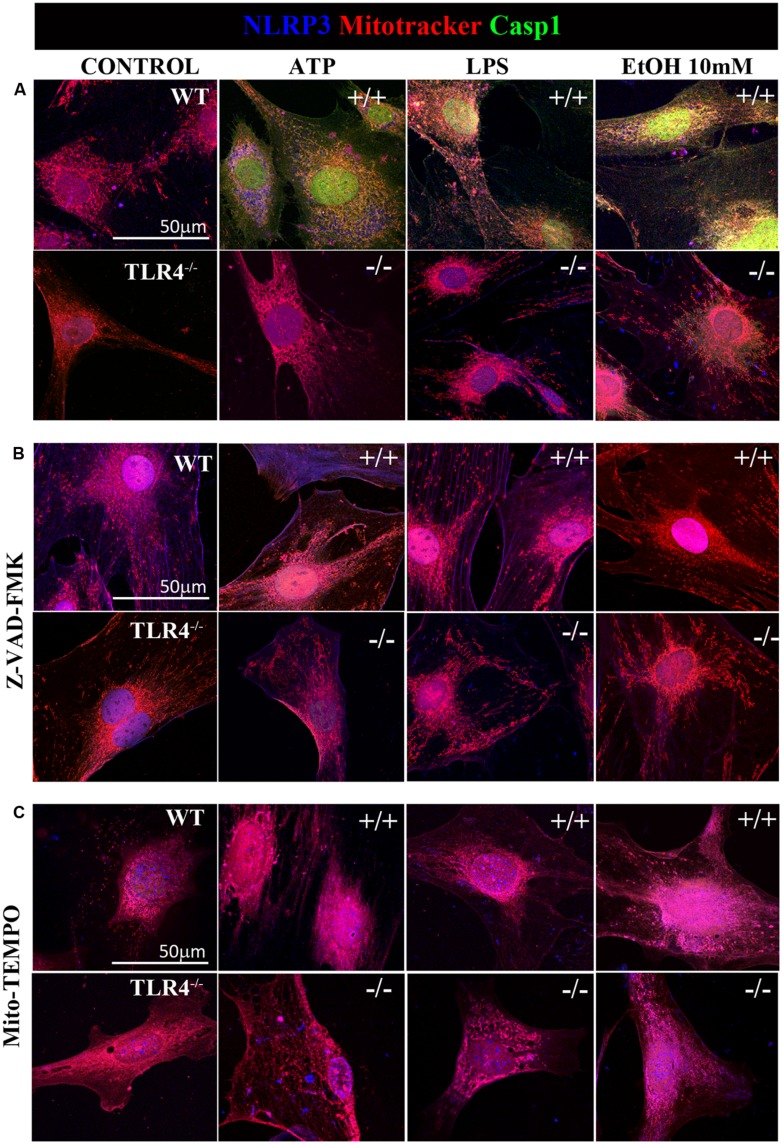
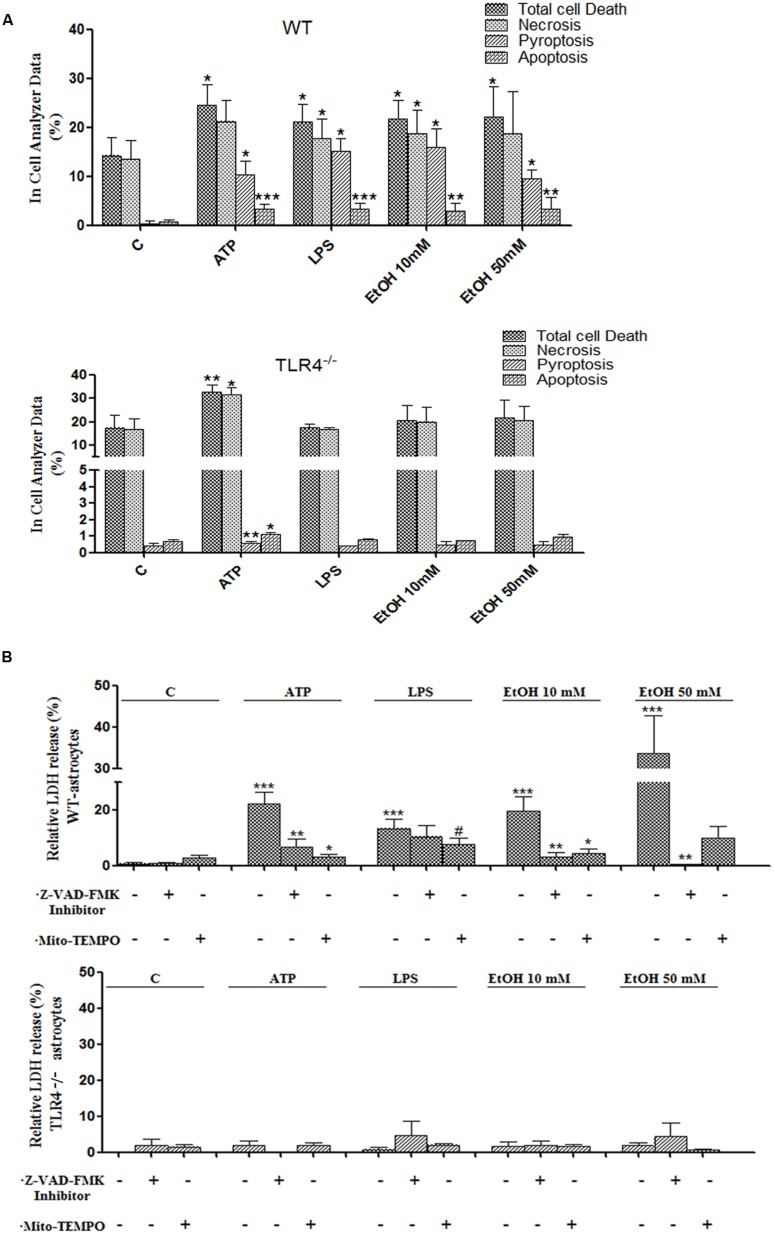
Toll-like receptors (TLRs) and NOD-like receptors (NLRs) are innate immunity sensors that provide an early/effective response to pathogenic or injury conditions. We have reported that ethanol-induced TLR4 activation triggers signaling inflammatory responses in glial cells, causing neuroinflammation and brain damage. However, it is uncertain if ethanol is able to activate NLRs/inflammasome in astroglial cells, which is the mechanism of activation, and whether there is crosstalk between both immune sensors in glial cells. Here we show that chronic ethanol treatment increases the co-localization of caspase-1 with GFAP(+) cells, and up-regulates IL-1β and IL-18 in the frontal medial cortex in WT, but not in TLR4 knockout mice. We further show that cultured cortical astrocytes expressed several inflammasomes (NLRP3, AIM2, NLRP1, and IPAF), although NLRP3 mRNA is the predominant form. Ethanol, as ATP and LPS treatments, up-regulates NLRP3 expression, and causes caspase-1 cleavage and the release of IL-1β and IL-18 in astrocytes supernatant. Ethanol-induced NLRP3/caspase-1 activation is mediated by mitochondrial (m) reactive oxygen species (ROS) generation because when using a specific mitochondria ROS scavenger, the mito-TEMPO (500 μM) or NLRP3 blocking peptide (4 μg/ml) or a specific caspase-1 inhibitor, Z-YVAD-FMK (10 μM), abrogates mROS release and reduces the up-regulation of IL-1β and IL-18 induced by ethanol or LPS or ATP. Confocal microscopy studies further confirm that ethanol, ATP or LPS promotes NLRP3/caspase-1 complex recruitment within the mitochondria to promote cell death by caspase-1-mediated pyroptosis, which accounts for ≈73% of total cell death (≈22%) and the remaining (≈25%) die by caspase-3-dependent apoptosis. Suppression of the TLR4 function abrogates most ethanol effects on NLRP3 activation and reduces cell death. These findings suggest that NLRP3 participates, in ethanol-induced neuroinflammation and highlight the NLRP3/TLR4 crosstalk in ethanol-induced brain injury.
Toll 样受体 (TLRs) 和 NOD 样受体 (NLRs) 是先天免疫传感器,可对致病或损伤条件提供早期/有效反应。我们已经报道,乙醇诱导的 TLR4 激活触发神经胶质细胞中的信号炎症反应,导致神经炎症和脑损伤。然而,尚不确定乙醇是否能够激活星形胶质细胞中的 NLRs/炎性体,这是激活的机制,以及两种免疫传感器在神经胶质细胞中是否存在串扰。在这里,我们显示慢性乙醇处理增加了 caspase-1 与 GFAP(+)细胞的共定位,并上调了 WT 但不是 TLR4 敲除小鼠额内侧皮质中的 IL-1β 和 IL-18。我们进一步表明,培养的皮质星形胶质细胞表达几种炎性体 (NLRP3、AIM2、NLRP1 和 IPAF),尽管 NLRP3 mRNA 是主要形式。乙醇、ATP 和 LPS 处理上调 NLRP3 表达,并导致 caspase-1 切割和星形胶质细胞上清液中 IL-1β 和 IL-18 的释放。乙醇诱导的 NLRP3/caspase-1 激活是由线粒体 (m) 活性氧 (ROS) 产生介导的,因为当使用特定的线粒体 ROS 清除剂,mito-TEMPO(500 μM)或 NLRP3 阻断肽 (4 μg/ml) 或特定的 caspase-1 抑制剂 Z-YVAD-FMK(10 μM)时,可阻断 mROS 的释放,并减少乙醇、LPS 或 ATP 诱导的 IL-1β 和 IL-18 的上调。共聚焦显微镜研究进一步证实,乙醇、ATP 或 LPS 促进 NLRP3/caspase-1 复合物在线粒体中的募集,通过 caspase-1 介导的细胞焦亡促进细胞死亡,这占总细胞死亡的 ≈73%(≈22%),其余(≈25%)通过 caspase-3 依赖性细胞凋亡死亡。抑制 TLR4 功能可阻断乙醇对 NLRP3 激活的大部分影响,并减少细胞死亡。这些发现表明 NLRP3 参与了乙醇诱导的神经炎症,并强调了 NLRP3/TLR4 在乙醇诱导的脑损伤中的串扰。