School of Biomedical Sciences, Queens Medical Centre, University of Nottingham Nottingham, UK.
Department of Cell Physiology and Pharmacology, University of Leicester Leicester, UK.
Front Neuroanat. 2014 Aug 1;8:73. doi: 10.3389/fnana.2014.00073. eCollection 2014.
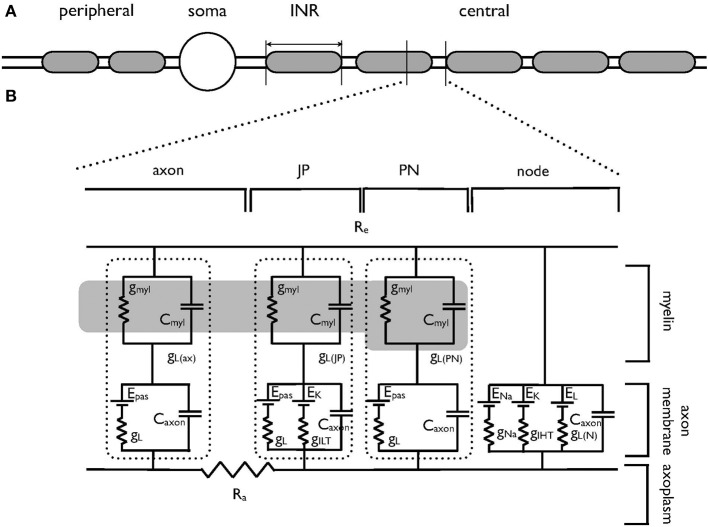
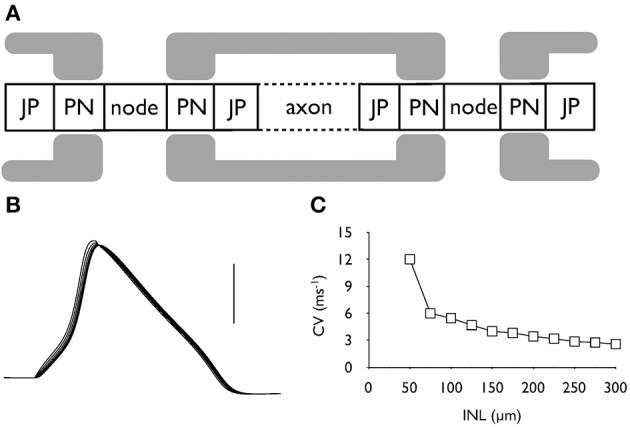
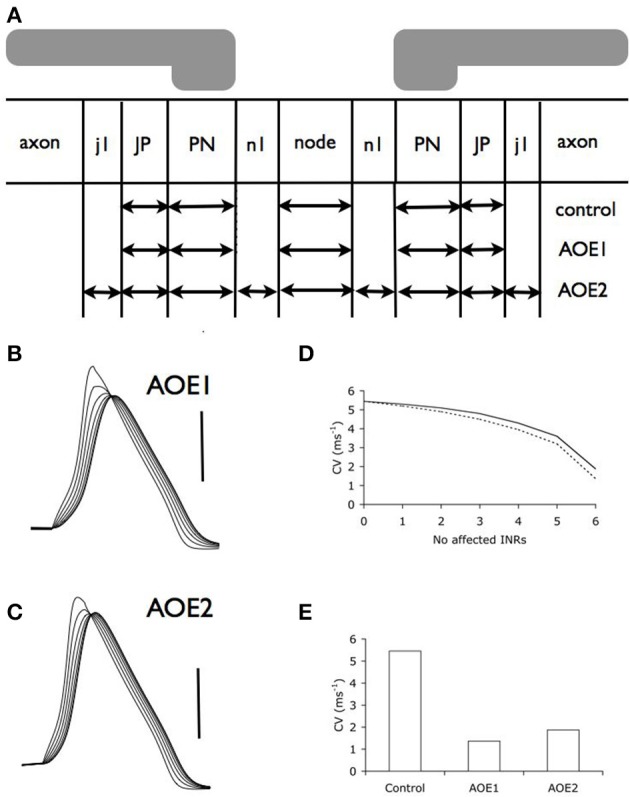
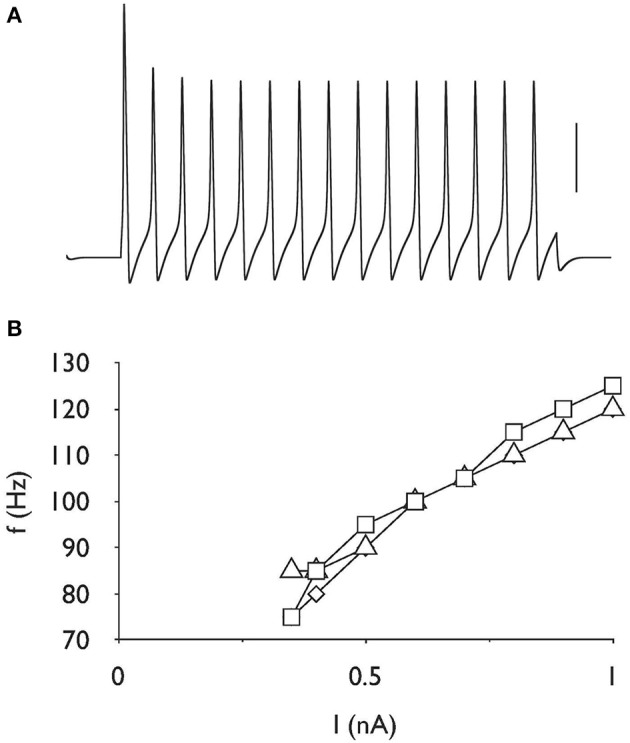
Our previous study showed that exposure to loud sound leading to hearing loss elongated the auditory nerve (AN) nodes of Ranvier and triggered notable morphological changes at paranodes and juxtaparanodes. Here we used computational modeling to examine how theoretical redistribution of voltage gated Na(+), Kv3.1, and Kv1.1 channels along the AN may be responsible for the alterations of conduction property following acoustic over-exposure. Our modeling study infers that changes related to Na(+) channel density (rather than the redistribution of voltage gated Na(+), Kv3.1, and Kv1.1 channels) is the likely cause of the decreased conduction velocity and the conduction block observed after acoustic overexposure (AOE).
我们之前的研究表明,暴露于导致听力损失的大声会使听神经(AN)的郎飞结伸长,并在连接部和连接旁区引发明显的形态变化。在这里,我们使用计算建模来研究理论上沿 AN 重新分布的电压门控 Na(+)、Kv3.1 和 Kv1.1 通道如何导致声过度暴露后传导特性的改变。我们的建模研究推断,与 Na(+)通道密度变化(而不是电压门控 Na(+)、Kv3.1 和 Kv1.1 通道的重新分布)相关的变化可能是声过度暴露后观察到的传导速度降低和传导阻滞的原因。