Caillet Joel, Gracia Céline, Fontaine Fanette, Hajnsdorf Eliane
CNRS FRE3630 (previously UPR9073), University Paris Diderot, Sorbonne Paris Cité, Institut de Biologie Physico-Chimique, 75005 Paris, France.
CNRS FRE3630 (previously UPR9073), University Paris Diderot, Sorbonne Paris Cité, Institut de Biologie Physico-Chimique, 75005 Paris, France
RNA. 2014 Oct;20(10):1567-78. doi: 10.1261/rna.043372.113. Epub 2014 Aug 21.
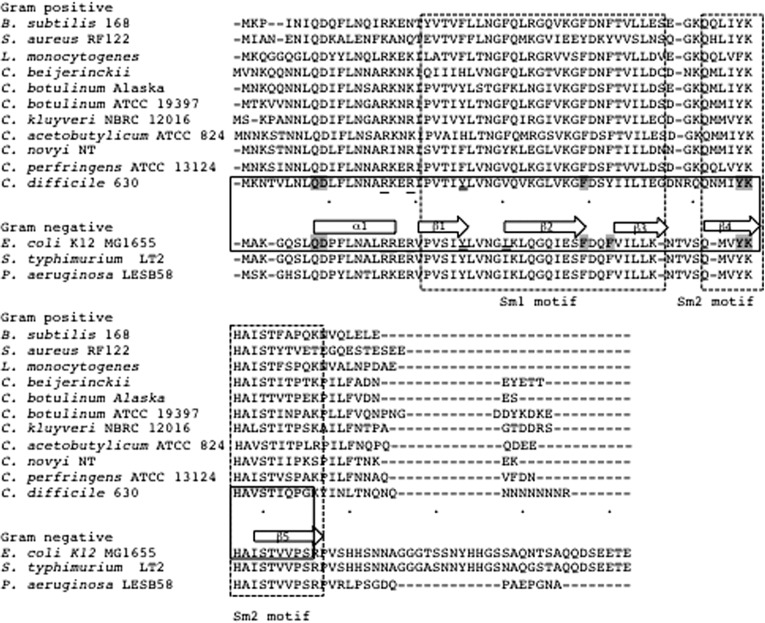
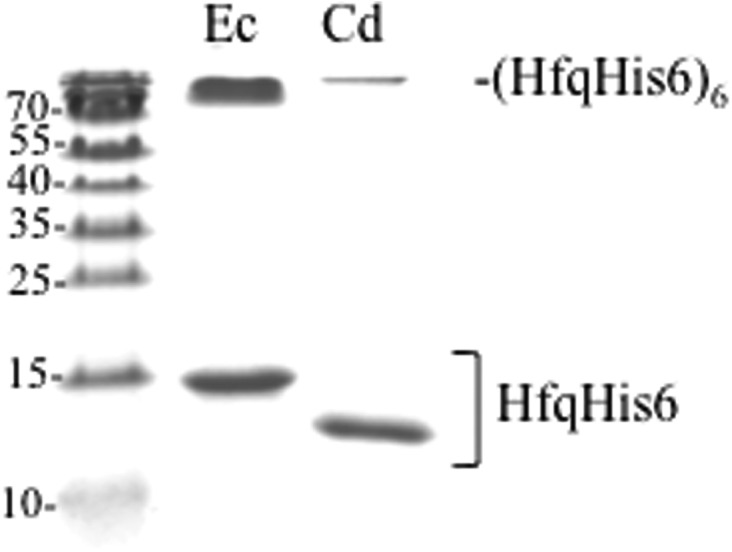
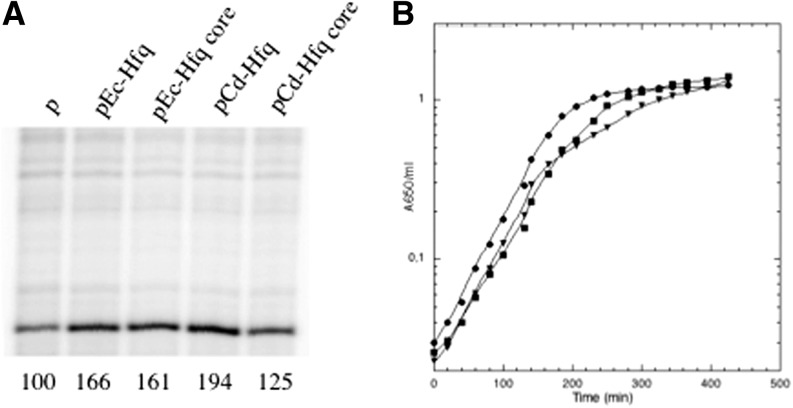
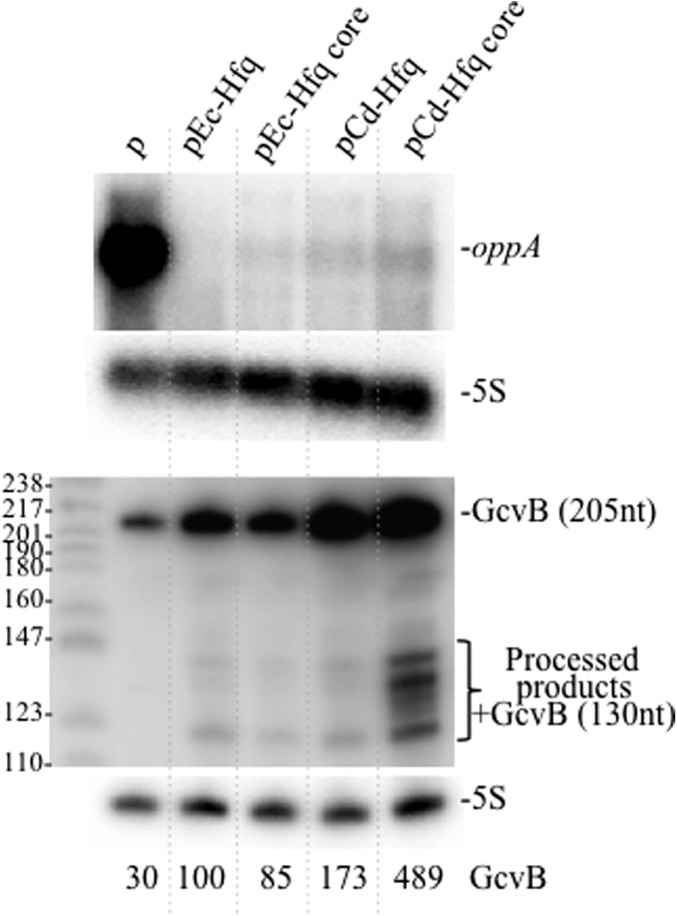
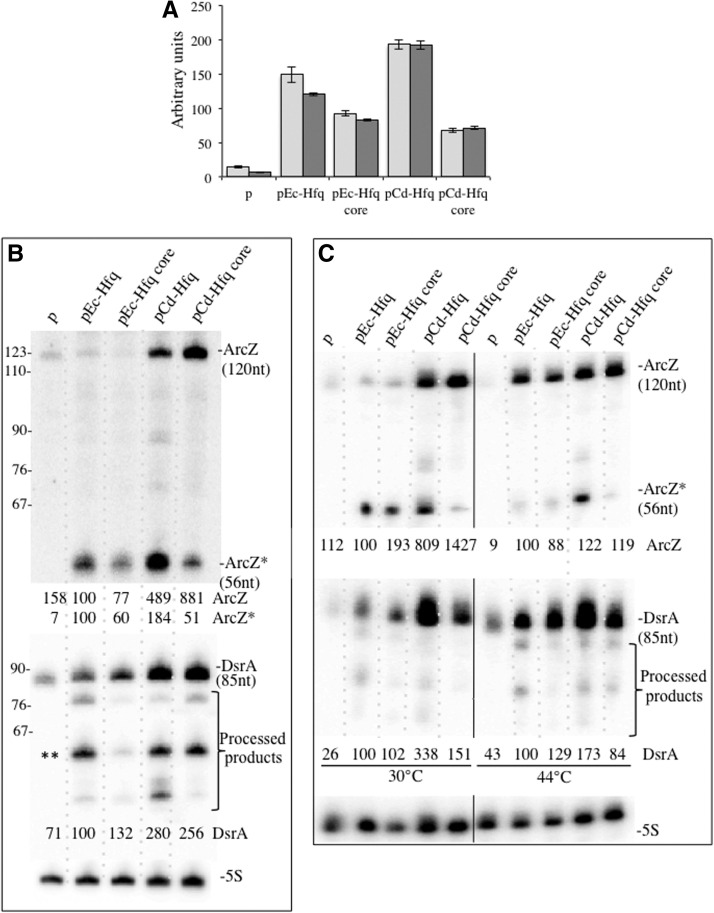
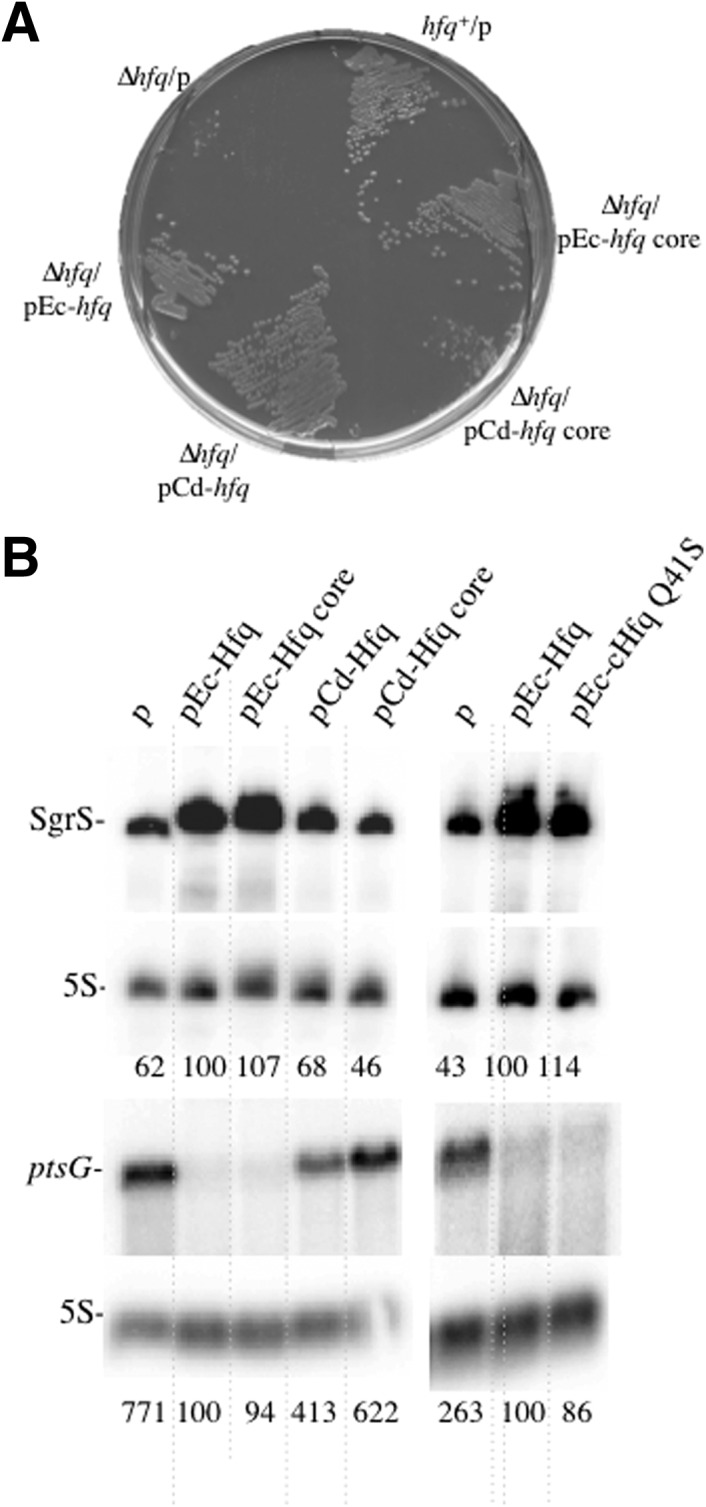
A gene for the Hfq protein is present in the majority of sequenced bacterial genomes. Its characteristic hexameric ring-like core structure is formed by the highly conserved N-terminal regions. In contrast, the C-terminal forms an extension, which varies in length, lacks homology, and is predicted to be unstructured. In Gram-negative bacteria, Hfq facilitates the pairing of sRNAs with their mRNA target and thus affects gene expression, either positively or negatively, and modulates sRNA degradation. In Gram-positive bacteria, its role is still poorly characterized. Numerous sRNAs have been detected in many Gram-positive bacteria, but it is not yet known whether these sRNAs act in association with Hfq. Compared with all other Hfqs, the C. difficile Hfq exhibits an unusual C-terminal sequence with 75% asparagine and glutamine residues, while the N-terminal core part is more conserved. To gain insight into the functionality of the C. difficile Hfq (Cd-Hfq) protein in processes regulated by sRNAs, we have tested the ability of Cd-Hfq to fulfill the functions of the E. coli Hfq (Ec-Hfq) by examining various functions associated with Hfq in both positive and negative controls of gene expression. We found that Cd-Hfq substitutes for most but not all of the tested functions of the Ec-Hfq protein. We also investigated the role of the C-terminal part of the Hfq proteins. We found that the C-terminal part of both Ec-Hfq and Cd-Hfq is not essential but contributes to some functions of both the E. coli and C. difficile chaperons.
大多数已测序的细菌基因组中都存在Hfq蛋白的基因。其特征性的六聚体环状核心结构由高度保守的N端区域形成。相比之下,C端形成一个延伸部分,其长度可变,缺乏同源性,预计为无结构状态。在革兰氏阴性菌中,Hfq促进小RNA(sRNA)与其mRNA靶标的配对,从而对基因表达产生正向或负向影响,并调节sRNA的降解。在革兰氏阳性菌中,其作用仍不清楚。在许多革兰氏阳性菌中已检测到大量sRNA,但尚不清楚这些sRNA是否与Hfq协同发挥作用。与所有其他Hfq相比,艰难梭菌的Hfq具有不寻常的C端序列,其中75%为天冬酰胺和谷氨酰胺残基,而N端核心部分更为保守。为了深入了解艰难梭菌Hfq(Cd-Hfq)蛋白在sRNA调控过程中的功能,我们通过检测基因表达正负调控中与Hfq相关的各种功能,测试了Cd-Hfq履行大肠杆菌Hfq(Ec-Hfq)功能的能力。我们发现Cd-Hfq可以替代Ec-Hfq蛋白的大部分但不是所有测试功能。我们还研究了Hfq蛋白C端部分的作用。我们发现Ec-Hfq和Cd-Hfq的C端部分都不是必需的,但对大肠杆菌和艰难梭菌伴侣蛋白的某些功能有贡献。