Wassef Mona, Behiry Iman, Younan Mariam, El Guindy Nancy, Mostafa Sally, Abada Emad
Department of Clinical and Chemical Pathology, Faculty of Medicine, Cairo University, Giza, Egypt.
Department of Botany and Microbiology, Faculty of science, Helwan University, Cairo, Egypt ; Department of Biology, Faculty of Science, Jazan University, Jazan, KSA.
Jundishapur J Microbiol. 2014 Jan;7(1):e8556. doi: 10.5812/jjm.8556. Epub 2014 Jan 1.
AmpC type β-lactamases are commonly isolated from extended-spectrum Cephalosporin-resistant Gram-negative bacteria. Also, resistance appeared in bacterial species not naturally producing AmpC enzymes. Therefore, a standard test for the detection of the plasmid-mediated AmpC enzyme and new breakpoints for extended spectrum Cephalosporins are urgently necessary.
To detect plasmid and chromosomal mediated AmpC-β-lactamases in Gram negative bacteria in community and hospital acquired infections.
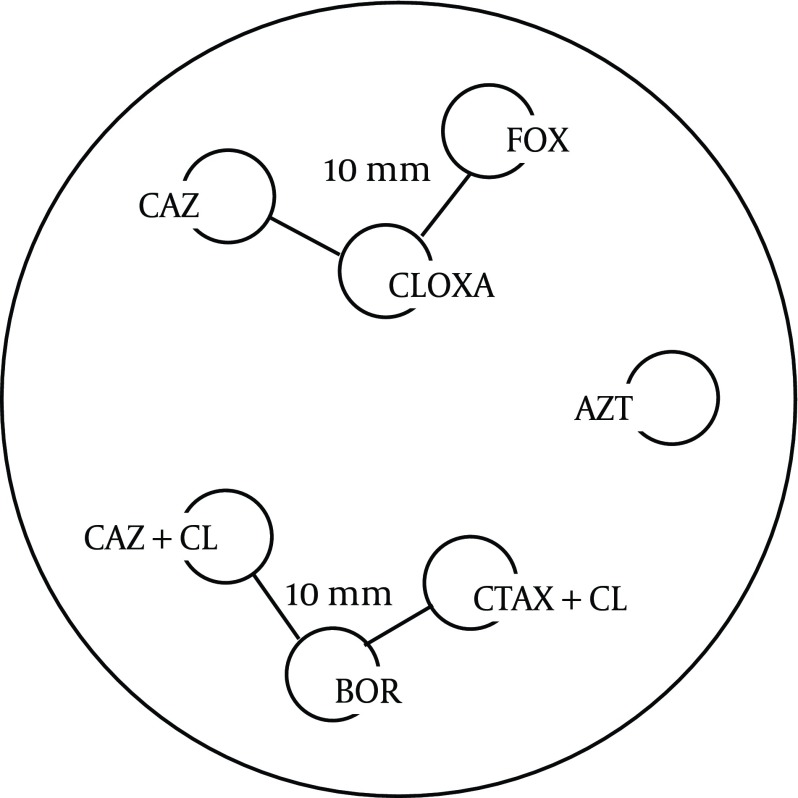
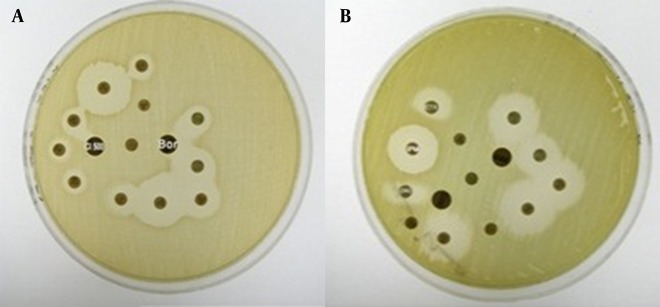
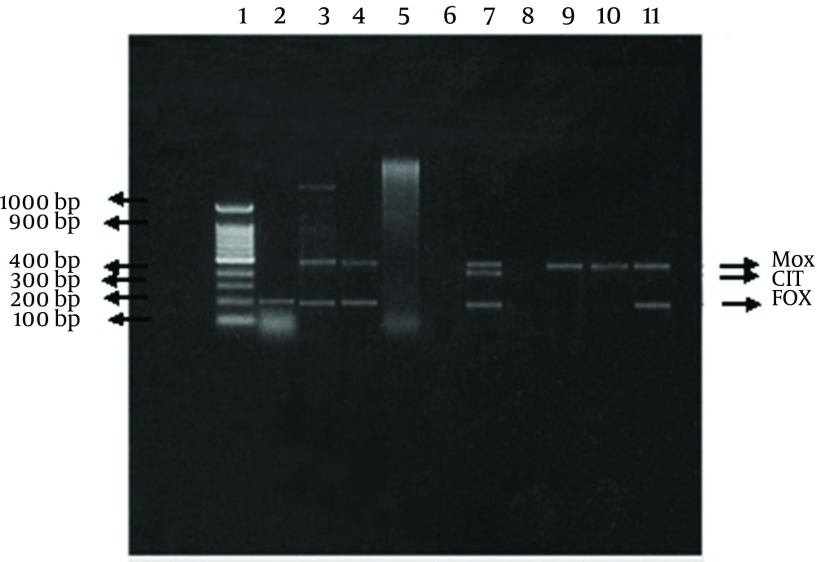
1073 Gram negative clinical isolates were identified by the conventional methods and were screened for AmpC production using Cefoxitin discs. Confirmatory phenotypic identifications were done for the Cefoxitin-resistant isolates using Boronic Acid for combined and double disc synergy tests, Cloxacillin based double disc synergy test, and induction tests. The genotypic identification of plasmid-mediated AmpC was done using multiplex PCR. ESBL production was also screened by discs of Ceftazidime and Cefotaxime with and without Clavulanic Acid (10 μg).
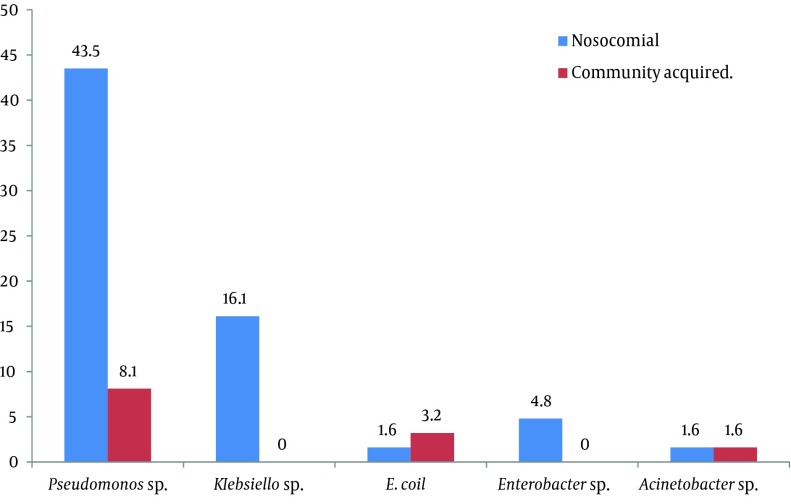
The AmpC-producing isolates among all identified Gram negative bacilli were 5.8% (62/1073) as detected by screening disc diffusion methods, where 72% were positive for AmpC by combined disc method (Cefotetan and Boronic Acid), 56.5% were positive by each of Boronic Acid and Cloxacillin double disc synergy tests, 35.5% were positive by the induction test, and 25.8% were plasmid-mediated AmpC β-lactamase producers by the multiplex PCR. Plasmid-mediated AmpC genes retrieved, belonged to the families (MOX, FOX, EBC and CIT). ESBL producers were found in 26 (41.9%) isolates, 15 (57%) of which also produced AmpC. Isolates caused hospital acquired infections were (53/62); of which (39/62) were AmpC producers. While only (8/62) of the isolates caused community-acquired infections, were AmpC producers, and (1.6%) (1/62) were non AmpC producer.
The AmpC β-lactamases detection tests had to be included in the routine microbiology workup of Gram negative bacteria, namely Cefoxitin as a screening test, combined Boronic Acid disc test with Cefotetan, followed by synergy tests and finally by the induction test for phenotypic identifications. Multiplex PCR can successfully detect the plasmid AmpC genes.
AmpC 型β-内酰胺酶通常从对超广谱头孢菌素耐药的革兰氏阴性菌中分离得到。此外,在原本不自然产生 AmpC 酶的细菌种类中也出现了耐药性。因此,迫切需要一种检测质粒介导的 AmpC 酶的标准试验以及超广谱头孢菌素的新断点。
检测社区获得性感染和医院获得性感染中革兰氏阴性菌的质粒和染色体介导的 AmpC-β-内酰胺酶。
采用常规方法鉴定 1073 株革兰氏阴性临床分离株,并用头孢西丁纸片法筛选 AmpC 的产生情况。对头孢西丁耐药分离株进行确证性表型鉴定,采用硼酸联合双纸片协同试验、基于氯唑西林的双纸片协同试验和诱导试验。采用多重 PCR 对质粒介导的 AmpC 进行基因鉴定。还通过头孢他啶和头孢噻肟纸片(含或不含克拉维酸(10μg))筛选 ESBL 的产生情况。
通过纸片扩散法筛选检测,在所有鉴定的革兰氏阴性杆菌中,产 AmpC 的分离株占 5.8%(62/1073),其中联合纸片法(头孢替坦和硼酸)检测 AmpC 阳性率为 72%,硼酸和氯唑西林双纸片协同试验阳性率均为 56.5%,诱导试验阳性率为 35.5%,多重 PCR 检测质粒介导的 AmpCβ-内酰胺酶产生菌阳性率为 25.8%。检出的质粒介导的 AmpC 基因属于(MOX、FOX、EBC 和 CIT)家族。在 26 株(41.9%)分离株中发现了 ESBL 产生菌,其中 15 株(57%)也产生 AmpC。引起医院获得性感染的分离株有 53 株(62 株中的);其中 39 株(62 株中的)为 AmpC 产生菌。而仅 8 株(62 株中的)引起社区获得性感染的分离株为 AmpC 产生菌,1 株(62 株中的 1.6%)为非 AmpC 产生菌。
AmpCβ-内酰胺酶检测试验必须纳入革兰氏阴性菌的常规微生物学检查中,即使用头孢西丁作为筛选试验,硼酸联合头孢替坦纸片试验,随后进行协同试验,最后进行诱导试验以进行表型鉴定。多重 PCR 可成功检测质粒 AmpC 基因。