Ishrat Tauheed, Kozak Anna, Alhusban Ahmed, Pillai Bindu, Johnson Maribeth H, El-Remessy Azza B, Ergul Adviye, Fagan Susan C
Charlie Norwood VA Medical Center, Augusta, GA 30912, USA ; Program in Clinical and Experimental Therapeutics, College of Pharmacy, University of Georgia, HM 1212, 1120 15th Street, Augusta, GA 30912, USA.
Department of Biostatistics, Georgia Regents University, Augusta, GA 30912, USA.
Stroke Res Treat. 2014;2014:560491. doi: 10.1155/2014/560491. Epub 2014 Jul 24.
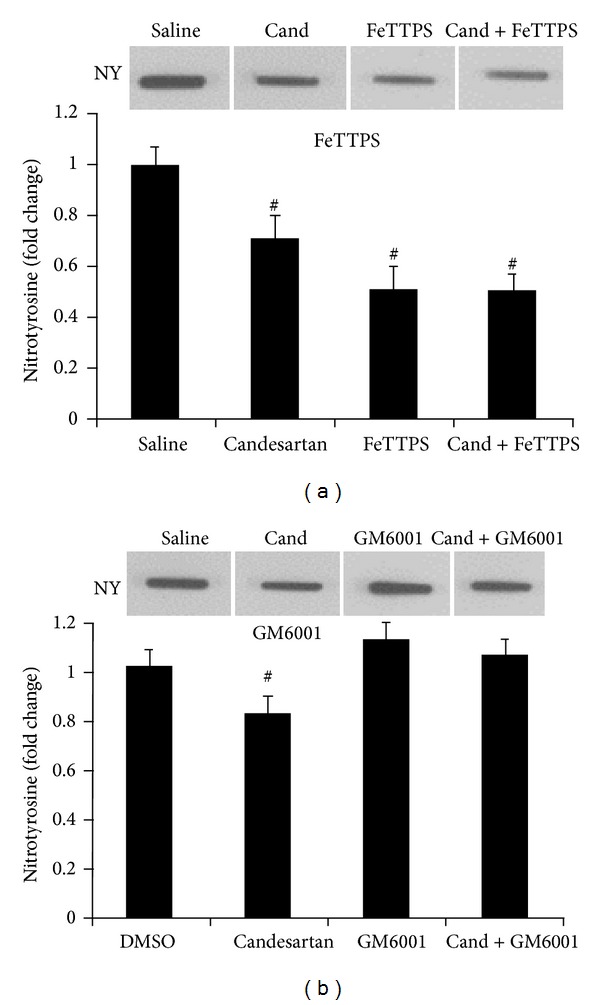
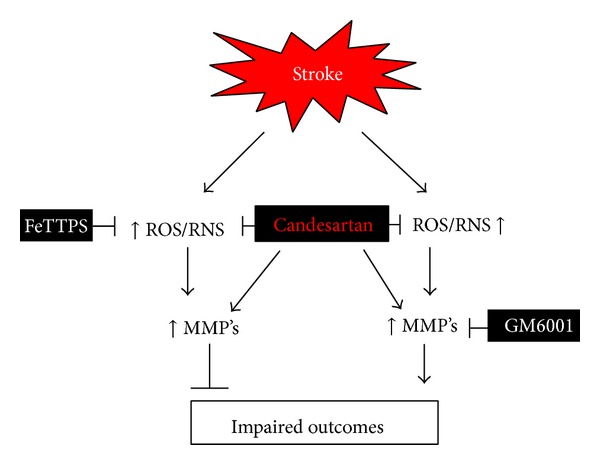
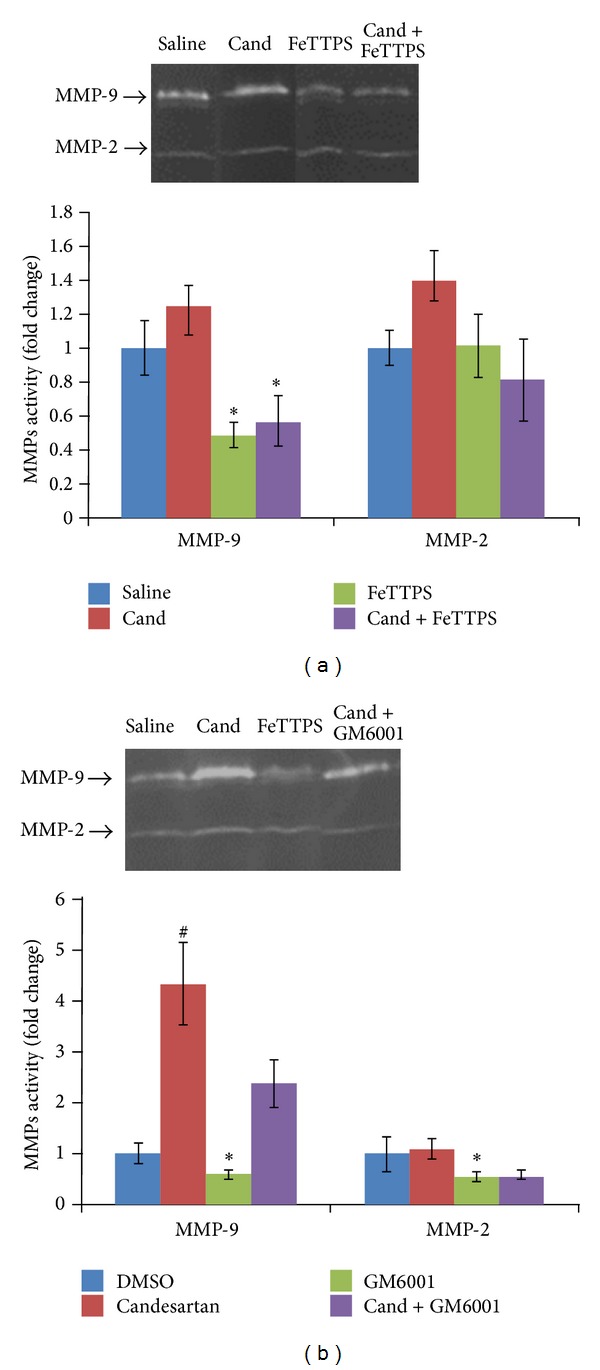
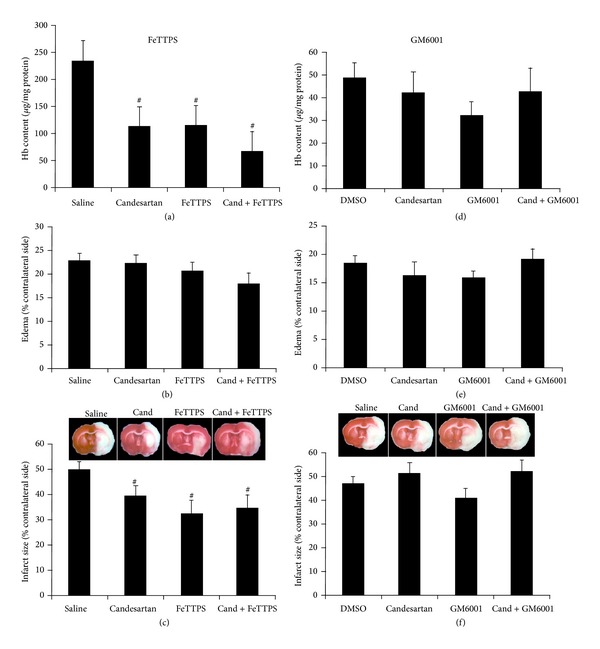
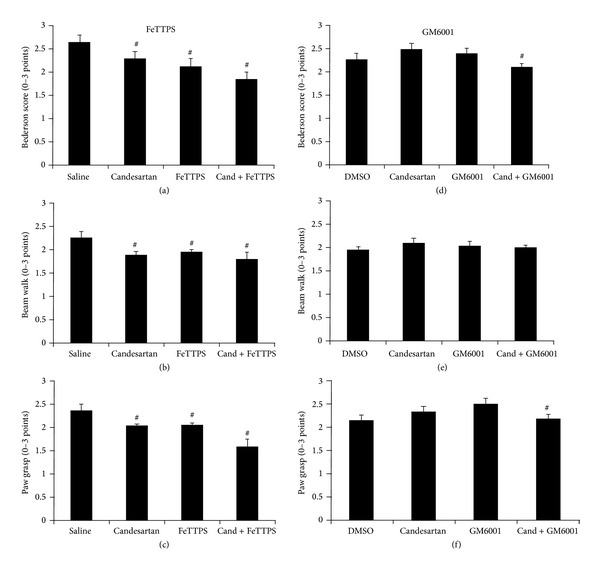
Background and Purpose. Oxidative stress and matrix metalloproteinase (MMP) activity have been identified as key mediators of early vascular damage after ischemic stroke. Somewhat surprisingly, the angiotensin II type 1 receptor (AT1) blocker, candesartan, has been shown to acutely increase MMP activity while providing neurovascular protection. We aimed to determine the contribution of MMP and nitrative stress to the effects of angiotensin blockade in experimental stroke. Methods. Wistar rats (n = 9-14/group; a total of 99) were treated in a factorial design with candesartan 1 mg/kg IV, alone or in combination with either a peroxynitrite decomposition catalyst, FeTPPs, 30 mg/kg IP or GM6001 50 mg/kg IP (MMP inhibitor). Neurological deficit, infarct, size and hemorrhagic transformation (HT) were measured after 3 h of middle cerebral artery occlusion (MCAO) and 21 h of reperfusion. MMP activity and nitrotyrosine expression were also measured. Results. Candesartan reduced infarct size and HT when administered alone (P = 0.0011) and in combination with FeTPPs (P = 0.0016). GM6001 did not significantly affect HT when administered alone, but the combination with candesartan caused increased HT (P < 0.0001) and worsened neurologic score (P = 0.028). Conclusions. Acute administration of candesartan reduces injury after stroke despite increasing MMP activity, likely by an antioxidant mechanism.
背景与目的。氧化应激和基质金属蛋白酶(MMP)活性已被确认为缺血性卒中后早期血管损伤的关键介质。有点令人惊讶的是,血管紧张素II 1型受体(AT1)阻滞剂坎地沙坦已被证明可急性增加MMP活性,同时提供神经血管保护作用。我们旨在确定MMP和硝化应激在实验性卒中中对血管紧张素阻断作用的贡献。方法。采用析因设计,将Wistar大鼠(每组n = 9 - 14只;共99只)用1 mg/kg静脉注射坎地沙坦单独处理,或与过氧亚硝酸根分解催化剂FeTPPs(30 mg/kg腹腔注射)或GM6001(50 mg/kg腹腔注射,MMP抑制剂)联合处理。在大脑中动脉闭塞(MCAO)3小时和再灌注21小时后测量神经功能缺损、梗死灶大小和出血转化(HT)。还测量了MMP活性和硝基酪氨酸表达。结果。单独给予坎地沙坦(P = 0.0011)以及与FeTPPs联合给予时(P = 0.0016),均可减小梗死灶大小并降低HT。单独给予GM6001时对HT无显著影响,但与坎地沙坦联合使用时会导致HT增加(P < 0.0001)并使神经功能评分恶化(P = 0.028)。结论。尽管坎地沙坦会增加MMP活性,但急性给予坎地沙坦仍可减轻卒中后的损伤,可能是通过抗氧化机制实现的。