Joncourt Raphael, Eberle Andrea B, Rufener Simone C, Mühlemann Oliver
University of Bern, Department of Chemistry and Biochemistry, Bern, Switzerland; Graduate School for Cellular and Biomedical Sciences, University of Bern, Bern, Switzerland.
University of Bern, Department of Chemistry and Biochemistry, Bern, Switzerland.
PLoS One. 2014 Aug 22;9(8):e104391. doi: 10.1371/journal.pone.0104391. eCollection 2014.
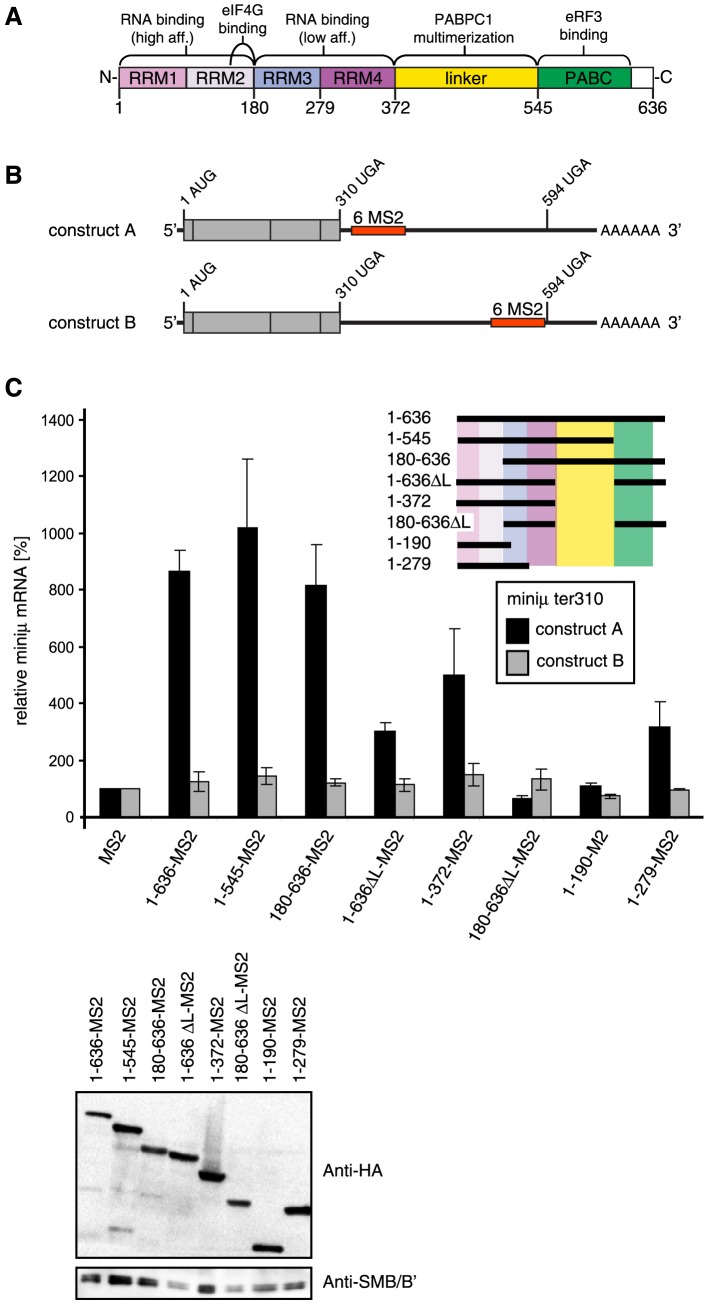
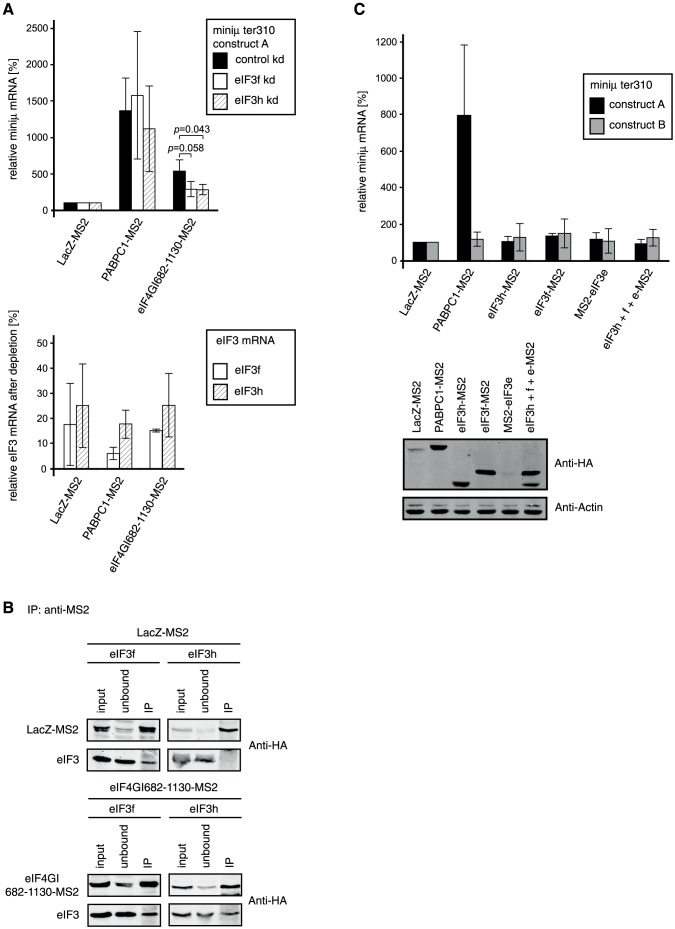
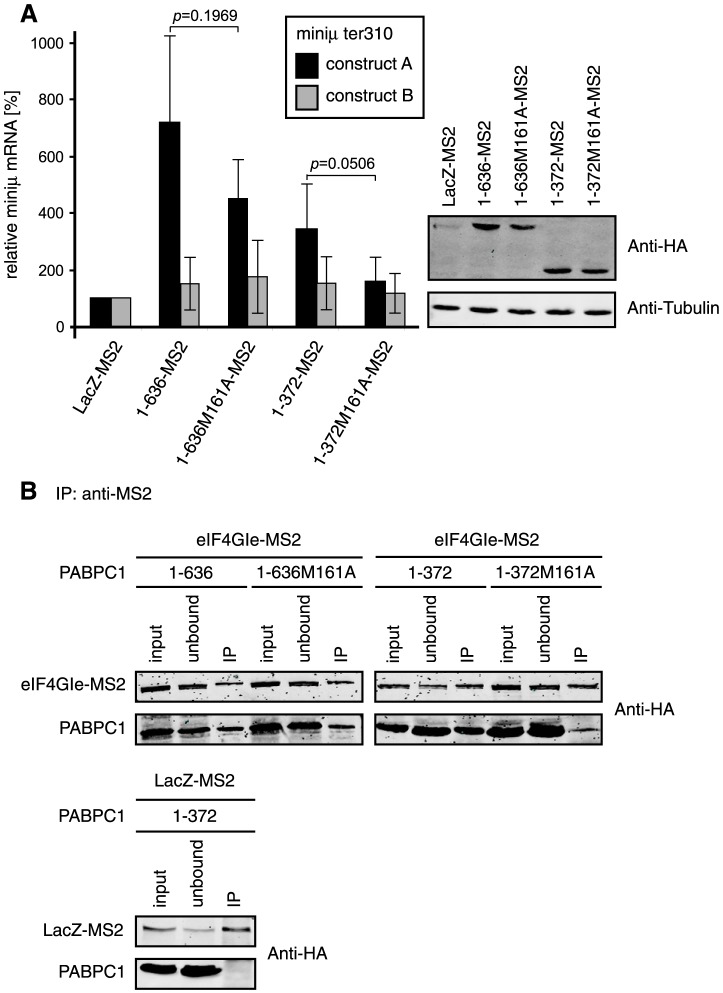
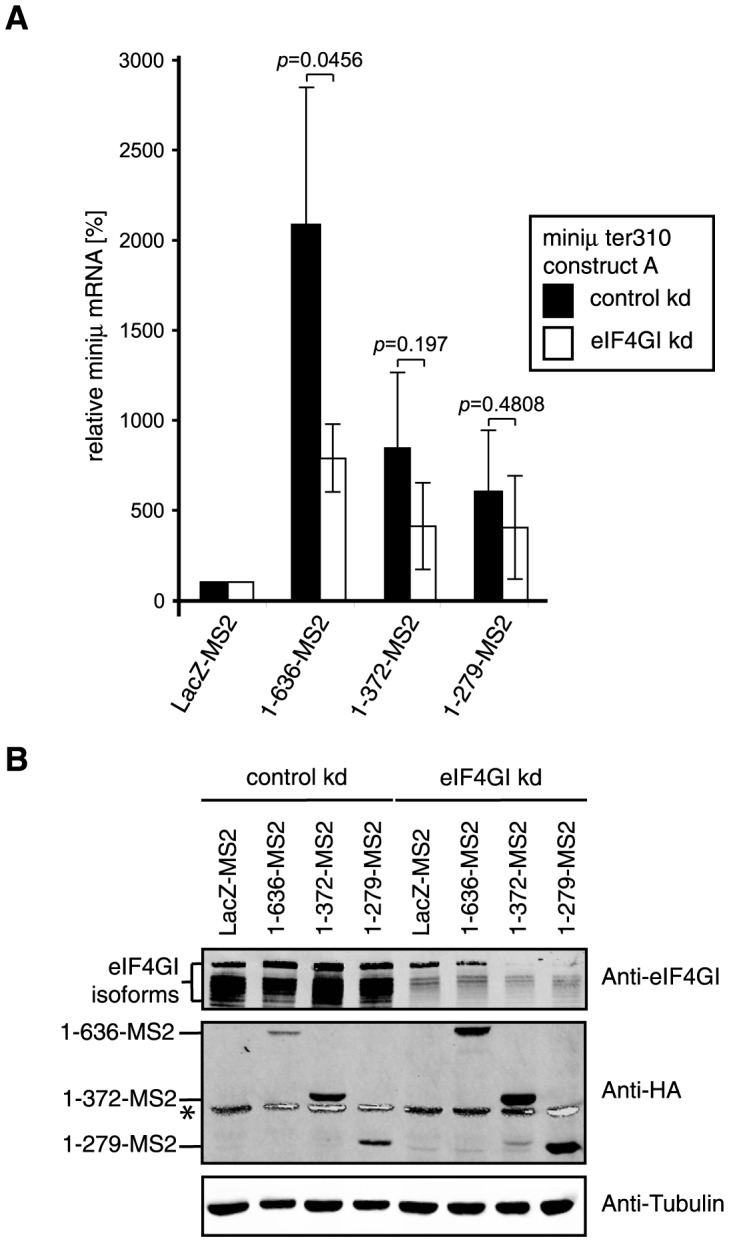
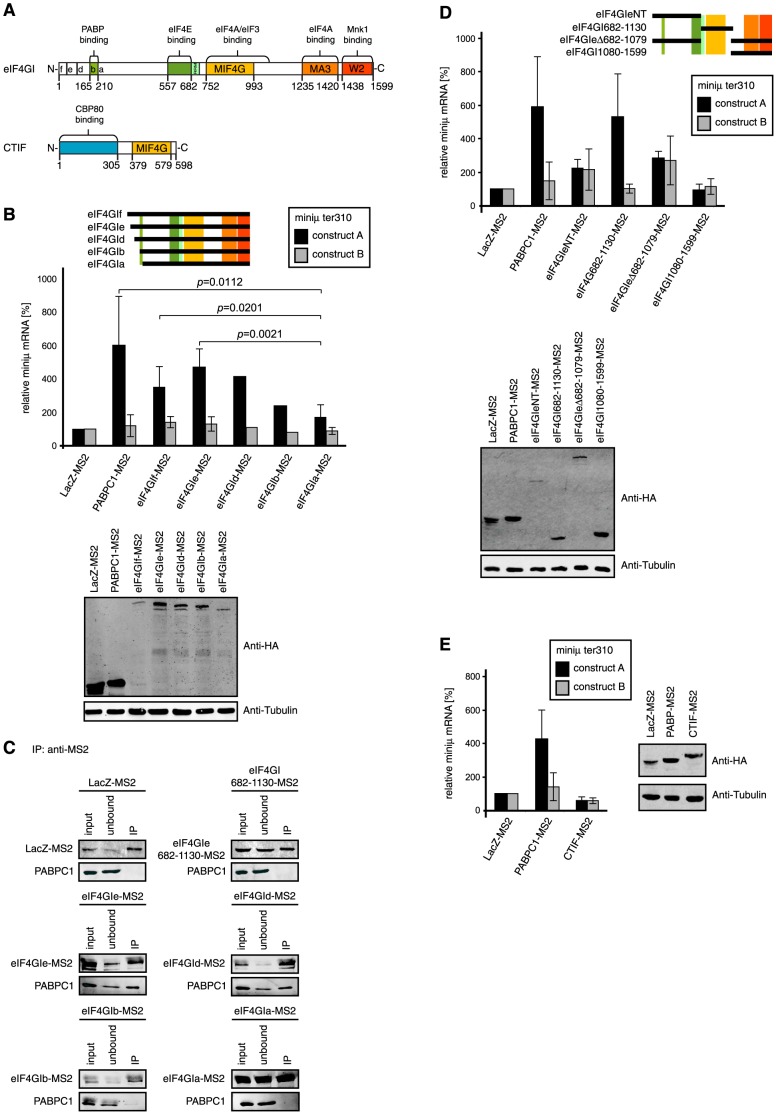
Nonsense-mediated mRNA decay (NMD), which is best known for degrading mRNAs with premature termination codons (PTCs), is thought to be triggered by aberrant translation termination at stop codons located in an environment of the mRNP that is devoid of signals necessary for proper termination. In mammals, the cytoplasmic poly(A)-binding protein 1 (PABPC1) has been reported to promote correct termination and therewith antagonize NMD by interacting with the eukaryotic release factors 1 (eRF1) and 3 (eRF3). Using tethering assays in which proteins of interest are recruited as MS2 fusions to a NMD reporter transcript, we show that the three N-terminal RNA recognition motifs (RRMs) of PABPC1 are sufficient to antagonize NMD, while the eRF3-interacting C-terminal domain is dispensable. The RRM1-3 portion of PABPC1 interacts with eukaryotic initiation factor 4G (eIF4G) and tethering of eIF4G to the NMD reporter also suppresses NMD. We identified the interactions of the eIF4G N-terminus with PABPC1 and the eIF4G core domain with eIF3 as two genetically separable features that independently enable tethered eIF4G to inhibit NMD. Collectively, our results reveal a function of PABPC1, eIF4G and eIF3 in translation termination and NMD suppression, and they provide additional evidence for a tight coupling between translation termination and initiation.
无义介导的mRNA降解(NMD),最广为人知的是降解带有提前终止密码子(PTC)的mRNA,被认为是由位于缺乏正确终止所需信号的mRNP环境中的终止密码子处的异常翻译终止所触发。在哺乳动物中,据报道细胞质聚腺苷酸结合蛋白1(PABPC1)通过与真核释放因子1(eRF1)和3(eRF3)相互作用来促进正确终止,从而拮抗NMD。使用系留测定法,其中将感兴趣的蛋白质作为MS2融合体招募到NMD报告转录本上,我们表明PABPC1的三个N端RNA识别基序(RRMs)足以拮抗NMD,而与eRF3相互作用的C端结构域则是可有可无的。PABPC1的RRM1 - 3部分与真核起始因子4G(eIF4G)相互作用,并且将eIF4G系留到NMD报告基因上也能抑制NMD。我们确定了eIF4G N端与PABPC1的相互作用以及eIF4G核心结构域与eIF3的相互作用是两个遗传上可分离的特征,它们独立地使系留的eIF4G能够抑制NMD。总的来说,我们的结果揭示了PABPC1、eIF4G和eIF3在翻译终止和NMD抑制中的功能,并且它们为翻译终止和起始之间的紧密耦合提供了额外的证据。