Quinton Lee J, Mizgerd Joseph P
Pulmonary Center and Departments of.
Annu Rev Physiol. 2015;77:407-30. doi: 10.1146/annurev-physiol-021014-071937. Epub 2014 Aug 13.
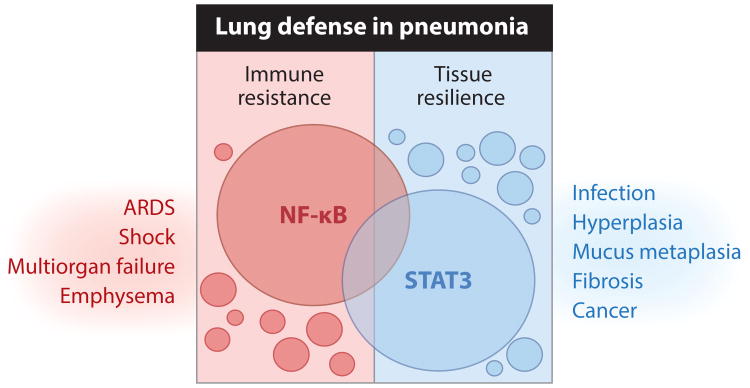
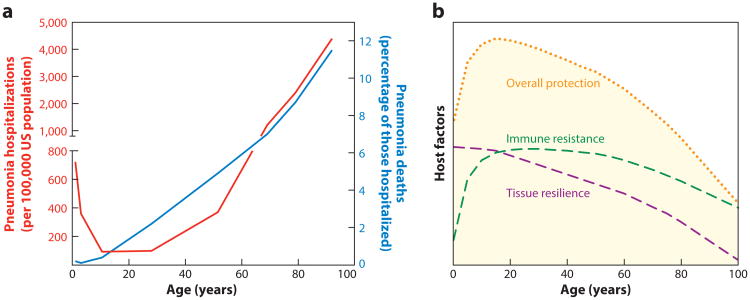
Pneumonia is initiated by microbes in the lung, but physiological processes integrating responses across diverse cell types and organ systems dictate the outcome of respiratory infection. Resistance, or actions of the host to eradicate living microbes, in the lungs involves a combination of innate and adaptive immune responses triggered by air-space infection. Resilience, or the ability of the host tissues to withstand the physiologically damaging effects of microbial and immune activities, is equally complex, precisely regulated, and determinative. Both immune resistance and tissue resilience are dynamic and change throughout the lifetime, but we are only beginning to understand such remodeling and how it contributes to the incidence of severe pneumonias, which diminishes as childhood progresses and then increases again among the elderly. Here, we review the concepts of resistance, resilience, and remodeling as they apply to pneumonia, highlighting recent advances and current significant knowledge gaps.
肺炎由肺部的微生物引发,但整合不同细胞类型和器官系统反应的生理过程决定了呼吸道感染的结果。肺部的抵抗力,即宿主根除活微生物的作用,涉及由肺泡感染引发的先天性和适应性免疫反应的结合。恢复力,即宿主组织耐受微生物和免疫活动生理损伤作用的能力,同样复杂、精确调控且具有决定性。免疫抵抗力和组织恢复力都是动态的,且在整个生命周期中都会发生变化,但我们才刚刚开始了解这种重塑以及它如何导致严重肺炎的发生,严重肺炎的发病率在儿童时期随着年龄增长而降低,然后在老年人中再次上升。在此,我们回顾抵抗力、恢复力和重塑的概念在肺炎中的应用,突出近期进展和当前显著的知识空白。