Chen Andrew, Chen Hsuan-Yu, Chen Chiachung
Department of Electrical Engineering, National Taiwan University, Taipei 10617, Taiwan.
Department of Materials Science and Engineering, National ChungHsing University, Taichung 40227, Taiwan.
Sensors (Basel). 2014 Aug 22;14(8):15593-609. doi: 10.3390/s140815593.
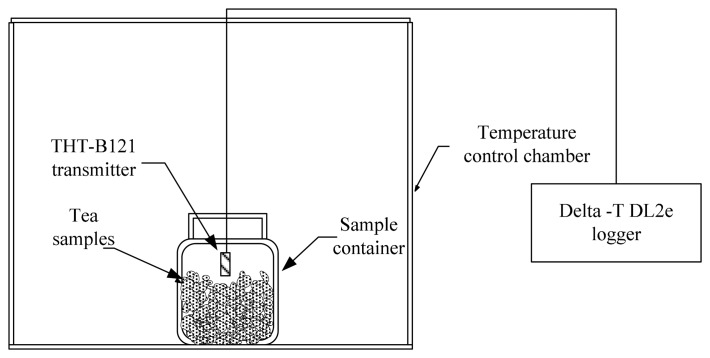
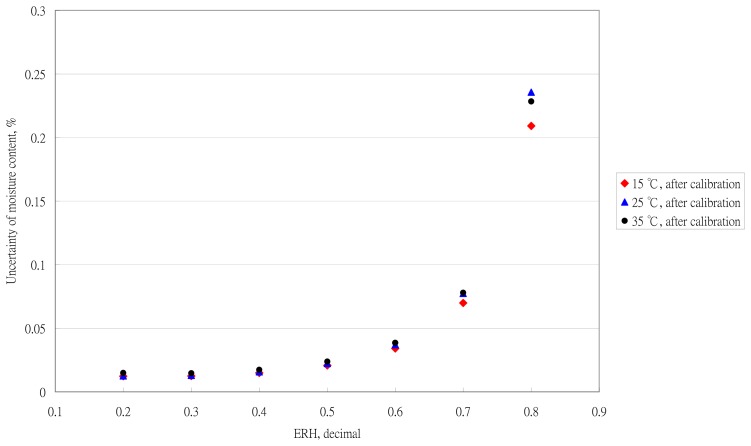
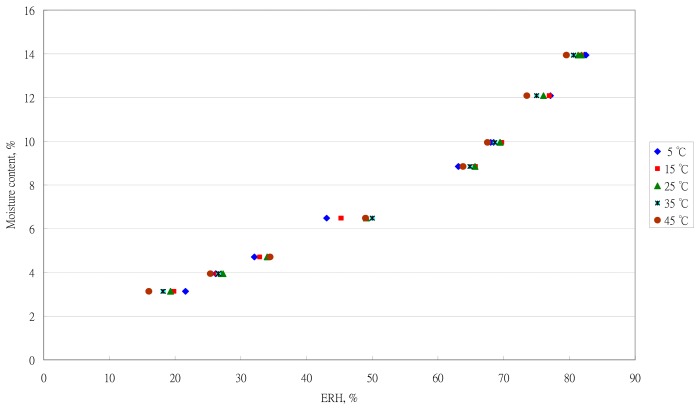
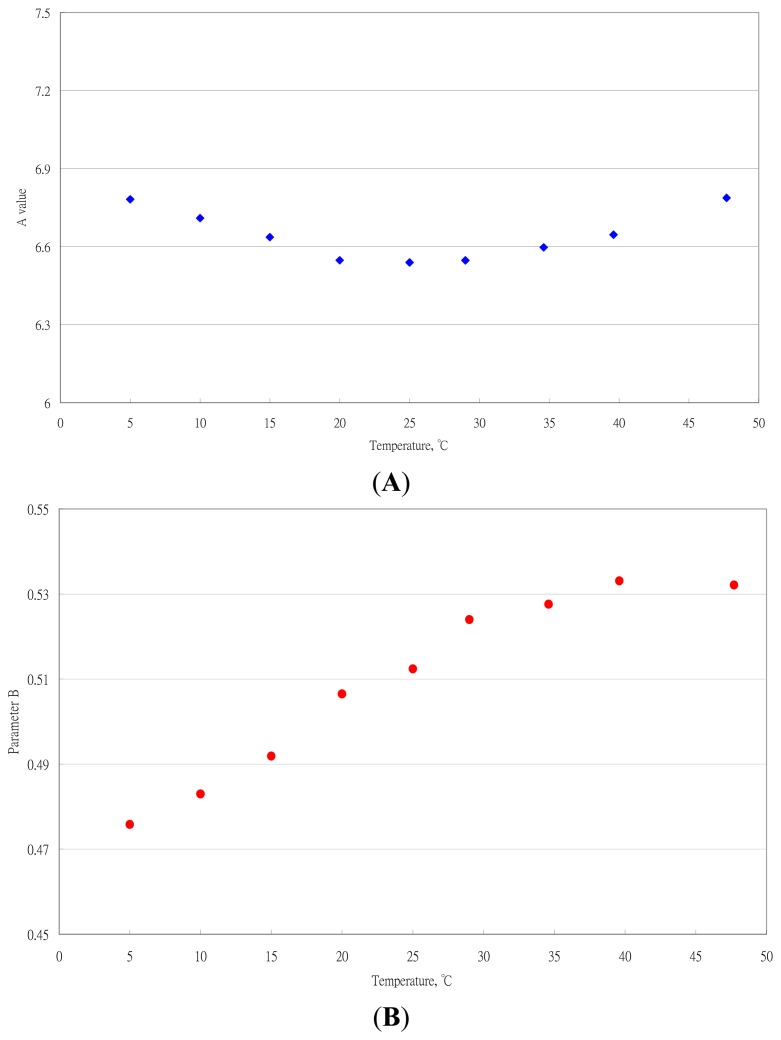
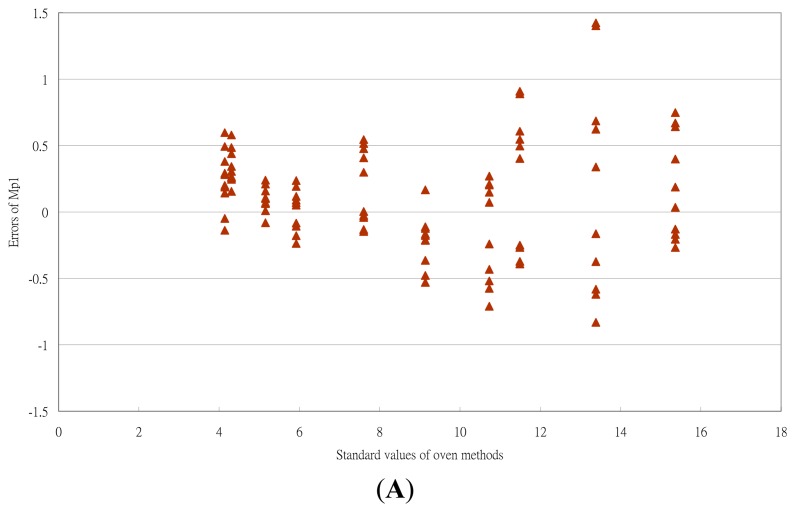
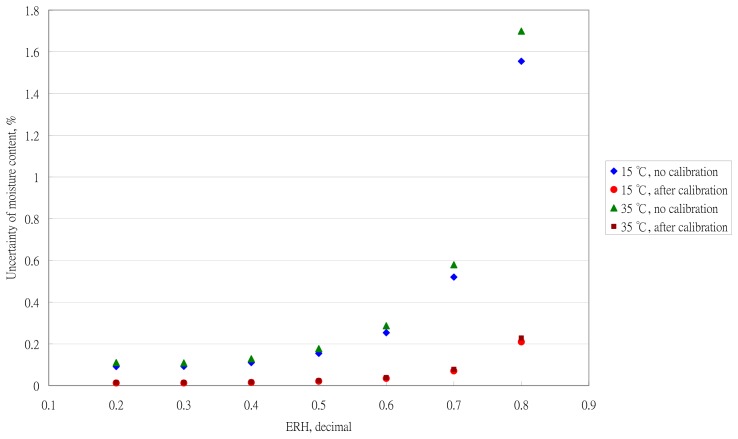
The measurement of tea moisture content is important for processing and storing tea. The moisture content of tea affects the quality and durability of the product. Some electrical devices have been proposed to measure the moisture content of tea leaves but are not practical. Their performance is influenced by material density and packing. The official oven method is time-consuming. In this study, the moisture content of Oolong tea was measured by the equilibrium relative humidity technique. The equilibrium relative humidity, and temperature, of tea materials were measured by using temperature and relative humidity sensors. Sensors were calibrated, and calibration equations were established to improve accuracy. The moisture content was calculated by using an equilibrium moisture content model. The error of the moisture content determined with this method was within 0.5% w.b. at moisture <15% w.b. Uncertainty analysis revealed that the performance of the humidity sensor had a significant effect on the accuracy of moisture determination.
茶叶水分含量的测定对于茶叶加工和储存至关重要。茶叶的水分含量会影响产品的品质和保质期。一些电子设备已被用于测定茶叶的水分含量,但并不实用。它们的性能受材料密度和包装的影响。官方的烘箱法耗时较长。在本研究中,采用平衡相对湿度技术测定乌龙茶的水分含量。利用温度和相对湿度传感器测量茶叶材料的平衡相对湿度和温度。对传感器进行校准,并建立校准方程以提高准确性。通过平衡水分含量模型计算水分含量。用该方法测定的水分含量误差在水分含量<15%(湿基)时为±0.5%(湿基)以内。不确定度分析表明,湿度传感器的性能对水分测定的准确性有显著影响。