Corrigan Laura, Redhai Siamak, Leiblich Aaron, Fan Shih-Jung, Perera Sumeth M W, Patel Rachel, Gandy Carina, Wainwright S Mark, Morris John F, Hamdy Freddie, Goberdhan Deborah C I, Wilson Clive
Department of Physiology, Anatomy and Genetics and Nuffield Department of Surgical Sciences, University of Oxford, Oxford OX1 3QX, England, UK.
Department of Physiology, Anatomy and Genetics and Nuffield Department of Surgical Sciences, University of Oxford, Oxford OX1 3QX, England, UK Department of Physiology, Anatomy and Genetics and Nuffield Department of Surgical Sciences, University of Oxford, Oxford OX1 3QX, England, UK.
J Cell Biol. 2014 Sep 1;206(5):671-88. doi: 10.1083/jcb.201401072. Epub 2014 Aug 25.
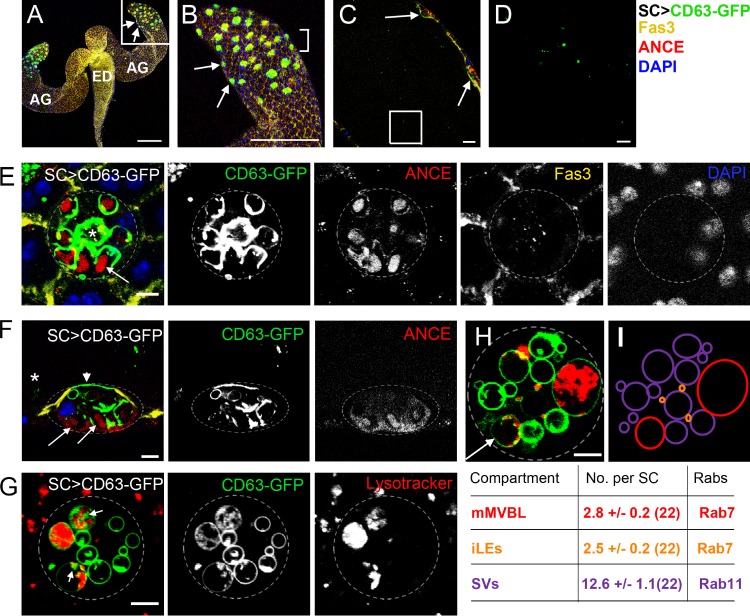
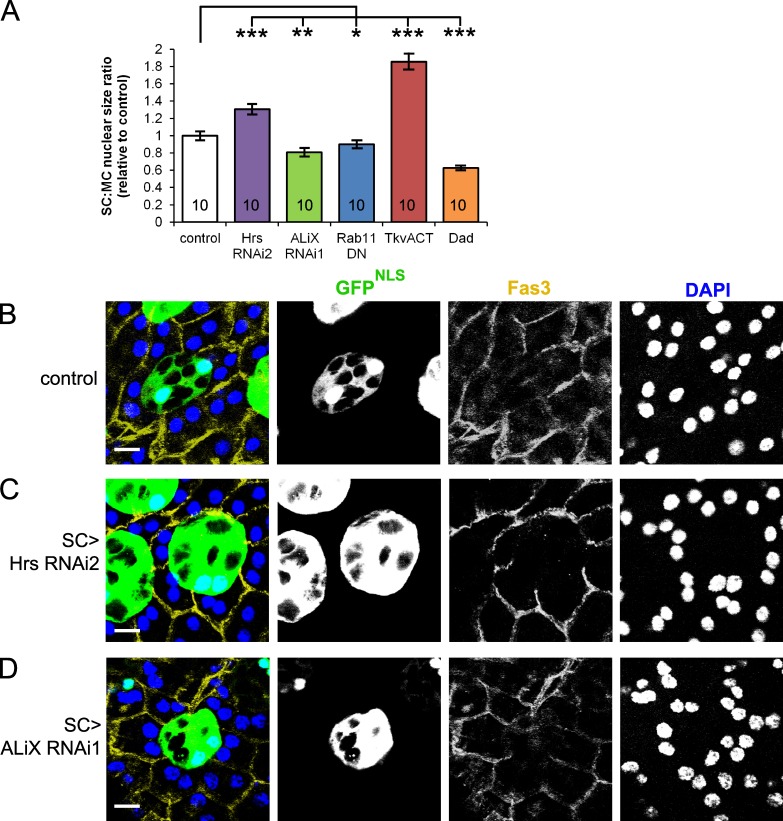
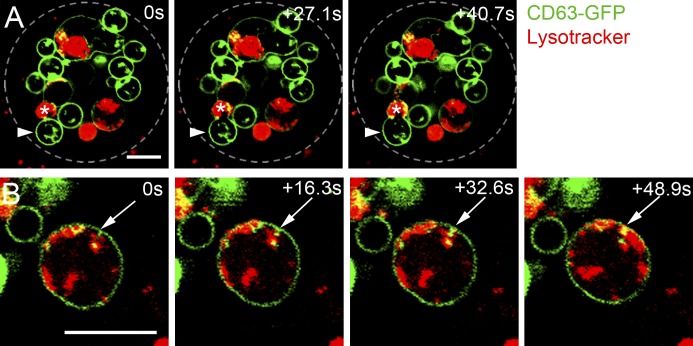
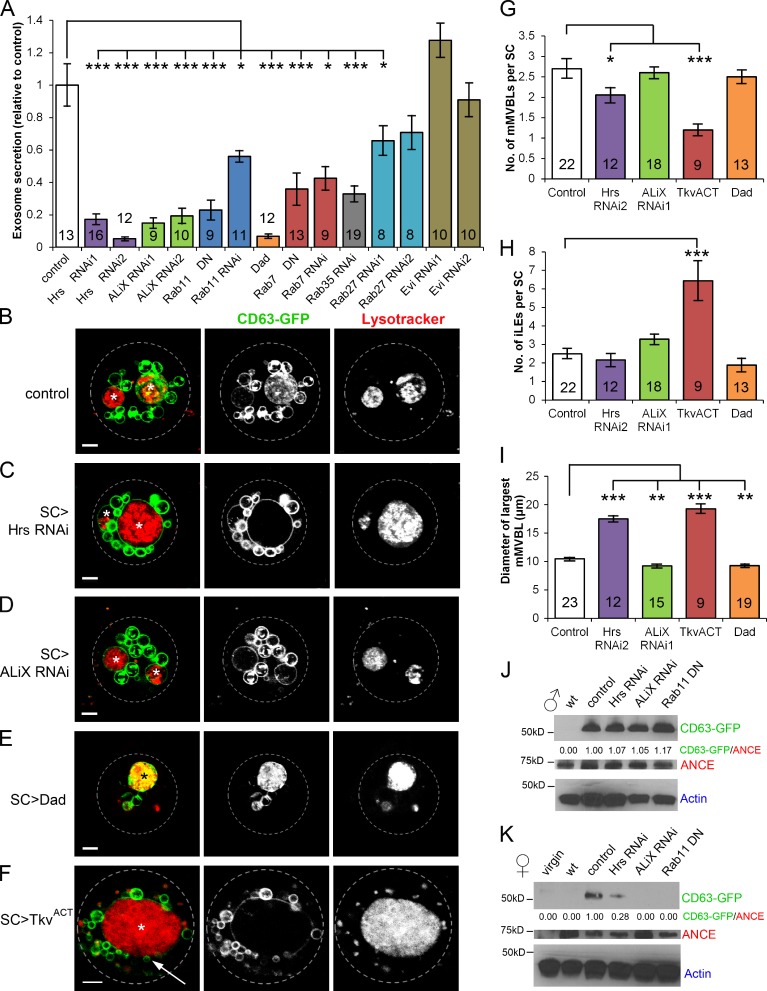
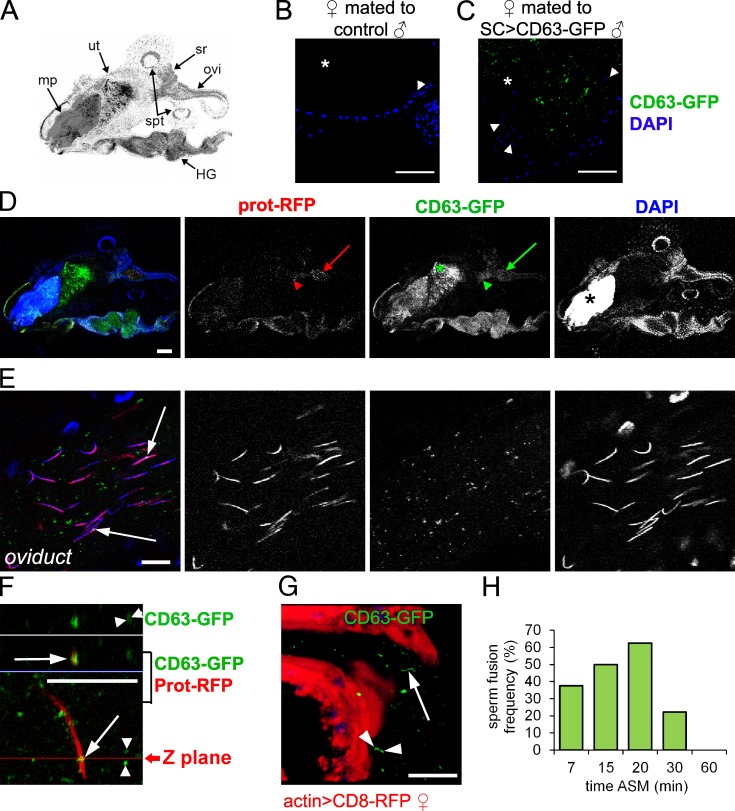
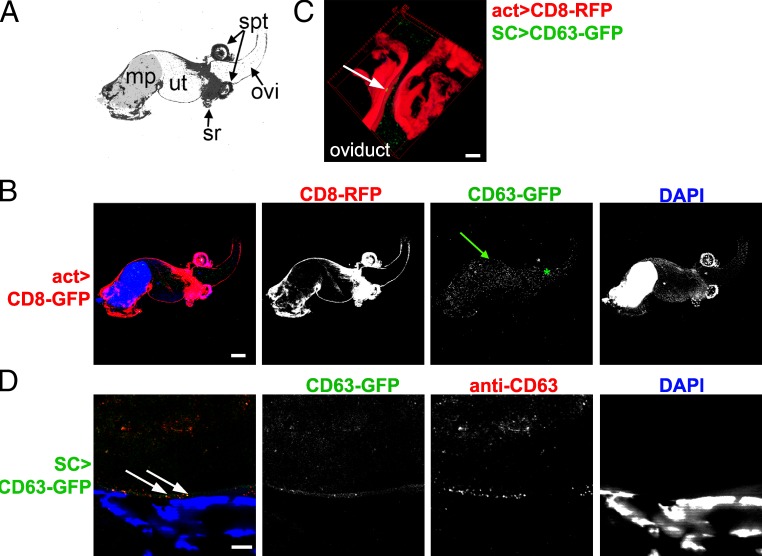
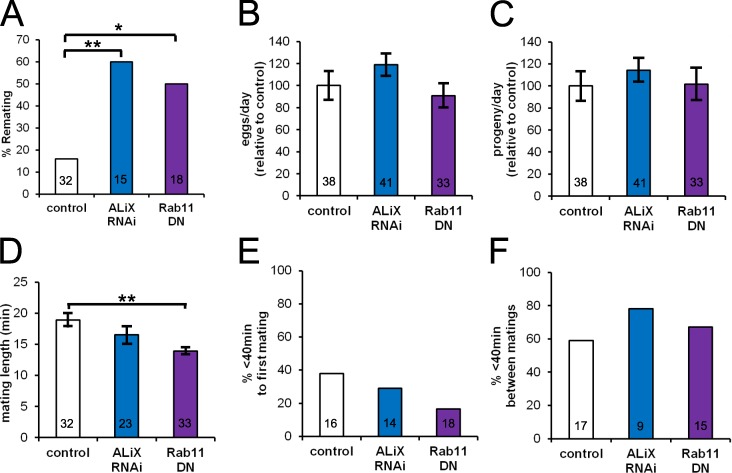
Male reproductive glands secrete signals into seminal fluid to facilitate reproductive success. In Drosophila melanogaster, these signals are generated by a variety of seminal peptides, many produced by the accessory glands (AGs). One epithelial cell type in the adult male AGs, the secondary cell (SC), grows selectively in response to bone morphogenetic protein (BMP) signaling. This signaling is involved in blocking the rapid remating of mated females, which contributes to the reproductive advantage of the first male to mate. In this paper, we show that SCs secrete exosomes, membrane-bound vesicles generated inside late endosomal multivesicular bodies (MVBs). After mating, exosomes fuse with sperm (as also seen in vitro for human prostate-derived exosomes and sperm) and interact with female reproductive tract epithelia. Exosome release was required to inhibit female remating behavior, suggesting that exosomes are downstream effectors of BMP signaling. Indeed, when BMP signaling was reduced in SCs, vesicles were still formed in MVBs but not secreted as exosomes. These results demonstrate a new function for the MVB-exosome pathway in the reproductive tract that appears to be conserved across evolution.
雄性生殖腺向精液中分泌信号以促进繁殖成功。在黑腹果蝇中,这些信号由多种精液肽产生,其中许多是由附腺(AGs)产生的。成年雄性AGs中的一种上皮细胞类型,即次生细胞(SC),会响应骨形态发生蛋白(BMP)信号而选择性生长。这种信号传导参与阻止已交配雌性的快速再次交配,这有助于第一个交配雄性的繁殖优势。在本文中,我们表明SCs分泌外泌体,外泌体是在内体晚期多囊泡体(MVBs)内产生的膜结合囊泡。交配后,外泌体与精子融合(在体外也可见人前列腺来源的外泌体与精子融合)并与雌性生殖道上皮相互作用。外泌体的释放是抑制雌性再次交配行为所必需的,这表明外泌体是BMP信号传导的下游效应物。事实上,当SCs中的BMP信号传导减弱时,MVBs中仍会形成囊泡,但不会作为外泌体分泌。这些结果证明了MVB-外泌体途径在生殖道中的新功能,这种功能似乎在进化过程中是保守的。