Kageyama-Yahara Natsuko, Yamamichi Nobutake, Takahashi Yu, Nakayama Chiemi, Shiogama Kazuya, Inada Ken-ichi, Konno-Shimizu Maki, Kodashima Shinya, Fujishiro Mitsuhiro, Tsutsumi Yutaka, Ichinose Masao, Koike Kazuhiko
Department of Gastroenterology, Graduate School of Medicine, The University of Tokyo, Bunkyo-ku, Tokyo, Japan.
1st Department of Pathology, Fujita Health University School of Medicine, Toyoake, Aichi, Japan.
PLoS One. 2014 Aug 28;9(8):e106106. doi: 10.1371/journal.pone.0106106. eCollection 2014.
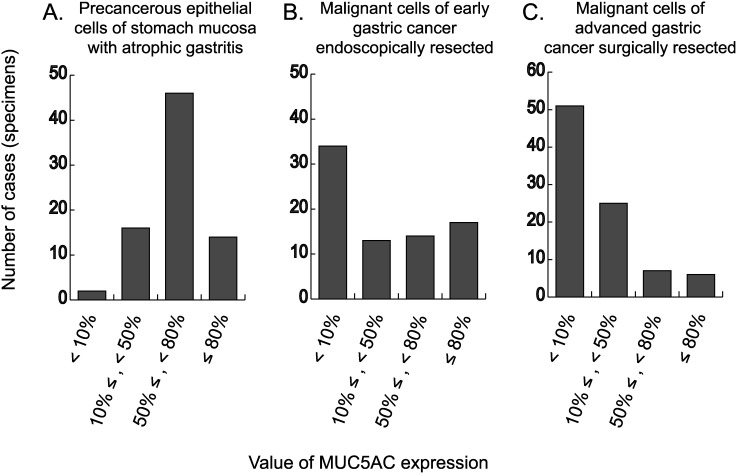
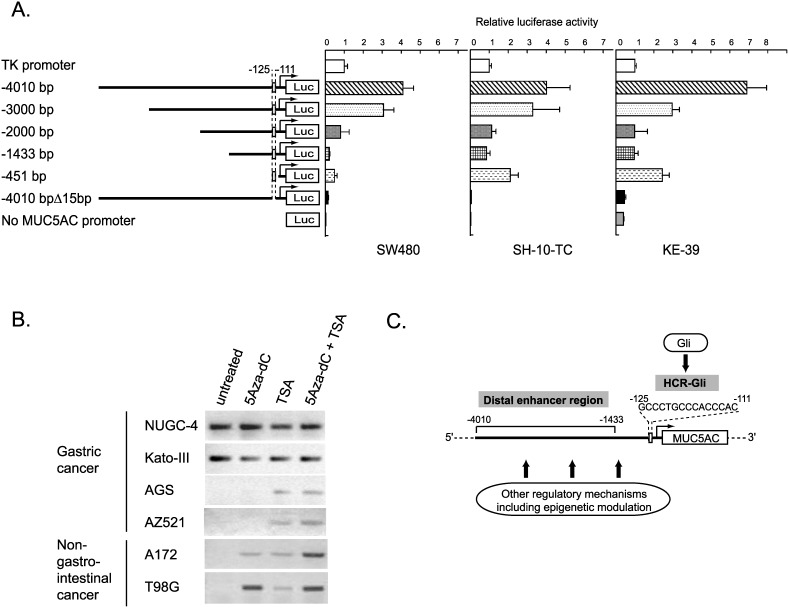
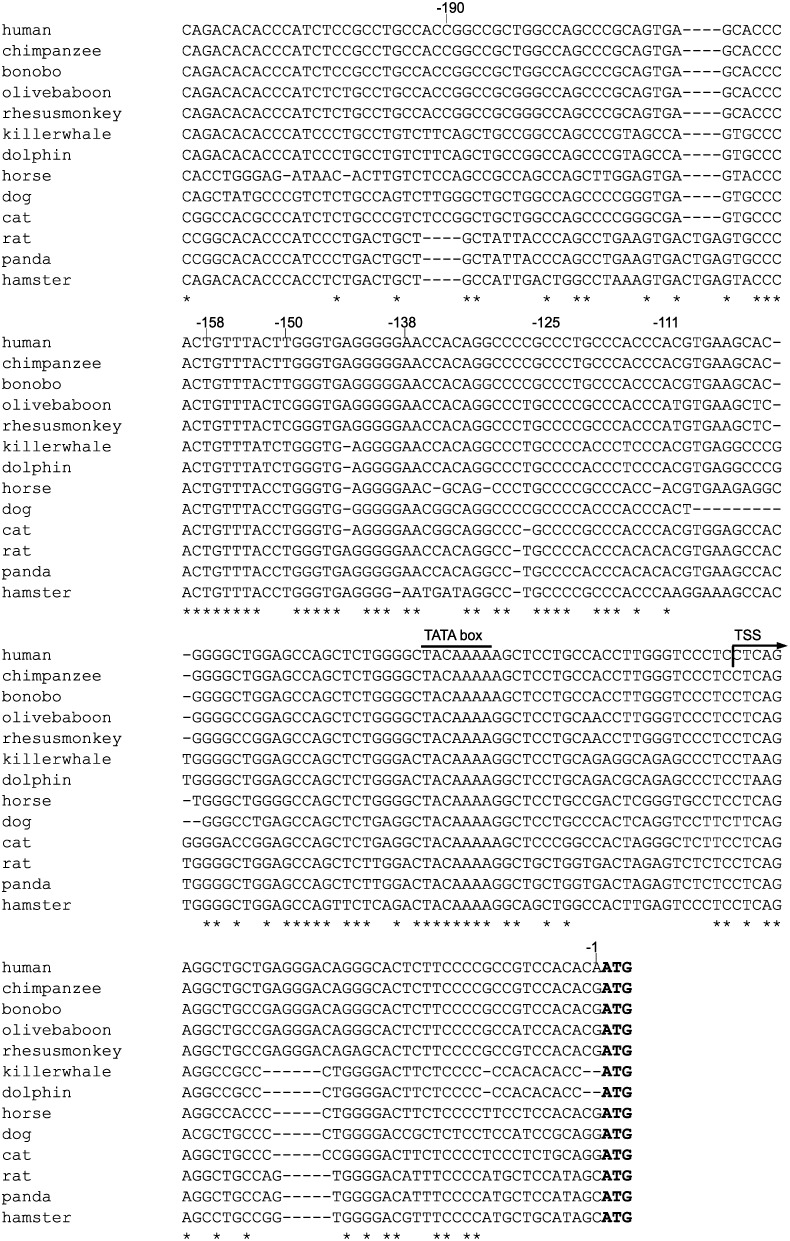
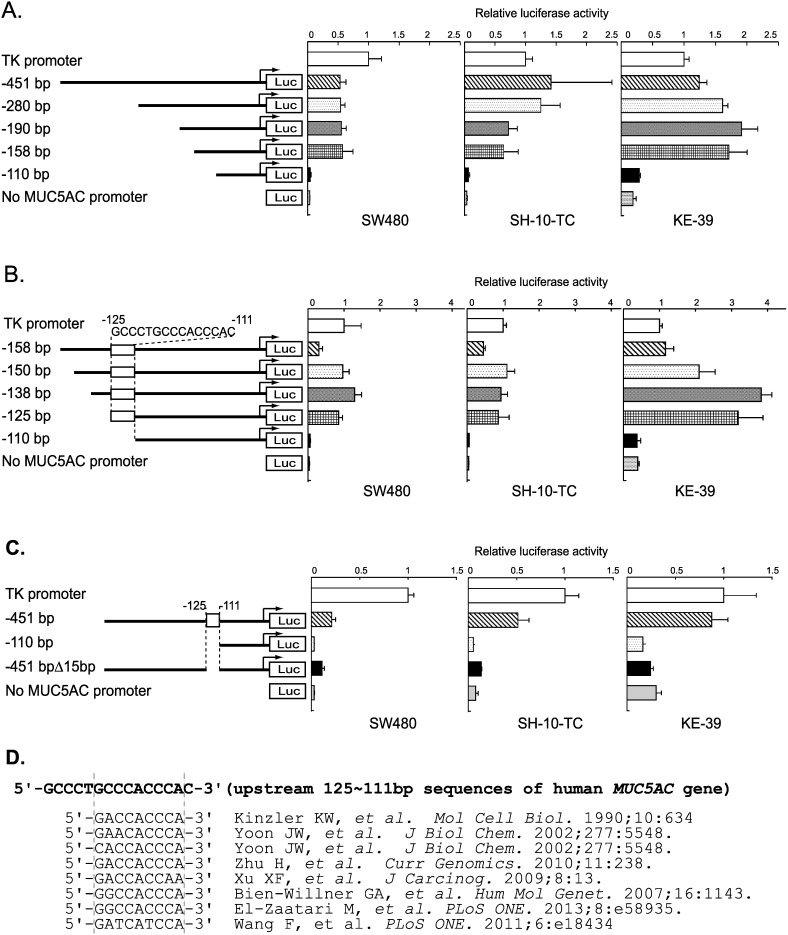
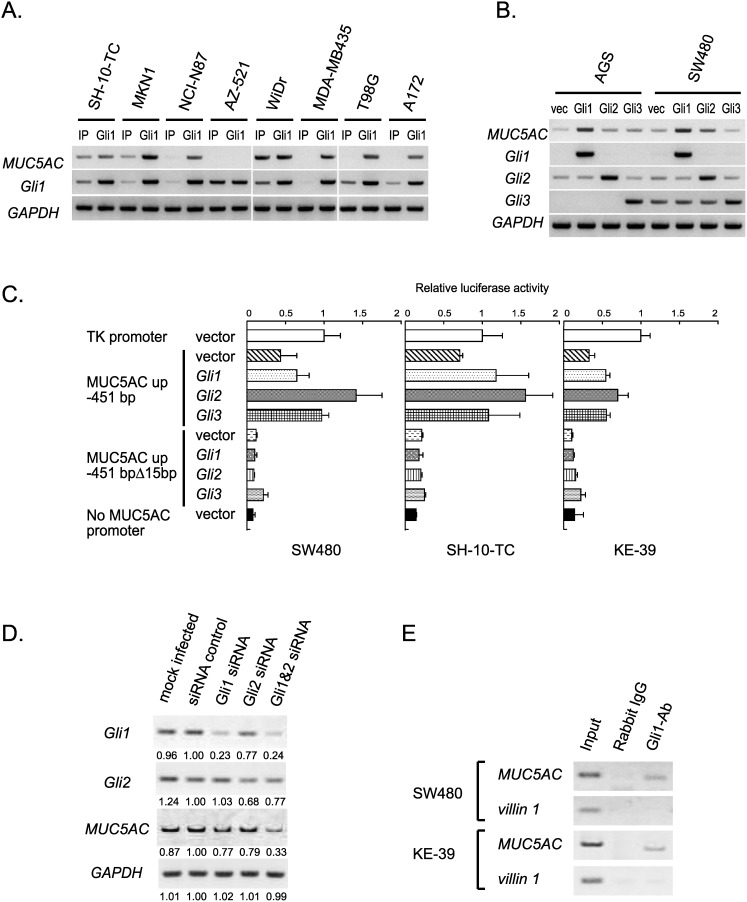
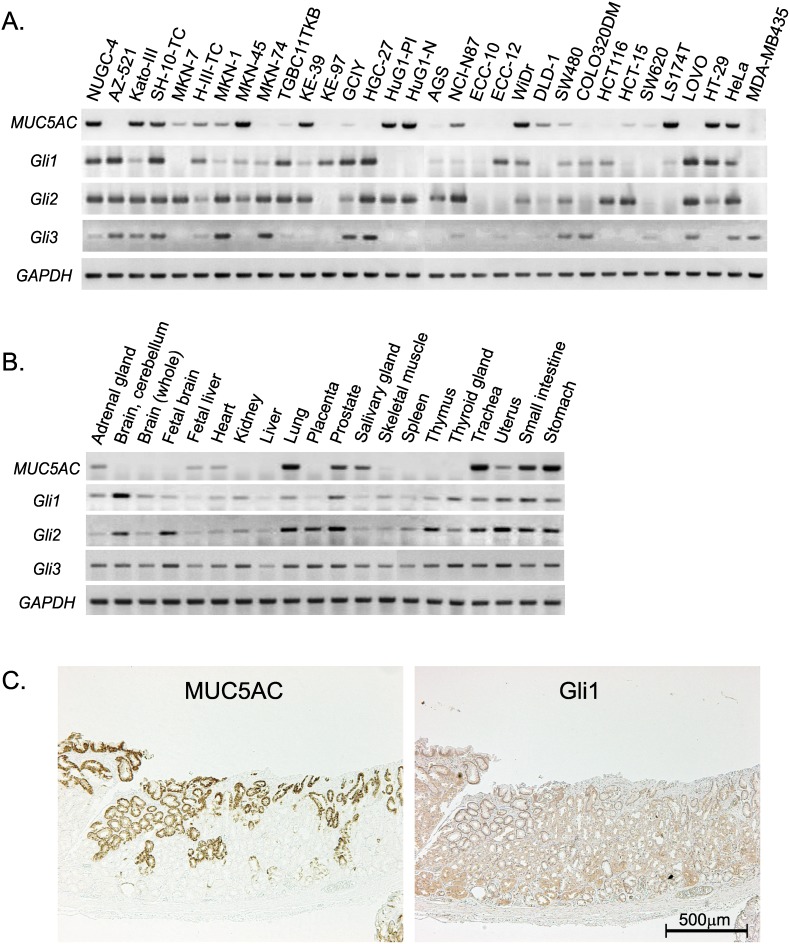
MUC5AC is a well-known gastric differentiation marker, which has been frequently used for the classification of stomach cancer. Immunohistochemistry revealed that expression of MUC5AC decreases accompanied with increased malignant property of gastric mucosa, which further suggests the importance of MUC5AC gene regulation. Alignment of the 5'-flanking regions of MUC5AC gene of 13 mammal species denoted high homology within 200 bp upstream of the coding region. Luciferase activities of the deletion constructs containing upstream 451 bp or shorter fragments demonstrated that 15 bp region between -111 and -125 bp plays a critical role on MUC5AC promoter activity in gastrointestinal cells. We found a putative Gli-binding site in this 15 bp sequence, and named this region a highly conserved region containing a Gli-binding site (HCR-Gli). Overexpression of Gli homologs (Gli1, Gli2, and Gli3) clearly enhanced MUC5AC promoter activity. Exogenous modulation of Gli1 and Gli2 also affected the endogenous MUC5AC gene expression in gastrointestinal cells. Chromatin immunoprecipitation assays demonstrated that Gli1 directly binds to HCR-Gli: Gli regulates MUC5AC transcription via direct protein-DNA interaction. Conversely, in the 30 human cancer cell lines and various normal tissues, expression patterns of MUC5AC and Gli did not coincide wholly: MUC5AC showed cell line-specific or tissue-specific expression whereas Gli mostly revealed ubiquitous expression. Luciferase promoter assays suggested that the far distal MUC5AC promoter region containing upstream 4010 bp seems to have several enhancer elements for gene transcription. In addition, treatments with DNA demethylation reagent and/or histone deacetylase inhibitor induced MUC5AC expression in several cell lines that were deficient in MUC5AC expression. These results indicated that Gli is necessary but not sufficient for MUC5AC expression: namely, the multiple regulatory mechanisms should work in the distal promoter region of MUC5AC gene.
MUC5AC是一种著名的胃分化标志物,常用于胃癌的分类。免疫组织化学显示,MUC5AC的表达随着胃黏膜恶性程度的增加而降低,这进一步表明了MUC5AC基因调控的重要性。对13种哺乳动物MUC5AC基因5'侧翼区域的比对表明,在编码区上游200 bp内具有高度同源性。含有上游451 bp或更短片段的缺失构建体的荧光素酶活性表明,-111至-125 bp之间的15 bp区域对胃肠道细胞中MUC5AC启动子活性起关键作用。我们在这个15 bp序列中发现了一个假定的Gli结合位点,并将该区域命名为含有Gli结合位点的高度保守区域(HCR-Gli)。Gli同源物(Gli1、Gli2和Gli3)的过表达明显增强了MUC5AC启动子活性。Gli1和Gli2的外源性调节也影响胃肠道细胞中内源性MUC5AC基因的表达。染色质免疫沉淀分析表明,Gli1直接与HCR-Gli结合:Gli通过直接的蛋白质-DNA相互作用调节MUC5AC转录。相反,在30种人类癌细胞系和各种正常组织中,MUC5AC和Gli的表达模式并不完全一致:MUC5AC表现出细胞系特异性或组织特异性表达,而Gli大多表现为普遍表达。荧光素酶启动子分析表明,包含上游4010 bp的远端MUC5AC启动子区域似乎有几个用于基因转录的增强子元件。此外,用DNA去甲基化试剂和/或组蛋白脱乙酰酶抑制剂处理可诱导几种缺乏MUC5AC表达的细胞系中MUC5AC的表达。这些结果表明,Gli对MUC5AC的表达是必要的,但不是充分的:即多种调控机制应在MUC5AC基因的远端启动子区域起作用。