Department of Internal Medicine, Division of Gastroenterology, University of Michigan, Ann Arbor, Michigan, United States of America.
PLoS One. 2013;8(3):e58935. doi: 10.1371/journal.pone.0058935. Epub 2013 Mar 8.
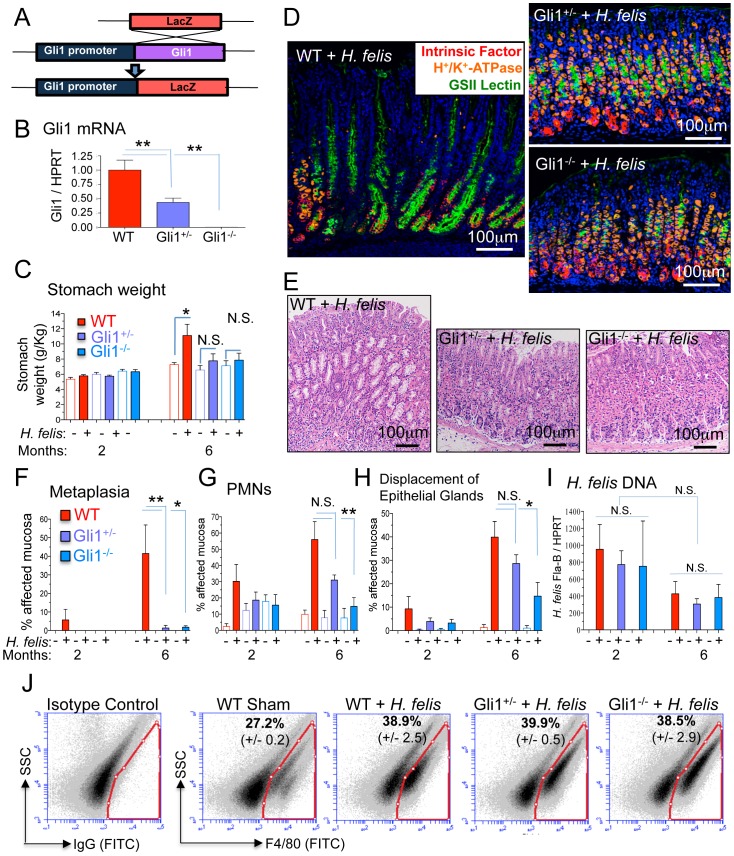
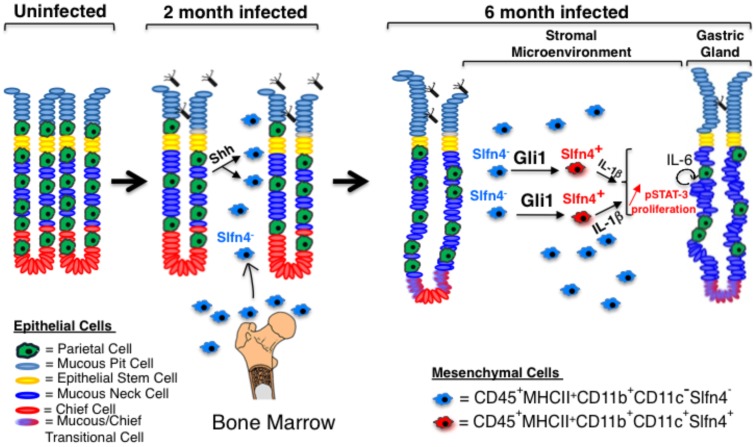
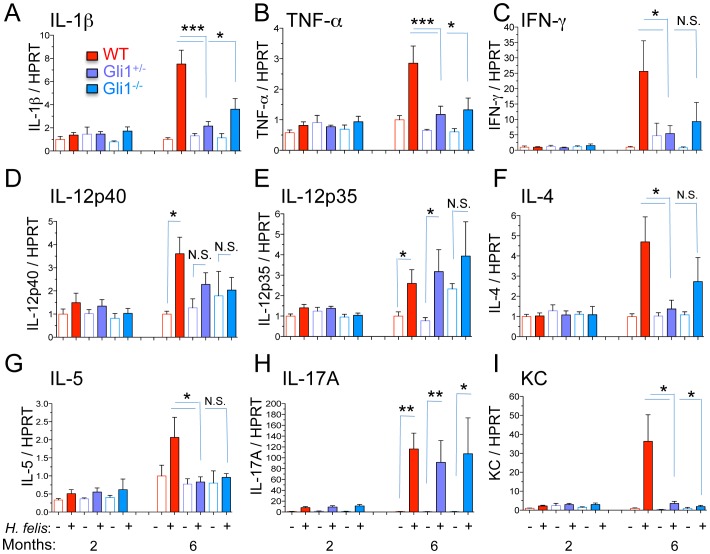
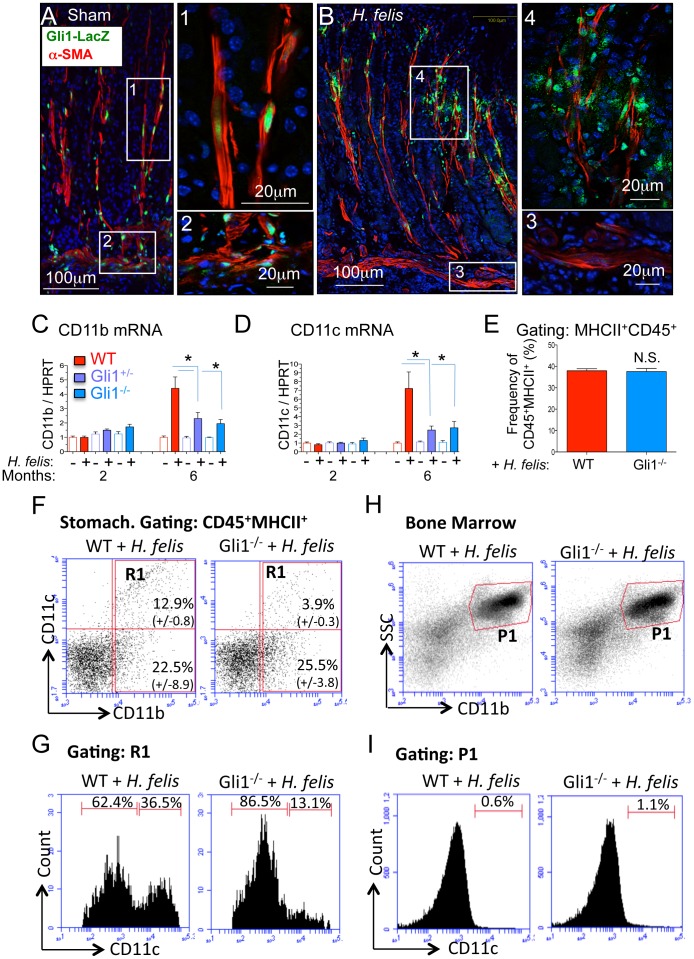
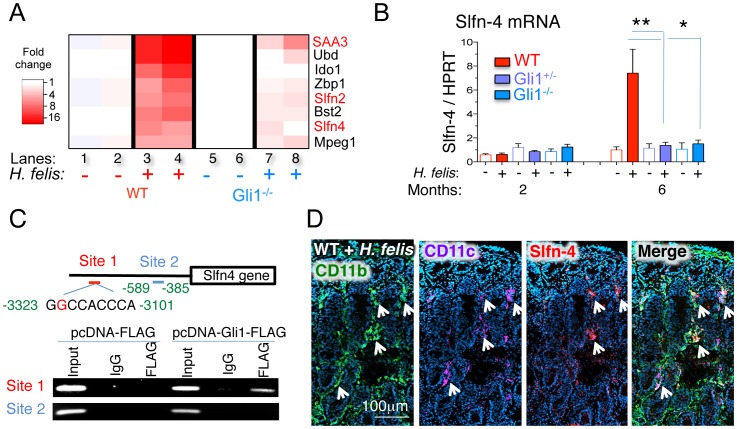
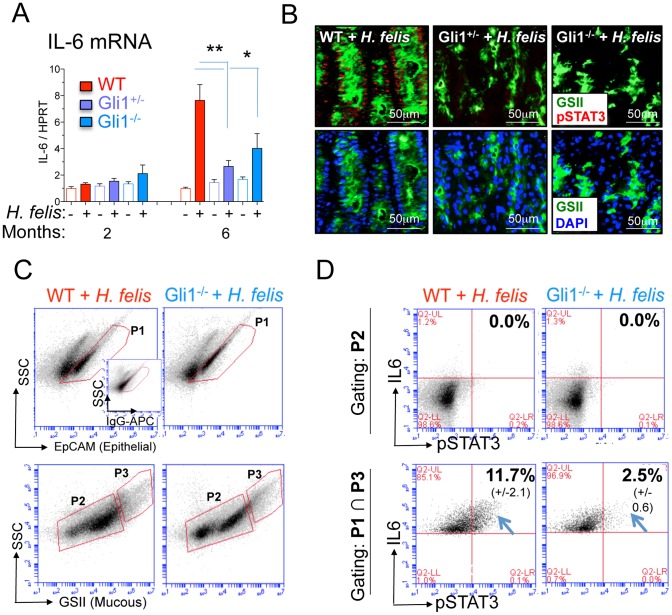
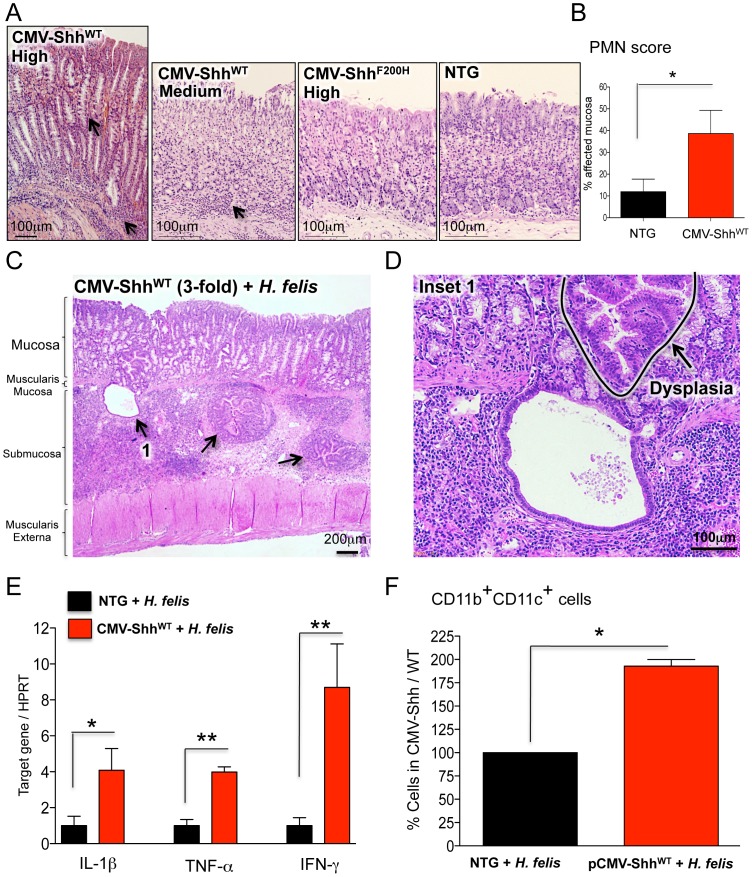
Chronic inflammation in the stomach induces metaplasia, the pre-cancerous lesion that precedes inflammation-driven neoplastic transformation. While Hedgehog signaling contributes to the initiation of some cancers, its role in gastric transformation remains poorly defined. We found that Helicobacter-infected C57BL/6 mice develop extensive mucous cell metaplasia at 6 month but not at 2 months post-infection. Gastric metaplasia coincided with the appearance of CD45(+)MHCII(+)CD11b(+)CD11c(+) myeloid cells that were normally not present in the chronic gastritis at 2 months. The myeloid regulatory gene Schlafen-4 was identified in a microarray analysis comparing infected WT versus Gli1 null mice and was expressed in the CD11b(+)CD11c(+) myeloid population. Moreover this same population expressed IL-1β and TNFα pro-inflammatory cytokines. By 6 months, the mucous neck cell metaplasia (SPEM) expressed IL-6, phosphorylated STAT3 and the proliferative marker Ki67. Expression was not observed in Gli1 mutant mice consistent with the requirement of Gli1 to induce this pre-neoplastic phenotype. Ectopic Shh ligand expression alone was not sufficient to induce SPEM, but with Helicobacter infection synergistically increased the histologic severity observed with the inflammation. Therefore Hedgehog signaling is required, but is not sufficient to generate pre-neoplastic changes during chronic gastritis. Gli1-dependent myeloid cell differentiation plays a pivotal role in the appearance of myeloid cell subtypes ostensibly required for SPEM development. Moreover, it suggests that therapies capable of targeting this phenotypic switch might prevent progression to metaplasia, the pre-neoplastic change that develops prior to dysplasia and gastric cancer, which also occurs in other epithelial-derived neoplasias initiated by chronic inflammation.
慢性胃部炎症会引起化生,即炎症驱动的肿瘤转化之前的癌前病变。尽管 Hedgehog 信号通路有助于一些癌症的发生,但它在胃转化中的作用仍未得到明确界定。我们发现,感染幽门螺杆菌的 C57BL/6 小鼠在感染后 6 个月会发生广泛的黏液细胞化生,但在 2 个月时不会发生。胃化生与 CD45(+)MHCII(+)CD11b(+)CD11c(+)髓样细胞的出现同时发生,而这些细胞在 2 个月的慢性胃炎中通常不存在。在比较感染 WT 与 Gli1 缺失小鼠的微阵列分析中发现了髓样调节基因 Schlafen-4,并在 CD11b(+)CD11c(+)髓样细胞群中表达。此外,该相同群体表达了 IL-1β 和 TNFα 促炎细胞因子。到 6 个月时,黏液颈细胞化生(SPEM)表达 IL-6、磷酸化 STAT3 和增殖标志物 Ki67。在 Gli1 突变小鼠中未观察到表达,这与 Gli1 诱导这种癌前表型的要求一致。单独异位 Shh 配体表达不足以诱导 SPEM,但与幽门螺杆菌感染协同作用,增加了炎症引起的组织学严重程度。因此,Hedgehog 信号通路是必需的,但不足以在慢性胃炎期间产生癌前变化。Gli1 依赖性髓样细胞分化在髓样细胞亚群的出现中起着关键作用,这些细胞亚群显然是 SPEM 发展所必需的。此外,这表明能够靶向这种表型转换的治疗方法可能会阻止化生进展,化生是在发育不良和胃癌之前发生的癌前变化,这种变化也发生在其他由慢性炎症引发的上皮源性肿瘤中。