François Arnaud, Terro Faraj, Quellard Nathalie, Fernandez Béatrice, Chassaing Damien, Janet Thierry, Rioux Bilan Agnès, Paccalin Marc, Page Guylène
EA3808 molecular Targets and Therapeutic of Alzheimer's disease, University of Poitiers, Poitiers F-86073, France.
Mol Brain. 2014 Aug 27;7:56. doi: 10.1186/s13041-014-0056-z.
Current evidence suggests a central role for autophagy in many neurodegenerative diseases including Alzheimer's disease, Huntington's disease, Parkinson's disease and amyotrophic lateral sclerosis. Furthermore, it is well admitted that inflammation contributes to the progression of these diseases. Interestingly, crosstalks between autophagy and inflammation have been reported in vitro and at the peripheral level such as in Crohn's disease. However, the impact of systemic inflammation on autophagic components in the brain remains to be documented. Therefore, this study monitored autophagy markers after acute and chronic lipopolysaccharide (LPS)-induced inflammatory stress in mice.
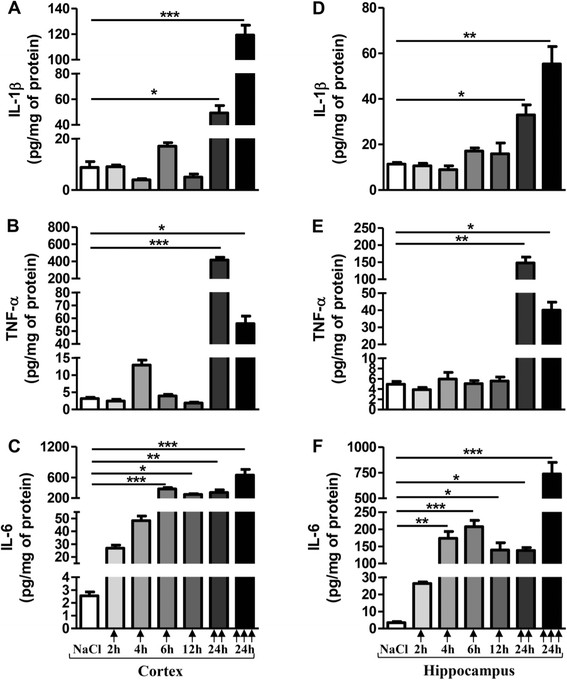
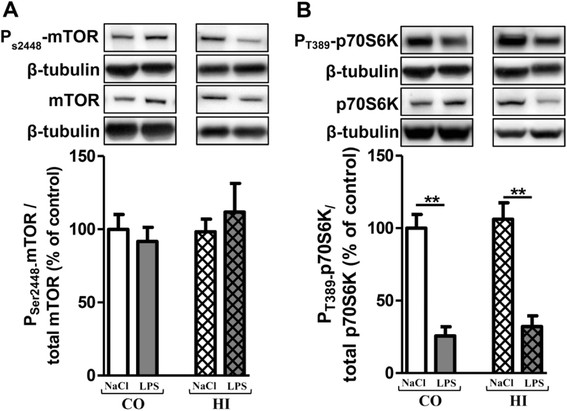
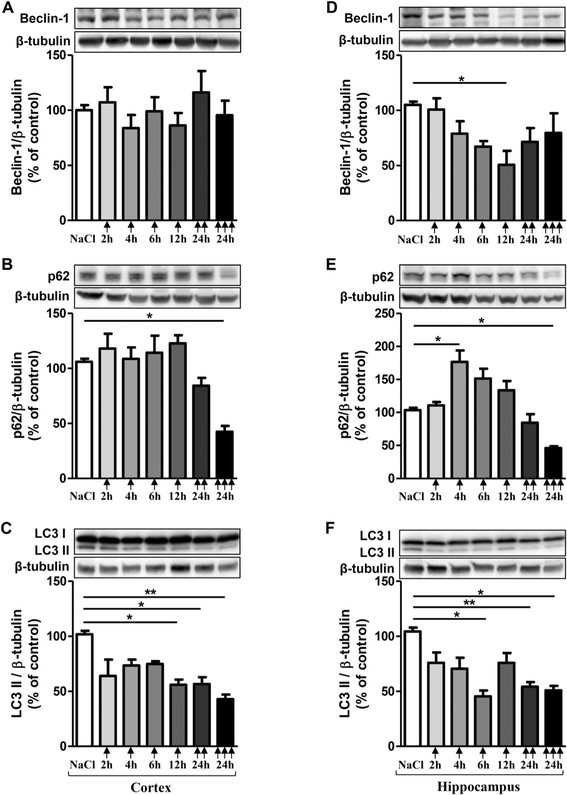
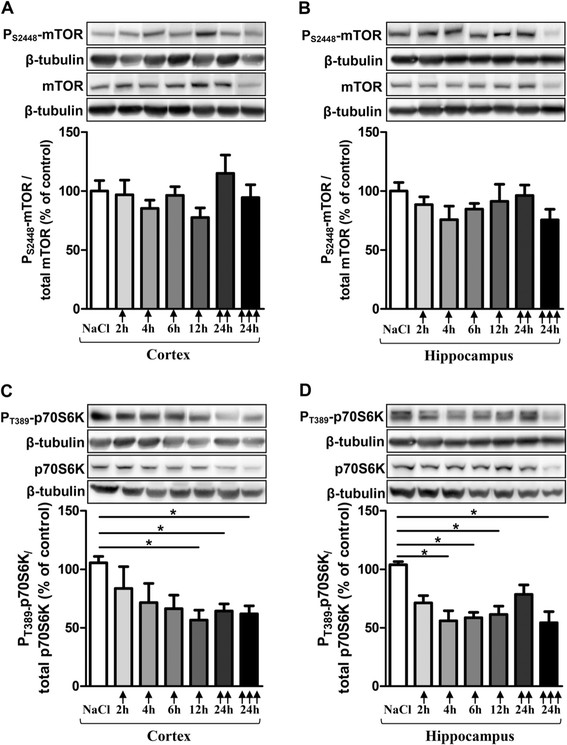
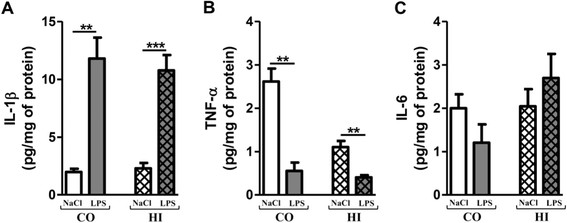
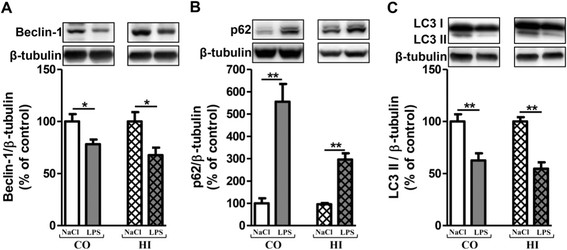
We showed that acute inflammation, 24 h post-intraperitoneal 10 mg/kg LPS, substantially increased cytokine production (Interleukin(IL)-1β, Tumor necrosis factor (TNF)-α and IL-6), decreased the levels of autophagy markers (Beclin-1, p62 and LC3 II) and reduced p70S6K activation in cortex and hippocampus. In hippocampus, IL-1β levels and LC3 II expression were positively and highly correlated and a negative correlation was noted between TNF-α levels and p70S6K activation. Chronic inflammation by injection of 0.5 mg/kg LPS every three days during three months led to a moderate IL-1β production and decreased TNF-α levels. Interestingly, Beclin-1 and LC3 II levels decreased while those of p62 increased. Cortical IL-1β levels positively correlated with Beclin-1 and LC3 II and on the contrary inversely correlated with p62.
The present study is the first showing links between IL-1β-mediated inflammation and autophagy in the brain. It could open to new therapeutic strategies in brain diseases where regulation impairment of inflammation and autophagy progress with the severity of diseases.
目前的证据表明自噬在许多神经退行性疾病中发挥核心作用,包括阿尔茨海默病、亨廷顿舞蹈症、帕金森病和肌萎缩侧索硬化症。此外,炎症促进这些疾病进展这一观点已得到广泛认可。有趣的是,体外实验及外周水平(如克罗恩病)已报道了自噬与炎症之间的相互作用。然而,全身炎症对大脑自噬成分的影响仍有待证实。因此,本研究监测了小鼠在急性和慢性脂多糖(LPS)诱导的炎症应激后自噬标志物的变化。
我们发现,腹腔注射10mg/kg LPS 24小时后引发的急性炎症显著增加了细胞因子的产生(白细胞介素(IL)-1β、肿瘤坏死因子(TNF)-α和IL-6),降低了自噬标志物(Beclin-1、p62和LC3 II)的水平,并降低了皮质和海马体中p70S6K的活性。在海马体中,IL-1β水平与LC3 II表达呈正相关且高度相关,而TNF-α水平与p70S6K活性呈负相关。每三天注射0.5mg/kg LPS,持续三个月引发的慢性炎症导致IL-1β产生适度增加,TNF-α水平降低。有趣的是,Beclin-1和LC3 II水平降低,而p62水平升高。皮质IL-1β水平与Beclin-1和LC3 II呈正相关,相反与p62呈负相关。
本研究首次揭示了大脑中IL-1β介导的炎症与自噬之间存在联系。这可能为脑部疾病带来新的治疗策略,在这些疾病中,炎症和自噬的调节障碍会随着疾病的严重程度而进展。