Duke Clinical Research Institute, Durham, NC.
Parkview Health System, Fort Wayne, IN.
Am Heart J. 2014 Sep;168(3):239-247.e1. doi: 10.1016/j.ahj.2014.04.007. Epub 2014 Apr 24.
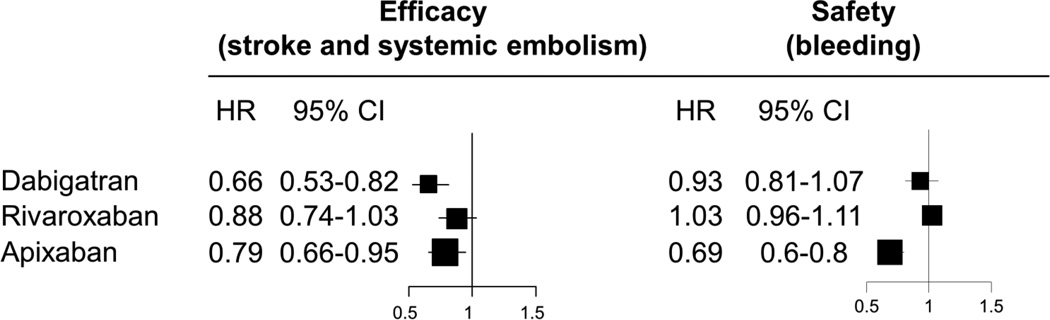
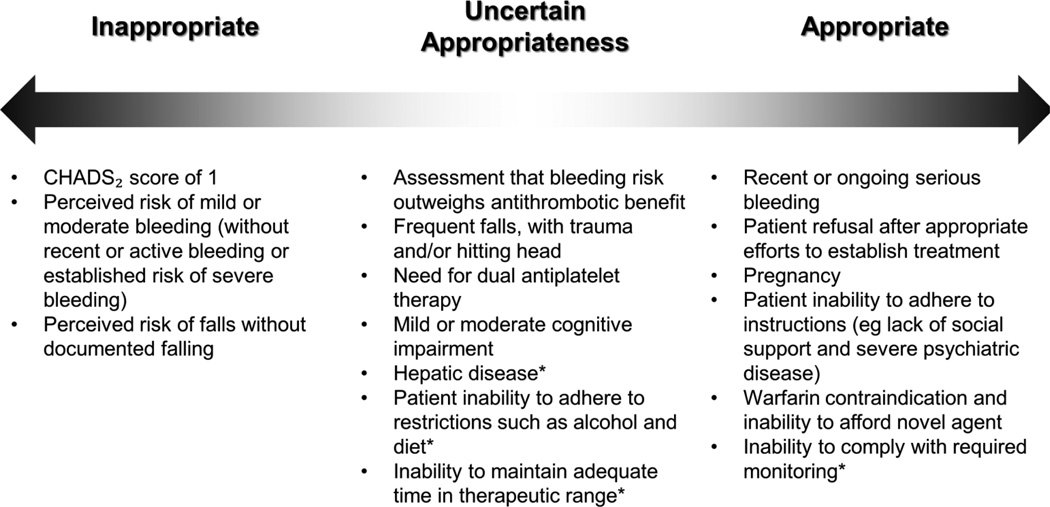
Approximately half of patients with atrial fibrillation and with risk factors for stroke are not treated with oral anticoagulation (OAC), whether it be with vitamin K antagonists (VKAs) or novel OACs (NOACs); and of those treated, many discontinue treatment. Leaders from academia, government, industry, and professional societies convened in Washington, DC, on December 3-4, 2012, to identify barriers to optimal OAC use and adherence and to generate potential solutions. Participants identified a broad range of barriers, including knowledge gaps about stroke risk and the relative risks and benefits of anticoagulant therapies; lack of awareness regarding the potential use of NOAC agents for VKA-unsuitable patients; lack of recognition of expanded eligibility for OAC; lack of availability of reversal agents and the difficulty of anticoagulant effect monitoring for the NOACs; concerns with the bleeding risk of anticoagulant therapy, especially with the NOACs and particularly in the setting of dual antiplatelet therapy; suboptimal time in therapeutic range for VKA; and costs and insurance coverage. Proposed solutions were to define reasons for oral anticoagulant underuse classified in ways that can guide intervention and improve use, to increase awareness of stroke risk as well as the benefits and risks of OAC use via educational initiatives and feedback mechanisms, to better define the role of VKA in the current therapeutic era including eligibility and ineligibility for different anticoagulant therapies, to identify NOAC reversal agents and monitoring strategies and make knowledge regarding their use publicly available, to minimize the duration of dual antiplatelet therapy and concomitant OAC where possible, to improve time in therapeutic range for VKA, to leverage observational data sets to refine understanding of OAC use and outcomes in general practice, and to better align health system incentives.
大约一半有房颤风险因素的患者并未接受口服抗凝治疗(OAC),无论是维生素 K 拮抗剂(VKA)还是新型 OAC(NOAC);而在接受治疗的患者中,许多人停止了治疗。2012 年 12 月 3 日至 4 日,学术界、政府、工业界和专业协会的领导人在华盛顿特区聚会,以确定优化 OAC 使用和依从性的障碍,并提出潜在的解决方案。与会者确定了广泛的障碍,包括对中风风险以及抗凝治疗的相对风险和益处的知识差距;对新型 OAC 药物在不适合 VKA 患者中的潜在用途缺乏认识;对 OAC 扩大适应证的认识不足;缺乏逆转剂,以及难以监测新型 OAC 的抗凝效果;对抗凝治疗出血风险的担忧,尤其是新型 OAC,特别是在双联抗血小板治疗的情况下;VKA 的治疗时间不理想;以及成本和保险覆盖范围。建议的解决方案是确定口服抗凝剂使用不足的原因,将其分类,以便指导干预和改善使用;通过教育计划和反馈机制提高对中风风险以及 OAC 使用的益处和风险的认识;更好地定义 VKA 在当前治疗时代的作用,包括不同抗凝治疗的适应证和禁忌证;确定新型 OAC 逆转剂和监测策略,并公开其使用知识;尽可能缩短双联抗血小板治疗和同时使用 OAC 的时间;改善 VKA 的治疗时间;利用观察性数据集来改进对一般实践中 OAC 使用和结果的理解;并更好地调整卫生系统的激励措施。