Jørgensen Viggo K, Toft Birgit S
Primary Care Unit, Region Midtjylland. Holstebro ( Denmark ).
Pharm Pract (Granada). 2008 Jul;6(3):136-41. doi: 10.4321/s1886-36552008000300004. Epub 2008 Sep 15.
In 2003, the Danish Minister for the Interior and Health instructed general practitioners to reduce prescriptions of benzodiazepines (BZD) and cyclopyrrolones (CP) by 50%. However, no effective methods were specified. In Denmark, it is estimated that there are approximately 100,000 BZD-dependent patients, constituting approximately 2% of the population.
This article describes the implementation of a successful, simple and voluntary intervention to reduce the use of dependence-inducing drugs, while at the same time challenging practitioners' ingrained habits and prejudices in this field.
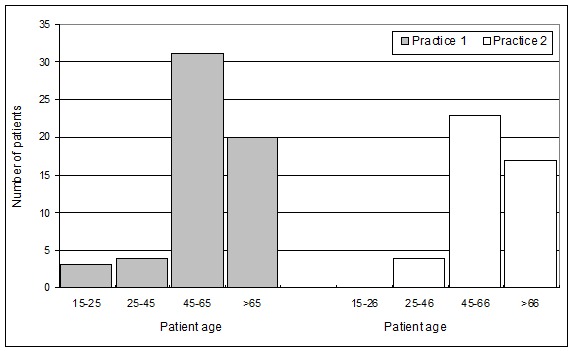
The rules implemented were essentially in accordance with the official Danish rules, such that a prescription for BZD and CP could only be issued for one month at a time, and only following consultation. Use was monitored using the Danish registration system, Ordiprax, which monitors sales of prescription medicine. Two Danish general practices, comprising a patient base of approximately 2300 were studied. With the exception of the severely physically or mentally ill, all users of BZD and CP were included.
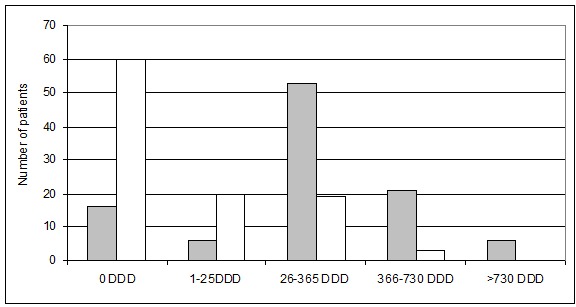
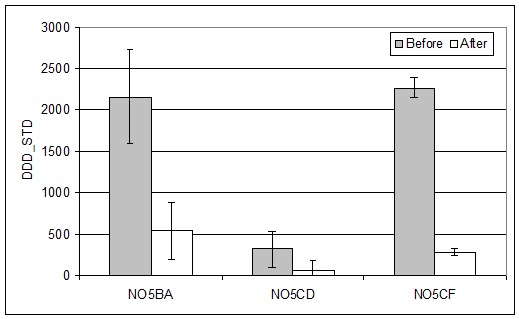
After 2½ years, the use of BZD and CP was reduced by 75% and 90%, respectively. The reorganization of prescription patterns was seen to be significantly easier than physicians had expected. During the first three months, only four to five additional visits per week per 1000 patients were required. Subsequently, this number was stabilized at one to two additional visits. The usual collaborative partners, such as psychiatrists, homecare services, hospitals and substance abuse units were essentially not deployed. No serious withdrawal effects arose.
The implementation of the aforementioned simple procedures is to be recommended for the prescription of BZD and CP drugs, as the effect is immediate and easily attainable, with a reasonable work input required on the part of general practitioners.
2003年,丹麦内政与卫生部长指示全科医生将苯二氮䓬类药物(BZD)和环吡咯酮类药物(CP)的处方量减少50%。然而,并未指定有效的方法。据估计,丹麦约有10万名对BZD药物依赖的患者,约占总人口的2%。
本文描述了一种成功、简单且自愿的干预措施的实施情况,该措施旨在减少诱导依赖药物的使用,同时挑战从业者在该领域根深蒂固的习惯和偏见。
实施的规则基本符合丹麦官方规则,即BZD和CP的处方每次只能开具一个月的用量,且必须经过会诊。使用丹麦注册系统Ordiprax监测使用情况,该系统可监测处方药的销售情况。对两家丹麦全科诊所进行了研究,其患者基数约为2300人。除严重身体或精神疾病患者外,所有BZD和CP的使用者均被纳入研究。
2年半后,BZD和CP的使用量分别减少了75%和90%。处方模式的重组比医生预期的要容易得多。在最初的三个月里,每1000名患者每周只需额外增加四到五次就诊。随后,这个数字稳定在每周一到两次额外就诊。通常的合作方,如精神科医生、家庭护理服务机构、医院和药物滥用治疗单位基本未被调用。未出现严重的戒断反应。
对于BZD和CP药物的处方,建议实施上述简单程序,因为其效果立竿见影且易于实现,全科医生只需投入合理的工作量。