Dunlay Shannon M, Roger Véronique L
Division of Cardiovascular Diseases, Department of Internal Medicine, Mayo Clinic, Gonda 5, 200 First St. SW, Rochester, MN, 55905, USA,
Curr Heart Fail Rep. 2014 Dec;11(4):404-15. doi: 10.1007/s11897-014-0220-x.
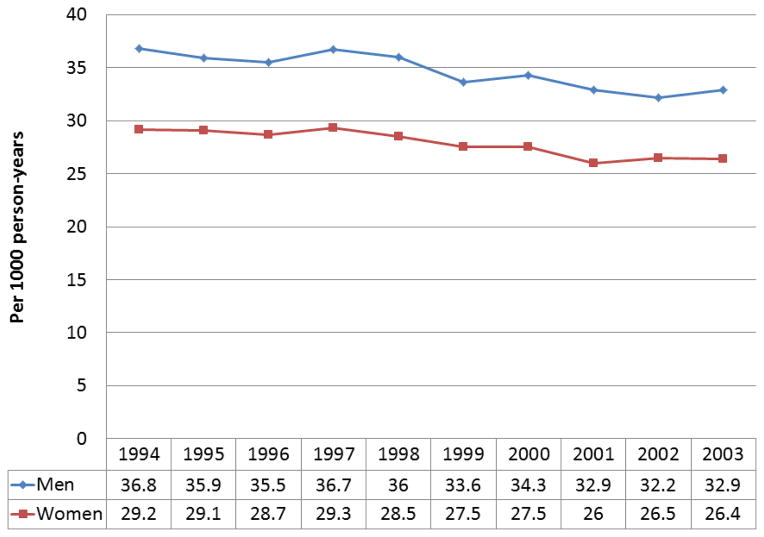
Heart failure (HF) is a major public health problem affecting more than five million Americans and more than 23 million patients worldwide. The epidemiology of HF is evolving. Data suggests that the incidence of HF peaked in the mid-1990s and has since declined. Survival after HF diagnosis has improved, leading to an increase in prevalence. The case mix is also changing, as a rising proportion of patients with HF have preserved ejection fraction and multimorbidity is increasingly common. After diagnosis, HF can have a profound associated morbidity. Hospitalizations in HF remain both frequent and costly, though they may be declining as a result of preventive efforts. The need for skilled nursing facility care in HF has risen. The role of palliative medicine in the care of patients with advanced HF is evolving as we learn how to best care for this population with a large symptom burden.
心力衰竭(HF)是一个重大的公共卫生问题,影响着超过500万美国人以及全球超过2300万患者。心力衰竭的流行病学正在演变。数据表明,心力衰竭的发病率在20世纪90年代中期达到峰值,此后有所下降。心力衰竭诊断后的生存率有所提高,导致患病率上升。病例组合也在发生变化,因为射血分数保留的心力衰竭患者比例不断上升,且多种疾病共存的情况越来越普遍。诊断后,心力衰竭可能伴有严重的相关发病率。心力衰竭患者的住院治疗仍然频繁且费用高昂,不过由于预防措施,住院率可能正在下降。心力衰竭患者对专业护理机构护理的需求有所增加。随着我们了解如何更好地护理这个症状负担较重的人群,姑息医学在晚期心力衰竭患者护理中的作用正在不断演变。