Li Xiao-Qian, Cao Xue-Zhao, Wang Jun, Fang Bo, Tan Wen-Fei, Ma Hong
Department of Anesthesiology, First Affiliated Hospital, China Medical University, Shenyang 110001, Liaoning, China.
Mol Brain. 2014 Sep 4;7:69. doi: 10.1186/s13041-014-0069-7.
Microglia are the primary immune cells of the spinal cord that are activated in response to ischemia/reperfusion (IR) injury and release various neurotrophic and/or neurotoxic factors to determine neuronal survival. Among them, matrix metalloproteinase-9 (MMP-9), which cleaves various components of the extracellular matrix in the basal lamina and functions as part of the blood spinal cord barrier (BSCB), is considered important for regulating inflammatory responses and microenvironmental homeostasis of the BSCB in the pathology of ischemia. Sevoflurane has been reported to protect against neuronal apoptosis during cerebral IR. However, the effects of sevoflurane preconditioning on spinal cord IR injury remain unclear. In this study, we investigated the role of sevoflurane on potential genetic roles of microglial MMP-9 in tight junction protein breakdown, opening of the BSCB, and subsequent recruitment of microglia to apoptotic spinal cord neurons.
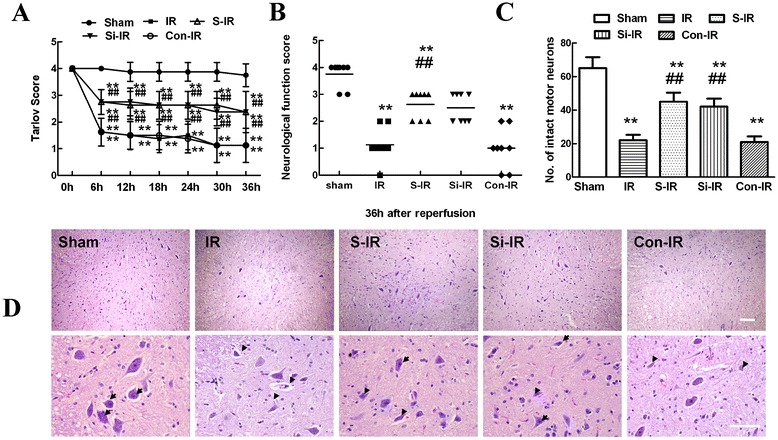
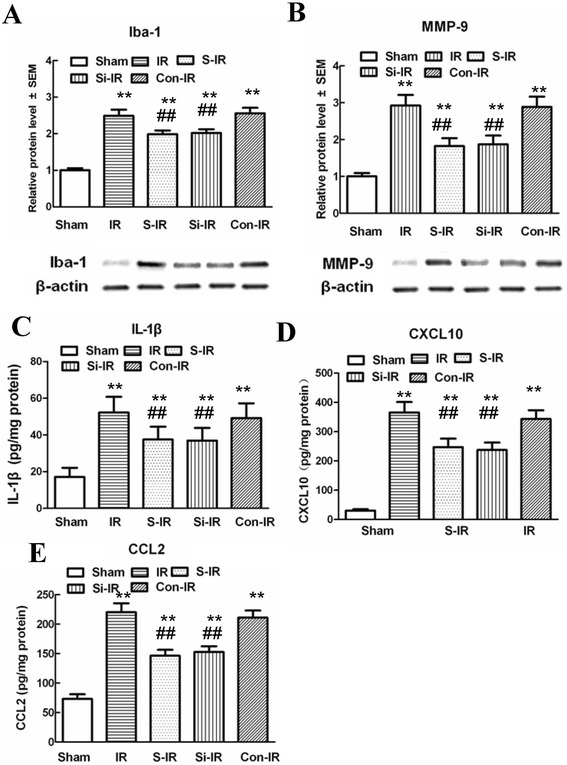
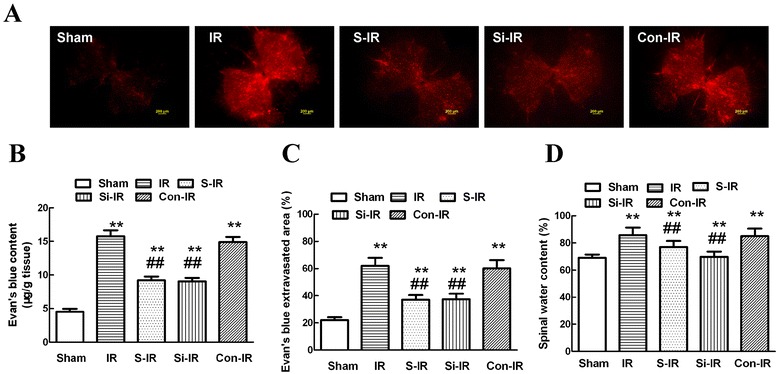
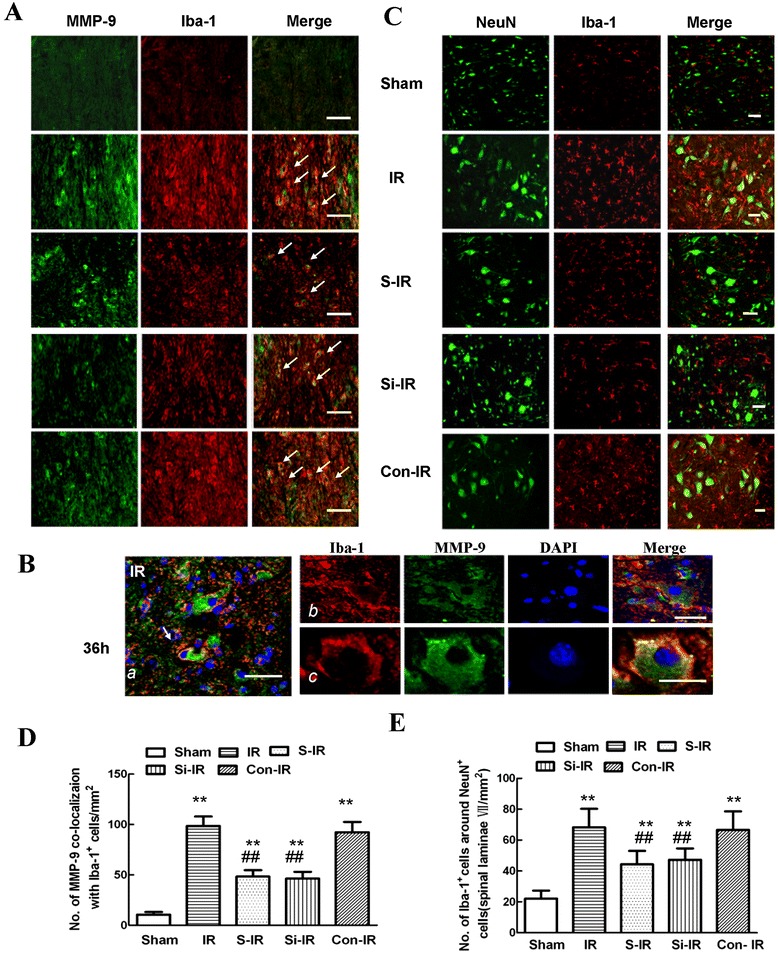
The results showed significant upregulation of MMP-9 in rats with IR-induced inflammation of the BSCB compared to that of the sham group, manifested as dysfunctional BSCB with increased Evans blue extravasation and reduced expression of occludin protein. Increased MMP-9 expression was also observed to facilitate invasion and migration of activated microglia, imaging as high Iba-1 expression, clustered to neurons in the injured spinal cord, as shown by double immunofluorescence, and increased proinflammatory chemokine production (CXCL10, CCL2). Further, sevoflurane preconditioning markedly improved motor function by ameliorating neuronal apoptosis, as shown by reduced TUNEL-positive cell counts and expression of cleaved caspase-3. These protective effects were probably responsible for downregulation of MMP-9 and maintenance of normal expression of occludin protein indicating BSCB integrity from inflammatory damage, which was confirmed by decreased protein levels of Iba-1 and MMP-9, as well as reduced production of proinflammatory chemokines (CXCL10, CCL2) and proinflammatory cytokines (IL-1β). Intrathecal injection of specific siRNAs targeting MMP-9 had similar protective effects to those of sevoflurane preconditioning.
Preconditioning with 2.4% sevoflurane attenuated spinal cord IR injury by inhibiting recruitment of microglia and secretion of MMP-9; thus inhibiting downstream effects on inflammatory damage to BSCB integrity and neuronal apoptosis.
小胶质细胞是脊髓的主要免疫细胞,在缺血/再灌注(IR)损伤时被激活,并释放各种神经营养和/或神经毒性因子以决定神经元的存活。其中,基质金属蛋白酶-9(MMP-9)可裂解基膜中细胞外基质的各种成分,并作为血脊髓屏障(BSCB)的一部分发挥作用,被认为在缺血病理过程中对调节炎症反应和BSCB的微环境稳态很重要。据报道,七氟醚可在脑IR期间防止神经元凋亡。然而,七氟醚预处理对脊髓IR损伤的影响仍不清楚。在本研究中,我们研究了七氟醚在小胶质细胞MMP-9的潜在基因作用中对紧密连接蛋白分解、BSCB开放以及随后小胶质细胞向凋亡脊髓神经元募集的作用。
结果显示,与假手术组相比,IR诱导的BSCB炎症大鼠中MMP-9显著上调,表现为功能失调的BSCB,伊文思蓝外渗增加,闭合蛋白表达降低。还观察到MMP-9表达增加促进了活化小胶质细胞的侵袭和迁移,成像显示Iba-1表达升高,聚集在受损脊髓中的神经元周围,如双重免疫荧光所示,并增加了促炎趋化因子的产生(CXCL10、CCL2)。此外,七氟醚预处理通过改善神经元凋亡显著改善了运动功能,表现为TUNEL阳性细胞计数减少和裂解的半胱天冬酶-3表达降低。这些保护作用可能是由于MMP-9下调以及闭合蛋白正常表达的维持,表明BSCB完整性免受炎症损伤,这通过Iba-1和MMP-9蛋白水平降低以及促炎趋化因子(CXCL10、CCL2)和促炎细胞因子(IL-1β)产生减少得到证实。鞘内注射靶向MMP-9的特异性siRNA具有与七氟醚预处理相似的保护作用。
2.4%七氟醚预处理通过抑制小胶质细胞募集和MMP-9分泌减轻脊髓IR损伤;从而抑制对BSCB完整性和神经元凋亡的炎症损伤的下游效应。