Hsu Pei-Jen, Wu Fang-Ju, Kudo Masataka, Hsiao Chih-Lun, Hsueh Aaron J W, Luo Ching-Wei
Department of Life Sciences and Institute of Genome Sciences, National Yang-Ming University, Taipei, Taiwan.
Division of Reproductive and Stem Cell Biology, Department of Obstetrics and Gynecology, Stanford University School of Medicine, Stanford, California, United States of America.
PLoS One. 2014 Sep 4;9(9):e106804. doi: 10.1371/journal.pone.0106804. eCollection 2014.
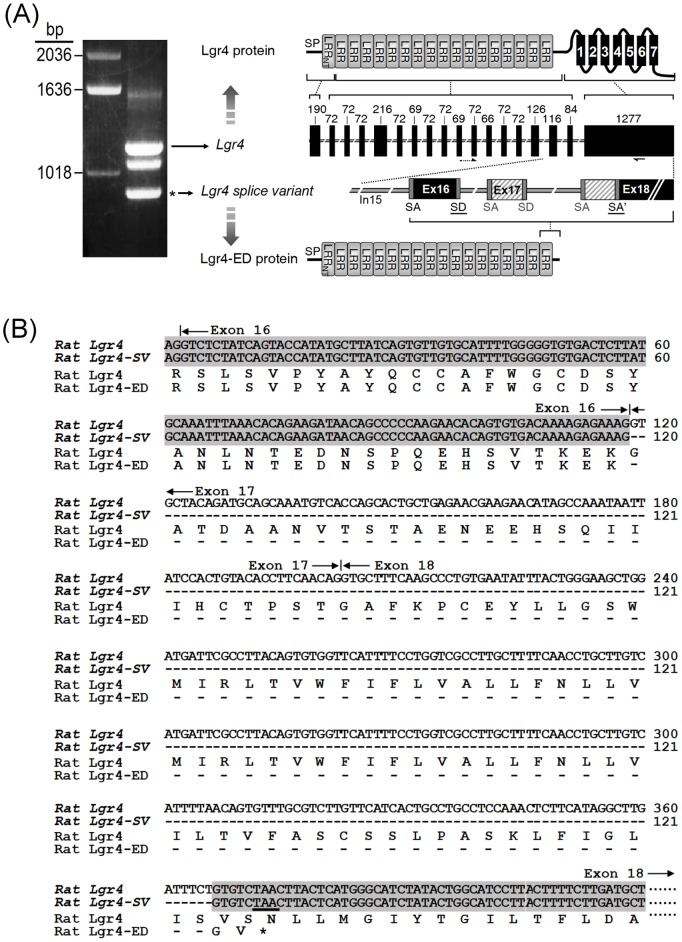
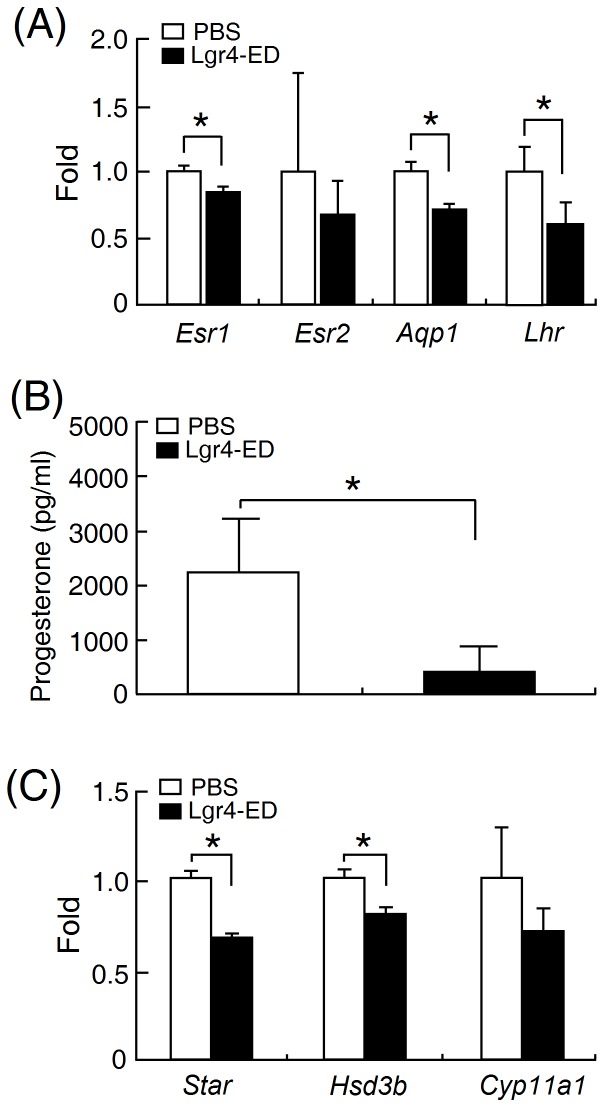
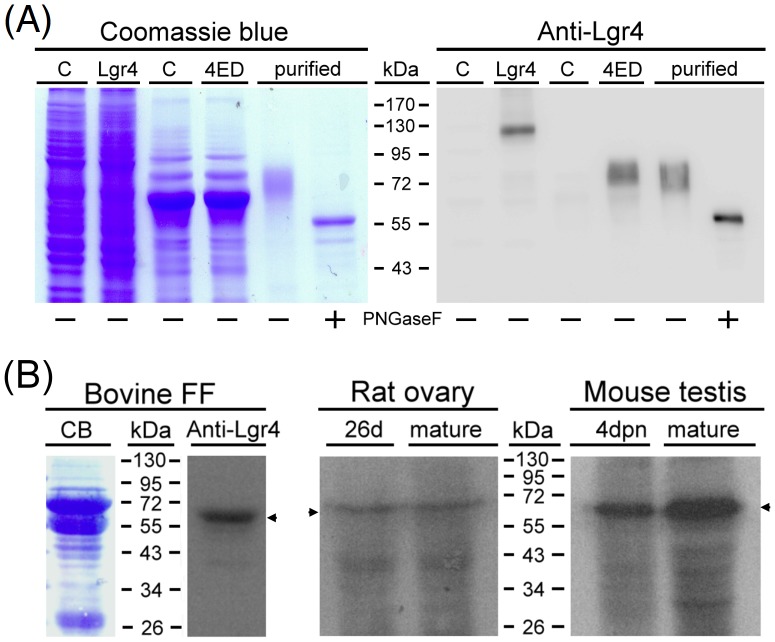
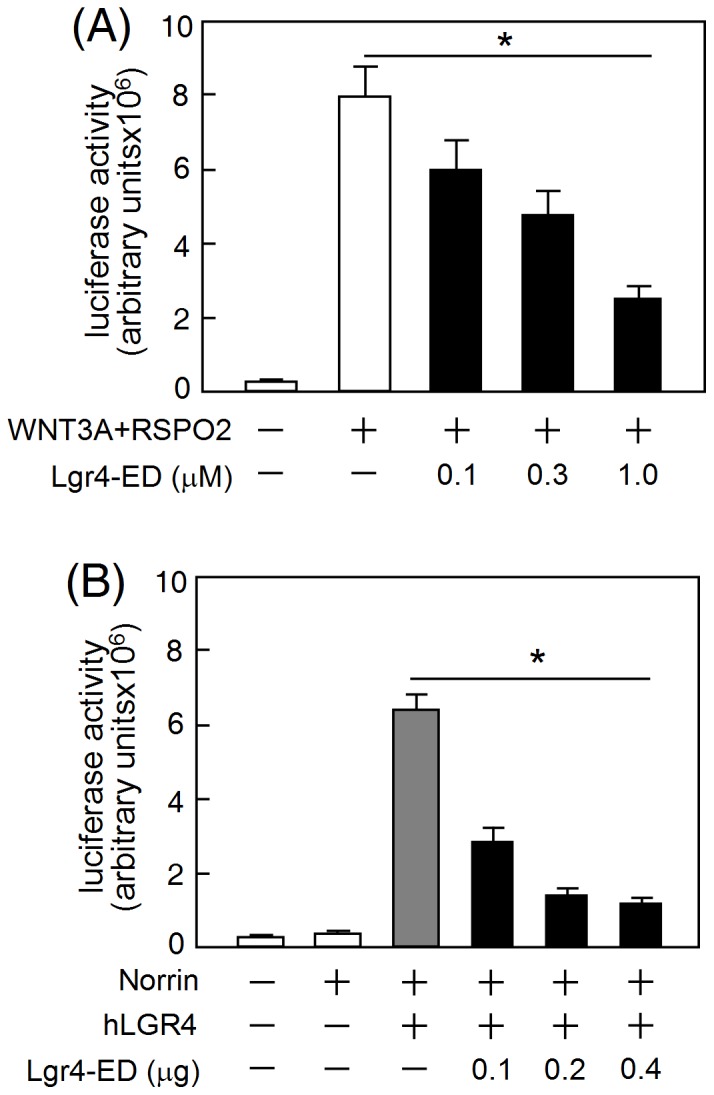
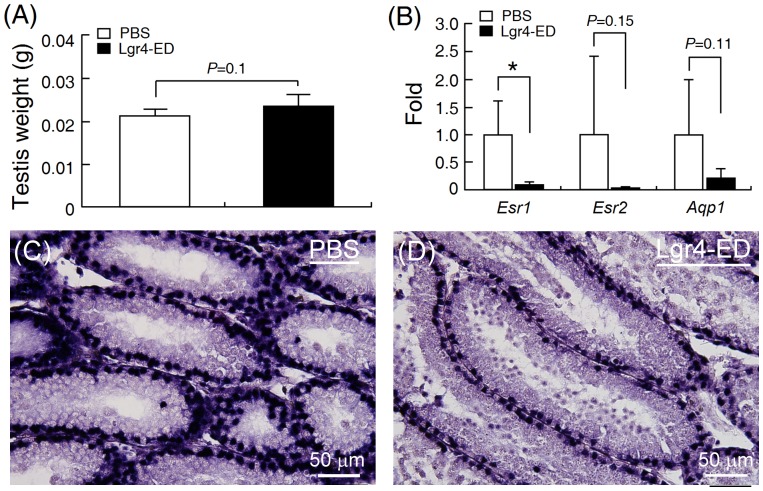
Leucine-rich repeat containing G protein-coupled receptor 4 (LGR4) promotes the Wnt signaling through interaction with R-spondins or norrin. Using PCR amplification from rat ovarian cDNAs, we identified a naturally occurring Lgr4 splice variant encoding only the ectodomain of Lgr4, which was named Lgr4-ED. Lgr4-ED can be detected as a secreted protein in the extracts from rodent and bovine postnatal gonads, suggesting conservation of Lgr4-ED in mammals. Recombinant Lgr4-ED purified from the conditioned media of transfected 293T cells was found to dose-dependently inhibit the LGR4-mediated Wnt signaling induced by RSPO2 or norrin, suggesting that it is capable of ligand absorption and could have a potential role as an antagonist. Intraperitoneal injection of purified recombinant Lgr4-ED into newborn mice was found to significantly decrease the testicular expression of estrogen receptor alpha and aquaporin 1, which is similar to the phenotype found in Lgr4-null mice. Administration of recombinant Lgr4-ED to superovulated female rats can also decrease the expression of estrogen receptor alpha, aquaporin 1, LH receptor and other key steroidogenic genes as well as bring about the suppression of progesterone production. Thus, these findings suggest that endogenously expressed Lgr4-ED may act as an antagonist molecule and help to fine-tune the R-spondin/norrin-mediated Lgr4-Wnt signaling during gonadal development.
富含亮氨酸重复序列的G蛋白偶联受体4(LGR4)通过与R-脊椎蛋白或诺林相互作用促进Wnt信号传导。通过从大鼠卵巢cDNA进行PCR扩增,我们鉴定出一种天然存在的Lgr4剪接变体,其仅编码Lgr4的胞外域,命名为Lgr4-ED。在啮齿动物和牛出生后的性腺提取物中可检测到Lgr4-ED作为一种分泌蛋白,这表明Lgr4-ED在哺乳动物中具有保守性。从转染的293T细胞的条件培养基中纯化的重组Lgr4-ED被发现可剂量依赖性地抑制由RSPO2或诺林诱导的LGR4介导的Wnt信号传导,这表明它能够吸收配体并可能具有作为拮抗剂的潜在作用。发现将纯化的重组Lgr4-ED腹腔注射到新生小鼠中可显著降低雌激素受体α和水通道蛋白1的睾丸表达,这与在Lgr4基因敲除小鼠中发现的表型相似。给超排卵的雌性大鼠施用重组Lgr4-ED也可降低雌激素受体α、水通道蛋白1、LH受体和其他关键类固醇生成基因的表达,并导致孕酮产生受到抑制。因此,这些发现表明内源性表达的Lgr4-ED可能作为一种拮抗剂分子,并有助于在性腺发育过程中微调R-脊椎蛋白/诺林介导的Lgr4-Wnt信号传导。